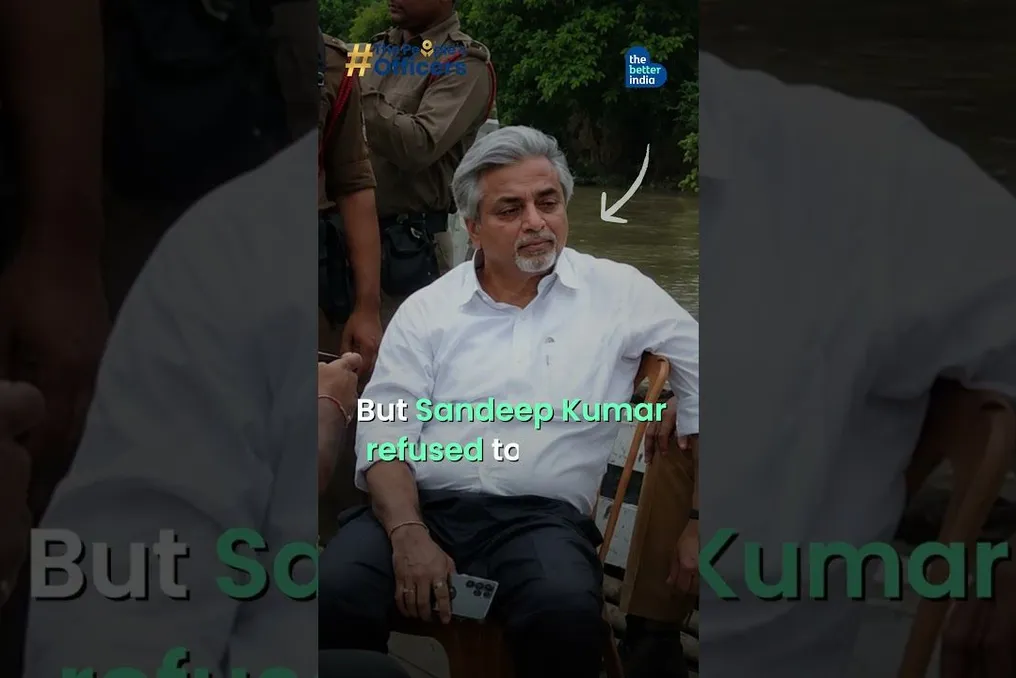
Thanks to the efforts of IFS officer Sandip Kumar, the fight against organized rhino poaching in Kaziranga National Park has been significantly strengthened. Previously, 27 cases of poaching were recorded annually.
Thanks to the efforts of IFS officer Sandip Kumar, the fight against organized rhino poaching in Kaziranga National Park has been significantly strengthened. Previously, 27 cases of poaching were recorded annually.
The nature conservation team reinforced anti-poaching operations using methods such as drones, surveillance systems, intelligence gathering, forming stronger teams, and involving the local community. These measures led to a historic achievement: in 2022, zero cases of rhino poaching were registered in Kaziranga, which had not been seen for almost 45 years.
Nevertheless, successes in nature conservation cannot be taken for granted. Questions are arising regarding proposed changes to the Ecologically Sensitive Zone of Kaziranga, which casts doubt on the possibility of maintaining the achieved protection.
The Head of the Environmental Department stated that Iran is prepared to put the issue of declining water levels in the Caspian Sea at the center of regional discussions ahead of the Caspian Sea Summit.
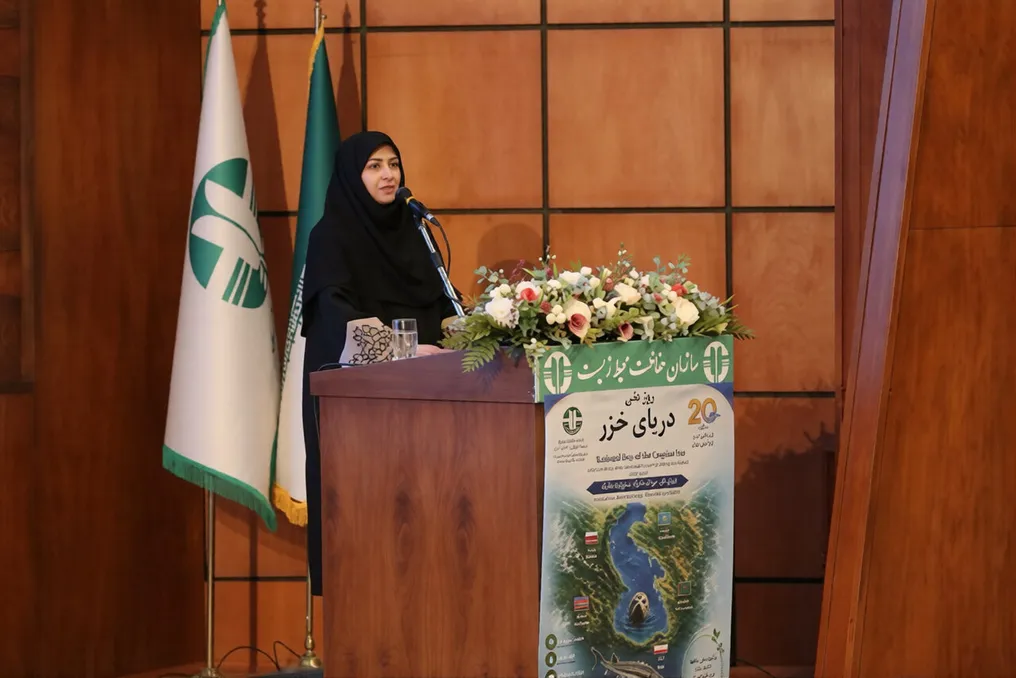
During the celebration of the Caspian Sea National Day on Tuesday, Shina Ansari, head of the Environmental Department, emphasized that August 12 is not just a date on the calendar. She noted that this day serves as a reminder of the joint commitment enshrined in the Tehran Convention, officially known as the Framework Convention for the Protection of the Marine Environment of the Caspian Sea.
According to Mehr, this convention, named after Iran as the host country, has been in effect for 20 years. Ansari stressed that despite existing disagreements, the five Caspian littoral states have agreed on one fundamental fact: before the Caspian Sea became their border, it was a common heritage.
Highlighting the significance of the Caspian Sea for Iran, she stated that it is not merely a body of water for the Islamic Republic of Iran, but an integral part of the nation's national, historical, cultural, and economic identity.
Ansari also reported that efforts are underway during technical meetings in Geneva and within the five-party working group to establish a permanent secretariat for the Tehran Convention in the Caspian region. She expressed hope that this initiative will be realized through the joint determination of the Caspian littoral states.
In addition to diplomatic environmental efforts, scientific and field activities are being conducted with determination. These include the Caspian Atlas, the Atlas of Habitats and Rivers in the South Caspian Basin, a biodiversity database documenting over 2300 species, and a comprehensive pollutant monitoring program that strengthens the knowledge base for decision-making.
Speaking about conservation programs for key Caspian species, Ansari focused on the Caspian seal, the only endemic marine mammal of the sea, which is the main focus of the Environmental Department. A national action plan for the conservation of the Caspian seal has been developed, and a special secretariat has been established. Furthermore, rescue and rehabilitation centers have been created in the Babolsar, Miyankaleh, Bandar-e Torkaman, and Bujag reserves.
The action plan of the Caspian littoral states regarding water level fluctuations for the period 2026–2030 provides a comprehensive framework for strengthening regional cooperation, developing scientific knowledge, and devising adaptive solutions.
The Seventh Conference of the Parties to the Tehran Convention is scheduled to take place in Tehran on September 23, and high-ranking officials from all five littoral states will participate.
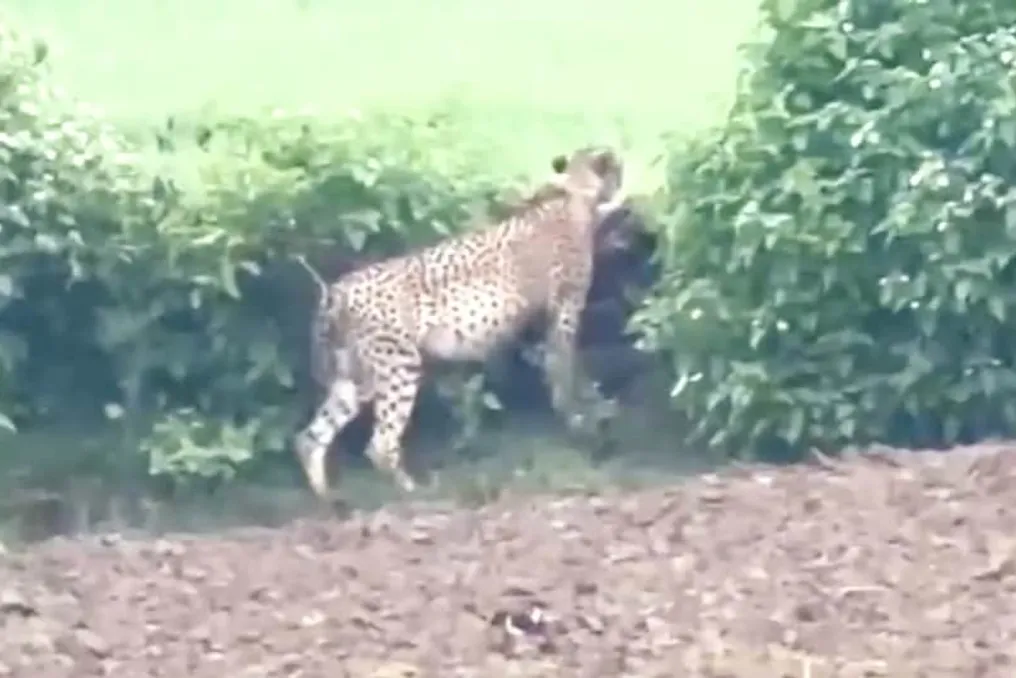
Vira, the mother cheetah, has been moving across the fields of Soikalan village and its surroundings for the past ten days, venturing outside the open forest of Kuno National Park, located in Sheopur town, Madhya Pradesh. On Wednesday, she was spotted near Bagcha village and the Rambadi canal, where she attempted a hunt.
Afterward, she crossed the Rambadi canal and headed back into the forest via Bagcha village. This news brought relief to residents of nearby villages. Before returning to the forest, Vira tried to catch a cub, but it managed to escape at the last moment.
Despite this, the wildlife department's tracking team continues to monitor the cheetah around the clock. On Wednesday morning, when Vira was near the Rambadi canal close to Bagcha village, she lunged at the cub. The cub immediately fled upon seeing the cheetah approaching, saving its life. Video of this incident has also become available. After that, Vira crossed the canal and moved towards the forest.
Villagers reported that due to the cheetah's presence in recent days, they were afraid to go out to the fields to graze their livestock. Now, knowing that Vira has returned to the forest, people feel calmer.
The wildlife department team maintains constant surveillance over the cheetah and tracks its location 24 hours a day. Residents of neighboring villages were advised to exercise caution and avoid solitary trips into the forest or fields. The wildlife department team will continue to observe every move of Vira.
R. Tirukural, Director of the Forest Division (DFO) of Kuno National Park, stated by phone that cheetahs can move freely in the open forest, and that they do not disclose the locations of the cheetahs. His teams constantly monitor them.
It is also known that 19 cheetahs roam freely in the open forest of Kuno National Park, while 31 cheetahs are kept in enclosures. Wildlife department teams conduct continuous monitoring of all cheetahs.
A Ramsar Convention site is a wetland area recognized globally for its ecological significance. Achieving this status attracts international attention and mandates careful management of the area, as well as the protection of the flora and fauna dependent on it.
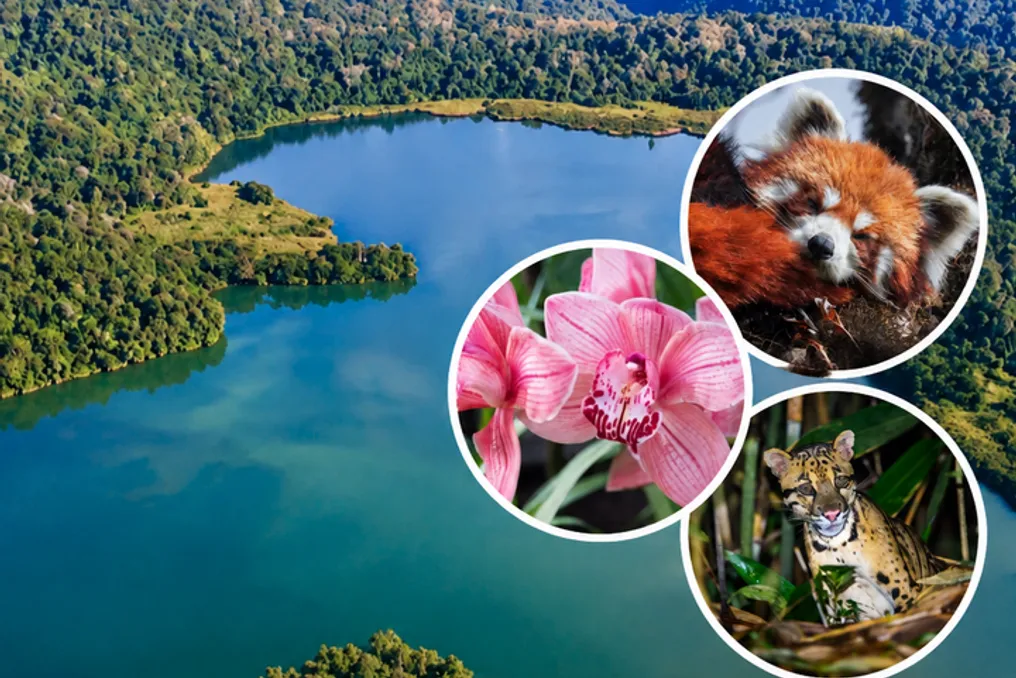
Lake Ghal, also known as Ghal Tuvi or Ghal Hawai, is located deep within the forests of Arunachal. It covers an area of 82 hectares at an altitude of about 1168 meters above sea level.
However, Ghal's influence extends far beyond its shores. The surrounding forest watershed feeds the Kamlang river system and a larger landscape. Water bodies flowing from Ghal include 12 perennial streams that sustain the lake year-round, linking this remote wetland to a larger network of rivers and forests.
Ghal's richness is also evident in its vegetation. Its watershed is home to over 150 species of trees and 49 species of orchids, turning the forests around the lake into a prominent center of biodiversity in the Eastern Himalayas.
The forest massif is also inhabited by diverse animals: elephants, wild boars, flying squirrels, civets, hoolock gibbons, Bengal slow lorises, and Himalayan palm civets. More powerful inhabitants of the Kamlang region include tigers, leopards, clouded leopards, and snow leopards.
Among the most valuable visitors to Ghal is the endangered white-rumped egret. The lake serves as a habitat and wintering ground for water-dependent birds.
Furthermore, over 20 species of reptiles and amphibians inhabit the lake and surrounding landscape, playing a vital role in the complex food chain that keeps the ecosystem functioning.
Lake Ghal is located approximately 20 kilometers from Wakhro, but reaching it can take seven to eight hours. The route passes through streams, gorges, forested slopes, and mountainous terrain, which itself highlights the remoteness of this lake.
Thus, this remote Himalayan lake has entered the global registry of wetlands. Ghal became the first Ramsar Convention site in Arunachal Pradesh and the 101st in India, drawing international attention to this rich ecosystem. Protecting Ghal requires attention not only to the lake itself but also to the 12 perennial streams, 49 orchid species, more than 150 tree species, endangered birds, and the broader Kamlang forests that support this living system.