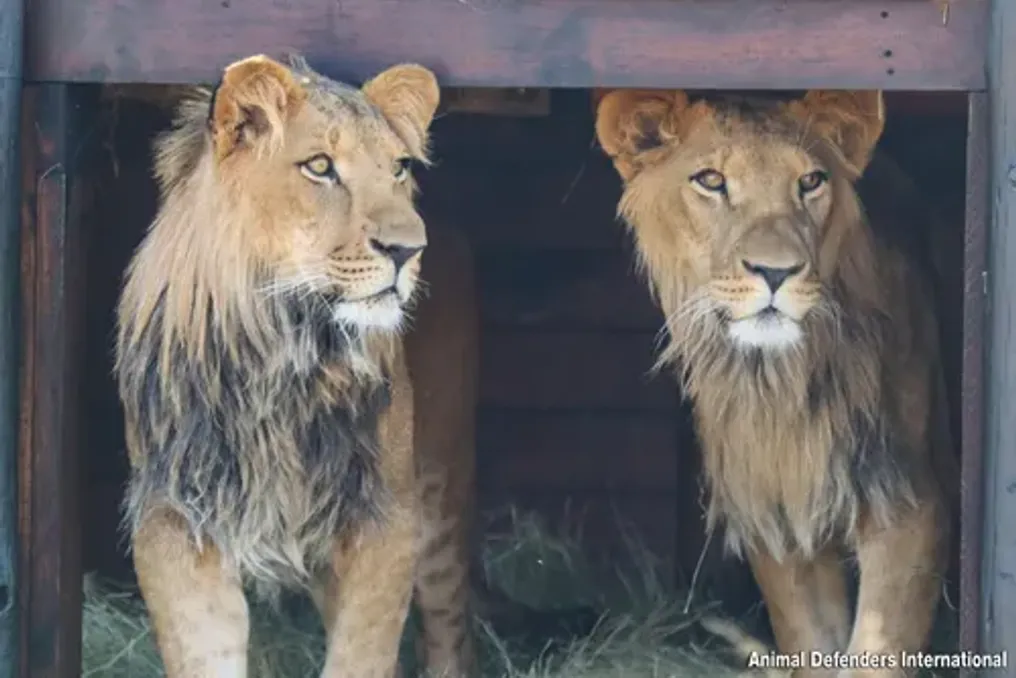
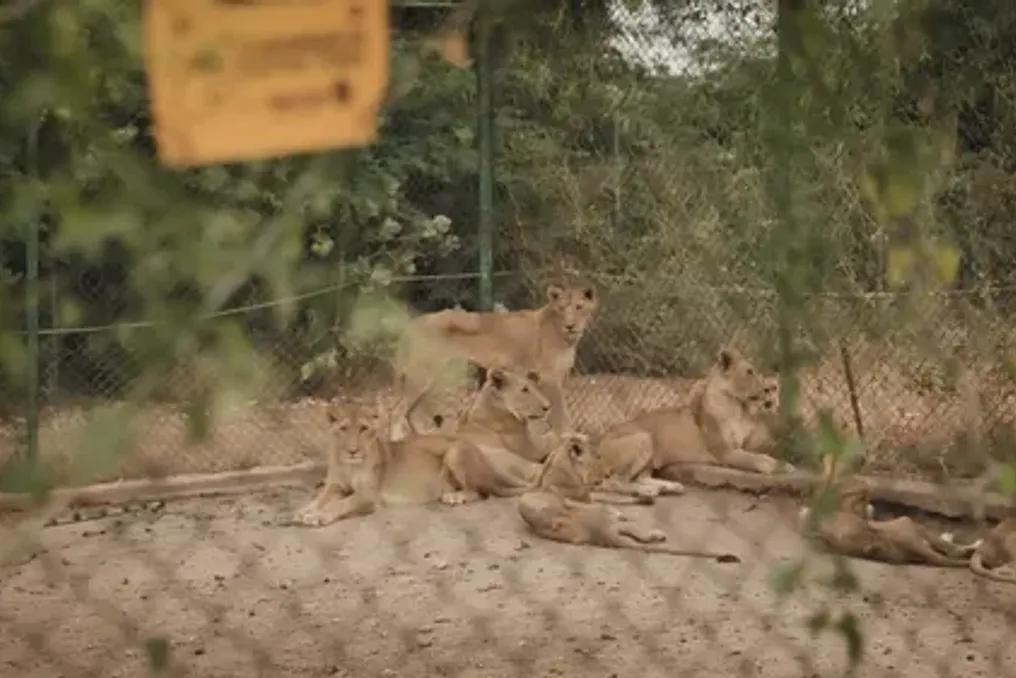
During urban fighting in Sudan's capital, Khartoum, in 2023, an entire pride of captive lions found themselves caught in the crossfire of concrete. They were confined to a holding facility while artillery fire devastated surrounding areas, leaving them without food or regular human care.
FOUR PAWS Rescue Operation
The global animal protection organization FOUR PAWS led a massive logistical operation to extract 11 predators from the active military conflict. However, extraction from the combat zone was only the beginning. This was followed by a two-year program of medical and psychological rehabilitation aimed at restoring bodies depleted by starvation and minds traumatized by artillery fire.
Condition of the Lions and Risk Assessment
During the initial assessment of survivors in the active combat zone in 2023, FOUR PAWS veterinarian and mission leader Dr. Amir Khalil discovered severe neglect. The structural integrity of the enclosure had been destroyed by munitions. The lions were extremely emaciated, their bodies consuming their own muscle mass just to survive the blockade.
Dr. Khalil noted that the level of care and food availability was worse than he expected. The evacuation required complex administrative and logistical maneuvers. The rescue convoy had to move the animals out of the capital, navigating military checkpoints and constant danger to prevent the pride from dying from escalating violence.
Transport to South Africa
The FOUR PAWS Rescue and Response team intervened to find a suitable habitat for the animals as quickly as possible. After a long and perilous mission, which included temporary stops in Sudan, the 11 lions were loaded onto a cargo flight, completely removing them from the urban crossfire. They landed safely at the LIONSROCK Big Cat Sanctuary in South Africa.
The physical toll of confinement in Sudan was extensive. The lions arrived injured, weak, and highly susceptible to infection. The LIONSROCK veterinary team began sorting them, discovering deep wounds hidden under dirt and matted fur. Behavior consultant Jessica Buckhart reported that they were covered in cuts and scars all over their bodies, faces, and thighs due to prolonged confinement.
Sanctuary Rehabilitation Program
The sanctuary administration intentionally placed the pride in the Special Care Unit (SCU), consisting of four connected enclosures. This specialized layout restricted their movement, which was critical for animals lacking sufficient muscle mass for long walks, while allowing staff to monitor their daily diet and safely administer medical treatment.
Rehabilitation continued for 24 months. Guardians carefully monitored the diet, gradually introducing complex proteins to avoid refeeding syndrome—a fatal metabolic reaction that occurs when starved animals eat too quickly. The lions regained lost muscle mass and healed their cuts.
Transfer to Permanent Home
As the lions grew out of the SCU, they needed to be moved to a permanent 6-hectare enclosure. Moving 11 adult cats usually requires strong tranquilizers, but administering these drugs carried the risk of serious psychological regression. Instead, the team dedicated six weeks to successfully implementing a behavior modification strategy known as cage training based on positive reinforcement.
Cage training required a deep understanding of the pride's social interactions and individual traumas. Some lions, such as Alfie and Mergi, needed absolute quiet and extreme patience to approach the metal cages, associating confinement with bombings in Khartoum. Behavior consultant Evianne Dubois noted that she had to work with '11 different personalities,' requiring changes to the training plan for each individual.
On the day of the move, the intensive behavioral preparation paid off. The loading process depended entirely on how much the animals trusted the caretakers to voluntarily enter. The team methodically moved vehicles, loading them in batches. The veterinary team confirmed that thanks to six weeks of targeted cage training, the entire transfer was accomplished without the use of anesthesia.
New Home and Adaptation
The trucks delivered the loaded cages through the sanctuary to the gates of the new home. The release went flawlessly. The expansive permanent space accommodates the established social dynamics of the pride, separating energetic young individuals from older ones. Sanctuary manager Hildegard Pirker explained that the largest enclosure, covering about 6 hectares, is divided down the middle by a fence: seven young lions occupy one side, and the other side is designated for the senior group.
For the senior members of the pride, the open grass initially presented a frightening unknown. Healing their psychological wounds took much longer than healing their physical injuries. Thanks to the thoughtful design of the habitat and patient intervention, the senior lions eventually realized they were no longer in danger. Pirker observed that 'Mudi was very insecure because of everything he went through. So first we needed to get him used to his environment so he wouldn't be afraid, and so he could start feeling more confident and brave.'
The lions from Sudan officially found their permanent home in the South African Highlands.