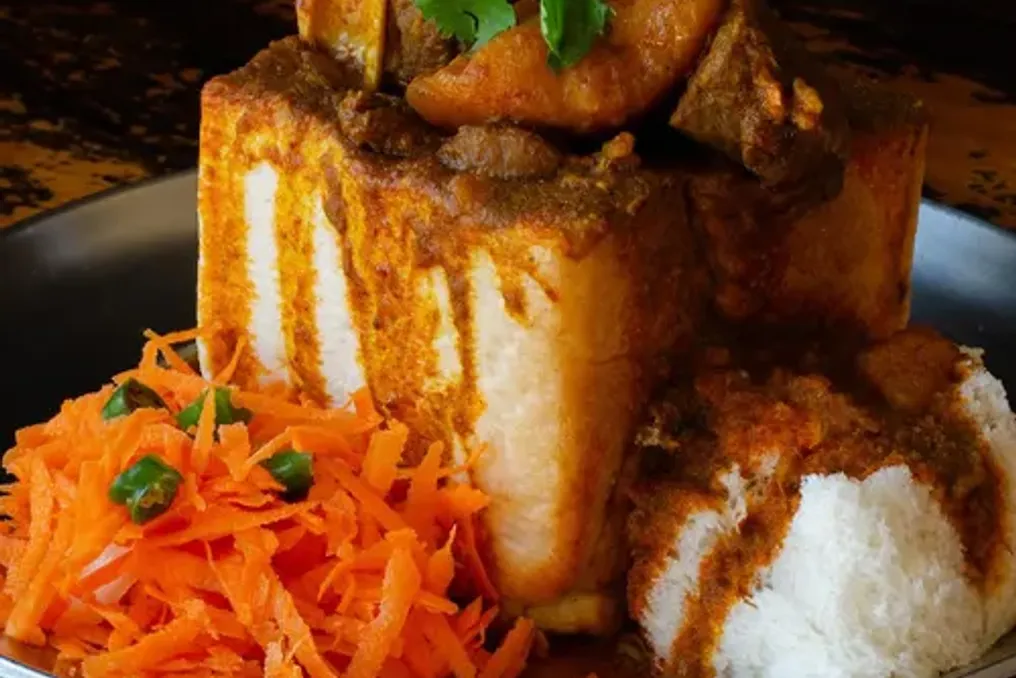
To prepare homemade lamb bunny chow in the Durban style, it is necessary to achieve a tender, well-spiced curry made from lamb, soft potatoes, and a thick sauce, which is served inside a whole piece of fresh white bread.
To prepare homemade lamb bunny chow in the Durban style, it is necessary to achieve a tender, well-spiced curry made from lamb, soft potatoes, and a thick sauce, which is served inside a whole piece of fresh white bread.
The bunny chow recipe should be kept handy if you want to cook one of South Africa's most recognizable dishes at home. Although this dish, beloved in Durban, has spread far beyond KwaZulu-Natal, its essence remains closely tied to this city.
The essence of the dish is that the hollow of the white bread is filled with curry; menus across the country feature versions with lamb, meat, chicken, beans, and vegetables. Lamb is a particularly popular choice, and a good lamb bunny requires a curry with enough sauce to soak into the bread without turning it into a soggy mass.
The meat must be tender, the potatoes delicate, and the spices well-roasted. This recipe serves two portions and uses whole spices, fresh chili pepper, ginger, garlic, curry leaves, coriander, and masala to create a deeply spiced lamb curry.
For preparation, you will need: 500g pieces of lamb or meat, ½ loaf of unsliced bread, 3 tablespoons vegetable oil, 1 onion and 2 tomatoes, 3 green chili peppers, 2 teaspoons grated ginger and garlic or paste, 2 potatoes, 2 bay leaves, 1 cinnamon stick, 2 star anise, ½ teaspoon cumin seeds, ½ teaspoon fennel seeds, 2 teaspoons red pepper flakes, 1 teaspoon cardamom powder, 1½ teaspoons garam masala, ½ teaspoon ground cumin, 1½ teaspoons ground coriander, 4 tablespoons chili powder or masala, 1 teaspoon turmeric, salt to taste, 1 sprig of curry leaves, several sprigs of thyme, ¼ cup of fresh chopped coriander, fresh coriander for garnish, boiling water as needed, and a loaf of unsliced white bread.
(Recipe provided by EetMee)
The sauce should be thick and substantial enough to be scooped with a spoon, while also containing enough liquid to coat the lamb and potatoes, and to soak into the bread. It is advisable to avoid adding too much water at the beginning. Tomatoes release liquid as the curry cooks, and the grated potato helps to thicken the sauce.
If the curry becomes too runny after cooking the lamb and potatoes, it should be simmered uncovered for a few minutes until it thickens. If the sauce becomes too dry before the meat is tender, add a little boiling water and continue cooking.
The finished curry should have enough sauce to generously fill the bread, without pooling at the bottom.
For making a true homemade lamb bunny chow in the Durban style, the goal is simple: tender, well-spiced lamb curry with soft potatoes and a thick sauce, all enclosed in a piece of fresh white bread.
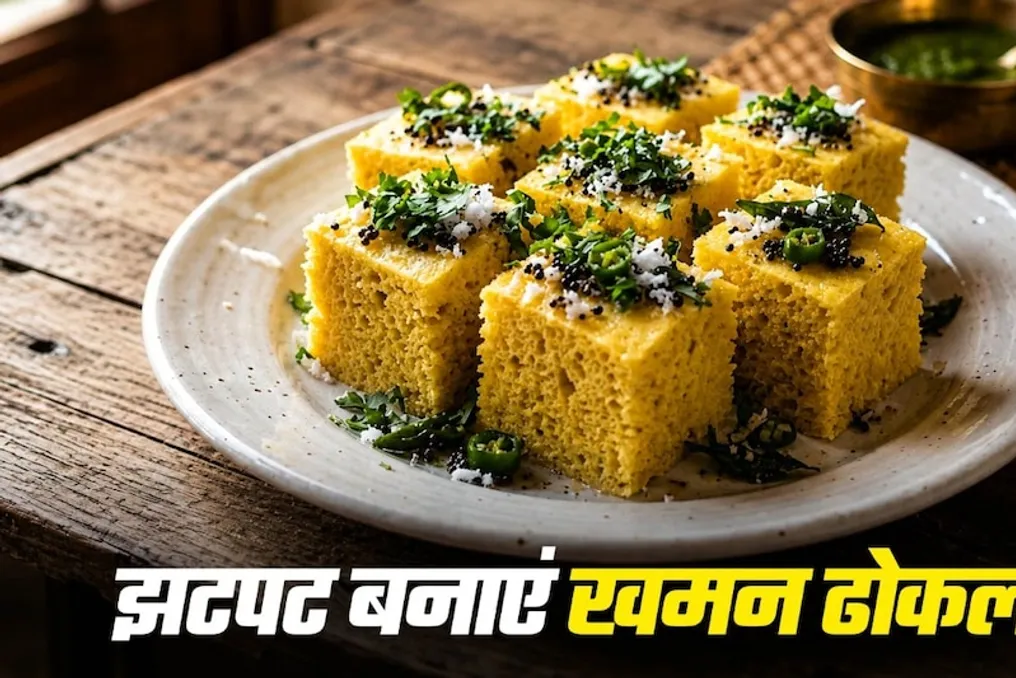
Known as Hamman Dhokla in Gujarat, it is popular across the country and enjoyed as a snack even in cities like Delhi and Mumbai. If your family members are tired of monotonous types of dhokla, you can easily make Hamman Dhokla at home and treat everyone to it. Its sweet and sour taste and texture are very appealing to children, and people enjoy eating it immensely.
We will tell you how to prepare perfectly fluffy and juicy Hamman Dhokla that resembles a restaurant version. The main feature of this recipe is that it does not require much preparation time while being a light and healthy snack. It can be used for breakfast in the morning, for an evening tea, or for children's lunch.
Ingredients for the batter and for the fried tempering are required for preparation.
First, mix the lentil flour (besan), semolina (sooji), salt, turmeric, and sugar in a large bowl. Then, gradually add yogurt, lemon juice, and a little water to knead a smooth, lump-free batter. Cover the finished batter and set it aside for 10–15 minutes.
In parallel, place water in a steamer or a large pot to heat up. Grease the mold or pan in which the dhokla will be cooked with a small amount of oil. Before starting to steam, add Eno to the batter and mix it lightly, adding one tablespoon of water. As soon as the batter starts to rise, pour it immediately into the greased mold.
Place the mold in the steamer and cook over medium heat for 15–20 minutes. Check for doneness with a toothpick: if it comes out clean, the dhokla is ready. After it cools down a bit, cut it into the desired shape.
Heat oil in a pan and add mustard seeds. When they start to sizzle, add green chili and curry leaves, frying them for a couple of seconds. Next, pour water, sugar, and lemon juice into the pan, bringing the mixture to a boil. Gently pour the resulting tempering over the sliced dhokla so that it absorbs the juice well. Finally, garnish the dish with fresh coriander and grated coconut.
Today, August 11, 2026, the festival of Savan Shivaratri is celebrated across the country. On this special day, followers of Lord Shiva perform religious rituals, observe fasts, and offer Jalabhishek on the Shivling to receive the blessings of Mahadeva. Many people consume only plant-based food throughout the day, while some eat fasting food in the evening or after prayers.
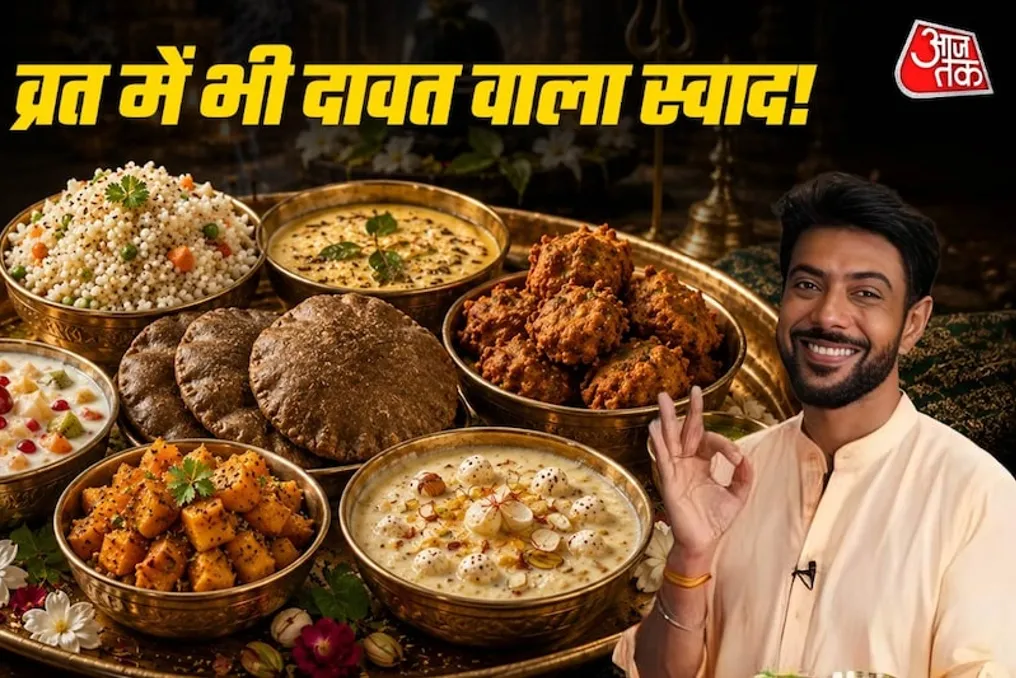
In such circumstances, a main question arises for those observing a fast: what to cook for lunch. If the thought of fasting only brings up dishes like Sabudana Khichdi, boiled potatoes, and fruits, it is time to diversify your diet a bit. You can prepare fasting food that is both fruity and not inferior in taste to a full feast. Moreover, it does not require spending hours in the kitchen. Today, we will tell you about a special fasting platter from Chef Ranveer Brar, which includes six dishes that are quickly prepared from minimal ingredients and possess rich flavor. That is, even during a fast, the food should be tangy, crunchy, creamy, and sweet.
The specialty of this platter from Chef Ranveer Brar is that it is not limited to one type of dish under the guise of fasting. It includes Samak rice pulao, peanut curry, kuttu pakora, makhana kheer, fruit raita, and a quick potato dish.
Quickly prepare Samak rice khichdi: Since regular rice is not eaten during a fast, you can prepare Samak rice khichdi. According to Chef Ranveer Brar, the rice should be washed and slightly soaked, then fried in ghee along with cumin seeds, asafoetida, and green chili, and then water added and cooked. Samak rice cooks in a short time.
Enhance the taste of peanut curry: If you want something different from ordinary fasting food, you can try peanut curry. This is a thick and very tasty curry made from roasted peanuts. It can be paired with Samak rice khichdi.
Kuttu pakora for a tangy snack: If your soul craves something crunchy and spicy, you can make kuttu pakora. Chef Ranveer Brar uses potatoes in this recipe. If the batter is given some time to stabilize, the pakora will turn out fluffier and crunchier.
Makhana kheer for a sweet finish: There is no joy in a fasting platter without dessert. For this, you can prepare makhana kheer from milk, makhana, and dry fruits. Slow cooking the pudding over low heat improves its taste and texture.
Fruit raita for freshness: If there are too many fried dishes on the platter, definitely add fruit raita. This yogurt sauce, made from favorite fruits, brings freshness and a light taste to the platter.
Quick potato dish: Finally, prepare a potato dish that cooks in just a few minutes. Fry cumin seeds, green chili, and curry leaves in ghee, then add potatoes and simmer with spices. The natural sweetness of the potato and the aroma of ghee make this dish special.
A complete feast even during a fast
If you are also tired of monotonous eating during Savan Shivaratri every year, you can take ideas from this platter by Chef Ranveer Brar. This platter, adorned with Samak rice khichdi, peanut curry, crunchy kuttu pakoras, potato dish, fruit raita, and makhana kheer, will help avoid boredom in the fasting menu.