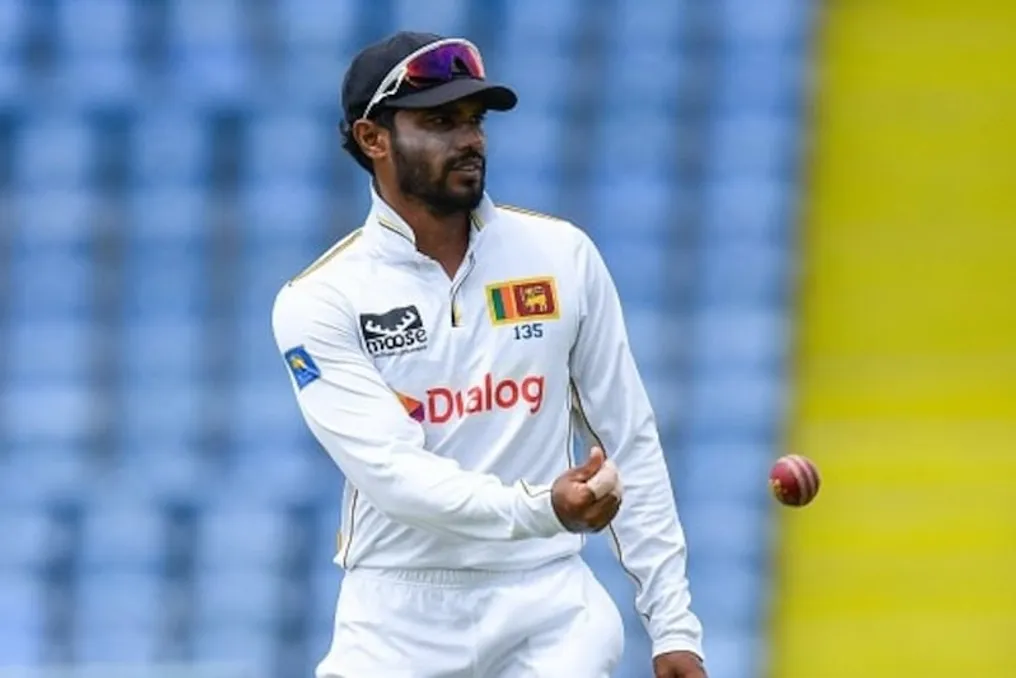
Sri Lanka captain Dunjaya Silva shared his strategy ahead of the first Test match between India and Sri Lanka, which will begin in Galle on August 15th. Instead of shocking India by giving them a difficult track from the start, Sri Lanka intends to stretch the game into the fourth or fifth day.
The plan is to allow the batsmen to bat early in the match, and then, as the pitch ages, use spinners as the most potent weapon against the Indian team. Dunjaya Silva is aware that Indian batsmen have recently faced difficulties on turning surfaces, as demonstrated in home series against New Zealand and South Africa.
Nevertheless, the Sri Lankan captain does not want to mistakenly assume this is a permanent weakness for the visitors. He emphasized that despite losses at home against New Zealand and South Africa, the Indian team has not forgotten how to play on turning pitches, and they will certainly strive to return to that form.
A key part of Sri Lanka's strategy is prolonging the match. The behavior of the surface in Galle can change over time. After the pitch breaks up and hardens, the role of spinners increases. Dunjaya stated that if they manage to extend the match to the fourth and fifth days, their chances of winning will increase. They hope to create such difficult conditions for their opponents to put pressure on them within the series.
Although there are no guarantees of significant turn from day one in Galle, recent rains in Sri Lanka have maintained humidity. According to Dunjaya Silva, given the current weather, the pitch might remain favorable for batsmen in the first two or three days. However, after exposure to the sun and play, the surface may deteriorate, which would give an advantage to the spinners. This is why the hosts value both spinners and fast bowlers. The initial moisture will help the seamers, and Sri Lanka intends to capitalize on this.
The captain also noted that the team's main strength in local conditions is not just about the ball spinning. Batsmen need to understand how the pitch changes and make decisions about defense or risk accordingly. Dunjaya said: 'We know how to advance our innings. We know when the ball will start to spin. Many batsmen get lost when it starts spinning and don't know how to play in those conditions.' Sri Lanka considers this experience to be its advantage against India.
If the hosts' strategy succeeds, the role of Prabath Jayasuriya will be crucial. The left-arm spinner has excellently utilized the Galle conditions and consistently troubled foreign batsmen. Dunjaya pointed to his spinner's experience, noting that among the current players of both teams, Jayasuriya possesses extensive experience in Galle conditions.
He added: 'Statistically, we have an advantage. Prabath has played more matches here than other players from both teams, especially in Galle. Over many years, his performance has been strong against various foreign batting lineups. I call this a plus for Sri Lanka.'
Dunjaya called the absence of Jasprit Bumrah in this series a serious blow for the visitors. Nevertheless, due to Bumrah's absence, the captain does not wish to show leniency. He asserts that the Indian team still has many 'match winners,' and Sri Lanka has prepared for them. This confidence was also gained after their recent tour of the West Indies, where their batsmen scored centuries and their bowlers showed impact.
Interestingly, Dunjaya considered KL Rahul the biggest threat, rather than Shubman Gill, Yashasvi Jaiswal, or Rishabh Pant. He stated: 'From an experience perspective, K.L. Rahul will be our biggest threat. He has performed well globally. He has also played in Sri Lanka and knows the local conditions well.' Rahul was part of the Indian team during their visit to Sri Lanka in 2017, highlighting the high value the host places on his experience.