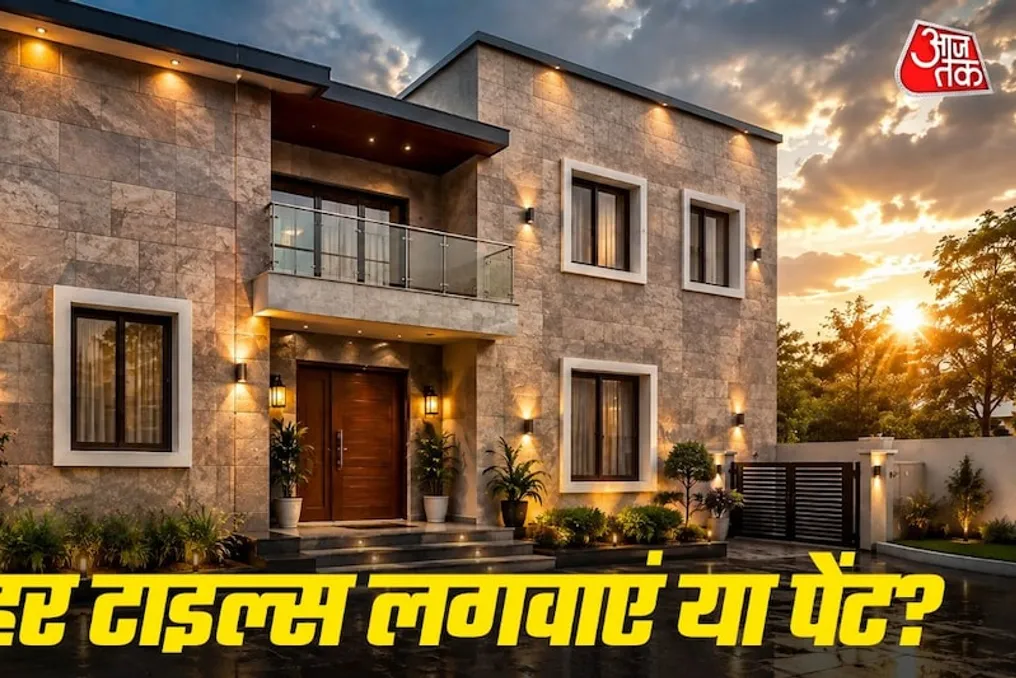
People often opt for painting exterior walls to make a house beautiful and attractive. However, recently, the trend of cladding exterior walls with tiles has gained popularity. Many believe that installing tiles will prevent the expense of repainting and keep the house looking new for a long time. Although this method looks aesthetically pleasing, it is important to understand whether tile cladding is truly a cost-effective solution, as this approach has both pros and potential difficulties.
After painting exterior walls, the color tends to fade over time due to exposure to rain, dust, sun, and humidity, which necessitates repainting. Installing tiles can significantly reduce this problem. Even if dirt and dust accumulate on the tiles, they can often be cleaned with water. This is why some consider tiles a more convenient alternative to paint for exterior walls.
Applying quality tiles to exterior walls allows the wall to be somewhat protected from direct exposure to rain and weather conditions. This is especially useful in areas with frequent precipitation. Nevertheless, achieving this effect critically depends on using suitable tiles and high-quality installation. It should be noted that the initial cost of tile installation may be higher than painting. This sum includes not only the price of the tiles themselves but also the costs of cement, adhesive, labor, and other fastening elements. If all exterior walls of the house are tiled, the initial budget can increase significantly. Therefore, deciding to install tiles solely based on future savings on painting is not universally correct for every house.
Tiles fixed to an exterior wall can crack due to weather conditions or external impact. Replacing one or two damaged tiles is possible, but finding matching tiles can be difficult if the original design is no longer produced. Furthermore, if the wall surface was not properly prepared before laying or unsuitable material was used, the tiles may start to detach over time. Instead of cladding every exterior wall, tiles can be used selectively, for example, around the main entrance, on a balcony, in a patio, or at the base of the house. This approach will improve the appearance and help control costs. If the budget is limited, high-quality waterproof paint may be a better substitute for full cladding.
There is no definitive answer to this question. If you have a good budget, the house is located in an area with high humidity and dust, and you prefer minimal maintenance in the long term, then tile cladding can be a good option. However, with a limited budget, tiling the entire house may be too expensive. The most important thing is that before making a decision, you must assess the condition of the wall, the weather conditions, the budget, and the quality of the tiles used. A more sensible choice will be based on long-term costs and maintenance, not just aesthetics.