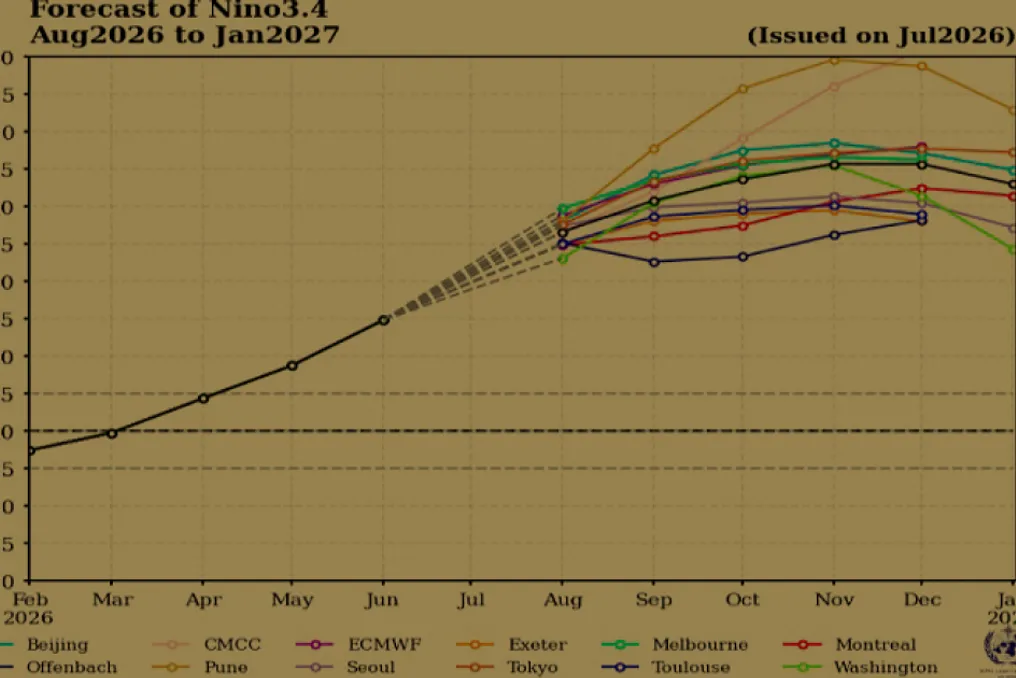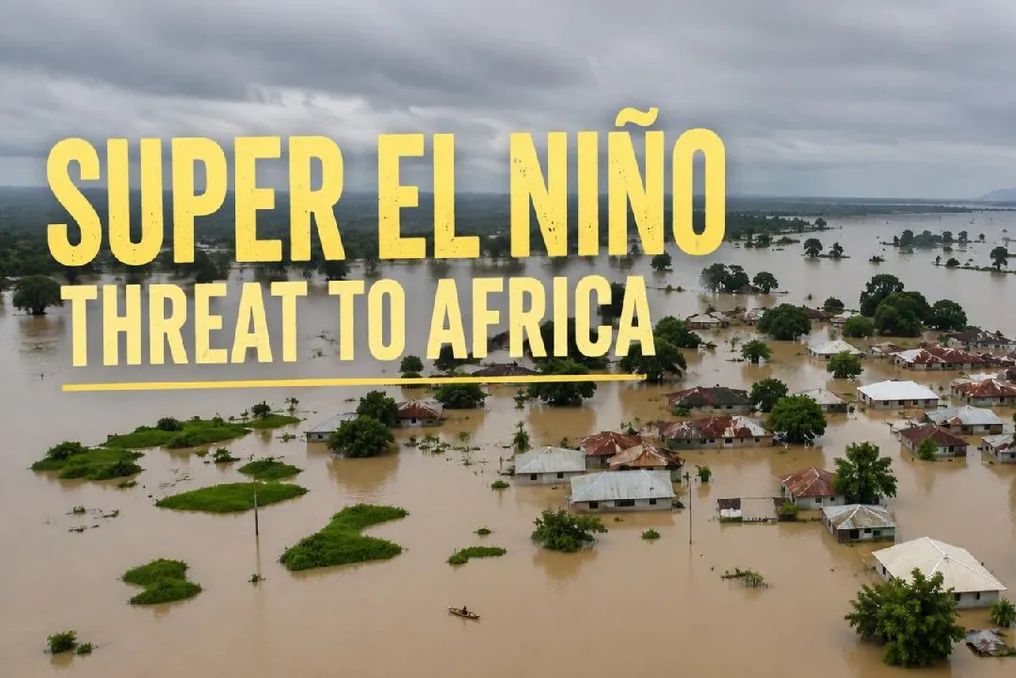
Africa is preparing for the possible impact of a powerful El Niño event, which may develop until 2026 and continue into 2027. This raises serious concerns regarding extreme weather conditions, food security, and livelihoods across the continent.
El Niño occurs when sea surface temperatures in the central and eastern tropical Pacific Ocean become abnormally high. Such warming can alter atmospheric circulation and disrupt weather patterns thousands of kilometers away.
According to Dr. James Mumina, a researcher at the University of Sussex, US meteorological services have observed changes over the Pacific Ocean. He noted that ocean warming causes a significant climate restructuring affecting East Africa, and there is a four-to-five percent probability of a super El Niño occurring.
What could be the consequences for Africa?
The impact of El Niño varies across the continent, depending on the region, season, and interaction with other climate systems. Specialists from the IGAD Climate Prediction and Applications Centre analyze decades of meteorological data, which is particularly important for countries like Kenya, Somalia, Uganda, Tanzania, Ethiopia, and South Sudan, where millions of people rely on seasonal rains for agriculture and livestock farming.
Hussain Said, a meteorologist at the IGAD Climate Prediction and Applications Centre, reported that in the upcoming October to December season—a crucial rainfall season for Kenya, Somalia, Southern Ethiopia, Uganda, Rwanda, Burundi, and Tanzania—El Niño is likely to lead to above-average precipitation.
Significant climatic variability is already observed in the region: some areas suffer from drought, while others face flooding and heavy rains. Said added that the signals for the October to December season are even stronger, and El Niño will have a more pronounced effect during this period compared to the current one, noting a greater than 80 percent probability of exceeding the average.
Turning forecasts into action
Climate scientists believe the key issue is not only the strength of El Niño but also the ability of governments and local communities to take timely measures to mitigate its effects. Seasonal forecasts allow authorities to pre-position emergency supplies, enhance flood preparedness, advise farmers on planting, protect water resources, and prepare medical facilities for potential emergencies.
Dr. Mumina pointed out the first gap: the distance between the forecast and decision-making. He recalled that during the OND 2023 season and the destructive prolonged rains from March to May 2024 in Kenya, which claimed about 300 lives and affected 42 of 47 counties, the forecasts were generally accurate, but the lag was in converting these forecasts into evacuations, preliminary stock placement, and proactive water resource management.
For communities themselves, timely and accessible information helps people make decisions before extreme weather events occur. Dr. Ahmed Amdihun, head of disaster risk management at IGAD, explained that IGAD aims to transform the region from a reactive, response-oriented approach to a proactive one. IGAD has developed a regional roadmap for preemptive actions, which implies starting actions based on forecasts rather than waiting for the impact of drought or floods on communities or their assets.
As scientists continue to monitor the development of El Niño conditions, governments across Africa are calling for increased preparedness and ensuring the timely dissemination of climate warnings to the public. The African Union has called for collective readiness through strengthening early warning systems, warning that inaction on climate issues could cost some African economies more than 5% of GDP.