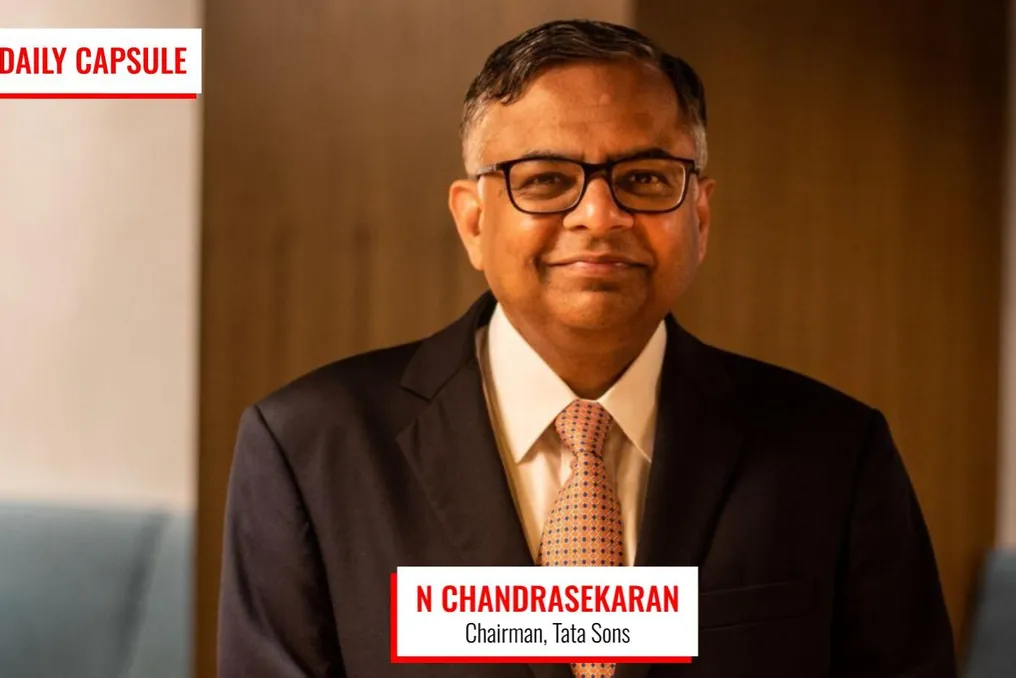
Investors in the Tata group experienced a shock on Wednesday after N. Chandrasekaran decided not to stand for re-election as chairman of Tata Sons, which triggered a sharp decline in shares of Tata group companies.
Chandrasekaran explained his decision by citing a lack of consensus among the members of the Tata Sons board of directors regarding the extension of his term. This event marks a turning point for the Tata group, which is reorienting towards new investment areas to remain competitive.
During his leadership, Chandra brought unusual stability to Bombay House and facilitated the group's entry into new markets, including semiconductors, electronics, and digital enterprises. Although his departure creates uncertainty, it may also provide the group with an opportunity to undergo a reset after a period of escalating disagreements within the board of directors.
Meanwhile, in the startup sector, Yulu attracted $93 million in a Series C funding round, which is the largest round for this company to date. The electric mobility startup plans to use the capital raised to expand its fleet to 200,000 electric vehicles and expand service centers.
In other news, Ola Electric received a revised five-year window for the PLI scheme, allowing it to receive cumulative incentives of up to ₹7,240 crore. The company focuses on creating a multi-chemical cell platform covering NMC (nickel-manganese-cobalt) and LFP (lithium-iron-phosphate) technologies. The company's energy product roadmap is also expected to be announced on Independence Day.
Key Highlights:
The IPO of Milky Mist Dairy Foods, amounting to ₹1,553 crore, was fully subscribed on Tuesday, the second day of the three-day offering, demonstrating high demand from non-institutional and retail investors. The subscription closing for the IPO is scheduled for Thursday, August 13. The offering includes a fresh issue of ₹1,428 crore and a sale offer of ₹125 crore from existing shareholders.
What does the Milky Mist IPO say about the company and its path to market?
Under the Surface:
In a broader context, N. Chandrasekaran, by deciding to step down and decline a new term at Tata Sons, is bringing to a close one of the most significant leadership periods in recent Indian corporate history. After taking over following the Cyrus Mistry scandal, Chandra became an island of stability for the group. Under his leadership, Tata strengthened its position in electronics, semiconductors, batteries, and digital business, continuing to rely on TCS as its primary source of revenue.
However, his later years were also marked by growing challenges: from transformations in Air India to expanding disagreements in Tata's governance structure. This makes the succession question more complex than simply finding a new chairman. The next leader will inherit a vast array of new projects and the task of restoring consensus at the highest level.