As the academic year resumes at the end of this month, educational institutions in the United Arab Emirates will begin applying a new age restriction date for student admission—December 31st, replacing the previous deadline of August 31st.
As the academic year resumes at the end of this month, educational institutions in the United Arab Emirates will begin applying a new age restriction date for student admission—December 31st, replacing the previous deadline of August 31st.
This change was announced by the Ministry of Education in December 2025 and is now being implemented in private schools in Dubai under the supervision of the Knowledge and Human Development Authority (KHDA). This update has forced schools to revise their admission procedures, increase classroom capacity, and initiate deeper discussions with parents regarding what constitutes a child's readiness for learning.
Parents of children born between September and December may find that their children can now qualify for a class different from the one originally planned, causing both excitement and concern across the emirate.
Schools throughout Dubai are actively working to update their registration and admission systems to comply with the new age requirements.
Sarah O'Ryan, Director and CEO of GEMS Wellington Academy – Silicon Oasis, stated that her school has been closely collaborating with families to ensure a smooth transition. She noted that they, along with the admissions team, have taken the revised age requirements into account in all registration and enrollment processes.
She added that applications are reviewed considering the updated criteria, with early years leaders participating in the review if a child's readiness or placement requires further analysis. The school's priority has remained providing clear guidance to families and ensuring the correct placement for each child to facilitate a successful start or continuation of their education.
Amy Falhi, Director of Dubai British School Mira, shared that her team invited affected children to undergo small-group assessments, which is unusual, to create a calm and supportive atmosphere. She explained that they adapted the assessment approach so that staff could consider developmental stages and the younger age of the children. Her main goal was to understand each child as an individual, rather than applying a universal standard.
The new policy presents particular complexity for children born between September 1st and December 31st, 2022. These children may be eligible for FS1 or FS2 under a one-time transitional arrangement. Schools are approaching these cases with great caution, conducting developmental readiness assessments instead of making decisions based solely on birth dates.
Colin Gerry, Director of Uptown International School, which follows the IB curriculum and accepts students from 45 days old up to Grade 12, emphasized the importance of viewing the child holistically. He stated that when necessary, placement discussions will take into account factors such as prior early learning experience, communication and language development, independence, socio-emotional development, confidence, and familiarity with the learning environment. He particularly highlighted the importance of this in early childhood, where developmental differences can be significant even among children of the same age.
A representative from Sunmarke School explained that every child undergoes a 'developmentally appropriate readiness assessment, supported by observations, parent discussions, and any available information about the child's previous experience and development.' This assessment covers personal, social, and emotional development; communication and language; physical development; independence and self-regulation; as well as overall readiness for the learning environment.
The new KHDA guidelines clearly state that enrollment decisions must be based on documented readiness assessments, the best interests of the child, and educational considerations, not merely on the availability of spots. Parental consent and proper documentation are also required.
Schools are taking this partnership seriously. At Dubai British School Mira, Amy mentioned that her team held a special meeting with parents, including members of the leadership team, to explain the changes and reassure families. Parents were offered the option to submit questions in advance via an online form, followed by a live Q&A session. She also added that individual calls and meetings were organized for parents wishing to discuss their child's specific circumstances. The aim was to provide parents with clear and accurate information, as well as personalized recommendations, so they feel confident in making the best decision for their child.
A representative from Sunmarke School supported this approach. He reported that families affected by the change will receive clear information about the new KHDA requirements, what this means for their child, and, where applicable, available transitional options. A clear distinction will be made between the right to a group and readiness for a specific placement.
The perspective of educators was echoed by a medical expert. Dr. Vishrut Singh, a pediatric specialist at Aster Clinic in Bur Dubai, stated that chronological age is a poor indicator of school readiness. He explained that before starting formal education, he assesses four aspects: the ability to separate from a parent without prolonged stress; basic self-regulation, such as tolerance for minor disappointment without tantrums; functional communication, including the ability to express needs; and toilet independence and basic self-care. He stressed that readiness is not about knowing the alphabet, but about the child's ability to function in a group outside the primary caregiver.
Dr. Vishrut advised parents of children born between September and December not to make decisions based solely on the birth month. He suggested asking themselves: 'Is my child developmentally ready to participate, learn, and feel comfortable in a classroom?' Parents should discuss the child's communication, independence, social interaction, attention, and emotional regulation with both the pediatrician and the school. He also noted that there is no universal rule. 'If a child thrives in preschool, communicates well, handles separation, and participates appropriately with peers, there may be no reason for delay,' he said.
He also outlined signs that might indicate a child is not ready for formal schooling, regardless of the official cutoff date: persistent severe separation anxiety, limited expressive language, or difficulty following simple multi-step instructions; poor emotional regulation—frequent tantrums that do not subside with redirection; lack of independent toileting skills; avoidance or significant difficulty in group play; a short attention span even for favorite activities; fine motor delays causing frustration when completing basic tasks in class. He advised that none of these signs alone constitute grounds for refusal, but their combination requires a formal readiness assessment before setting a start date.
Since each group now has a wider age range, schools are placing special emphasis on supporting younger children academically, socially, and emotionally. Sarah noted that her school's approach to adaptive teaching allows staff to respond to children's individual starting points, regardless of age. She explained that continuous observation and assessment help teachers identify strengths and next steps, adapting teaching, environment, and support accordingly. For younger children, special attention may be paid to communication and language, personal and social development, independence, self-regulation, and physical development.
The Sunmarke representative stated that teachers constantly observe, assess, and adapt conditions according to what individual children know, understand, and can do. They affirmed that the curriculum will remain personalized so that children receive appropriate support and challenges based on their own starting points. It is important to note that they will not lower expectations for younger children; they will adapt the path, not limit the final goal.
Amy added that high-quality early childhood practice is inherently responsive to children's individual developmental stages. She emphasized that their focus will not be on rushing younger children just because they are in a certain group, but on providing sufficient time, quality interaction, purposeful play, and appropriate instructional guidance to allow them to build a strong foundation.
As the new academic year begins, educators and doctors agree: the date of birth is just a number. What truly matters is whether the child is happy, confident, and ready to learn. Because schools offer personalized assessments, parents are viewed as partners, and pediatricians provide consultation, families across the UAE have more support than ever to make the right choice for their little ones.
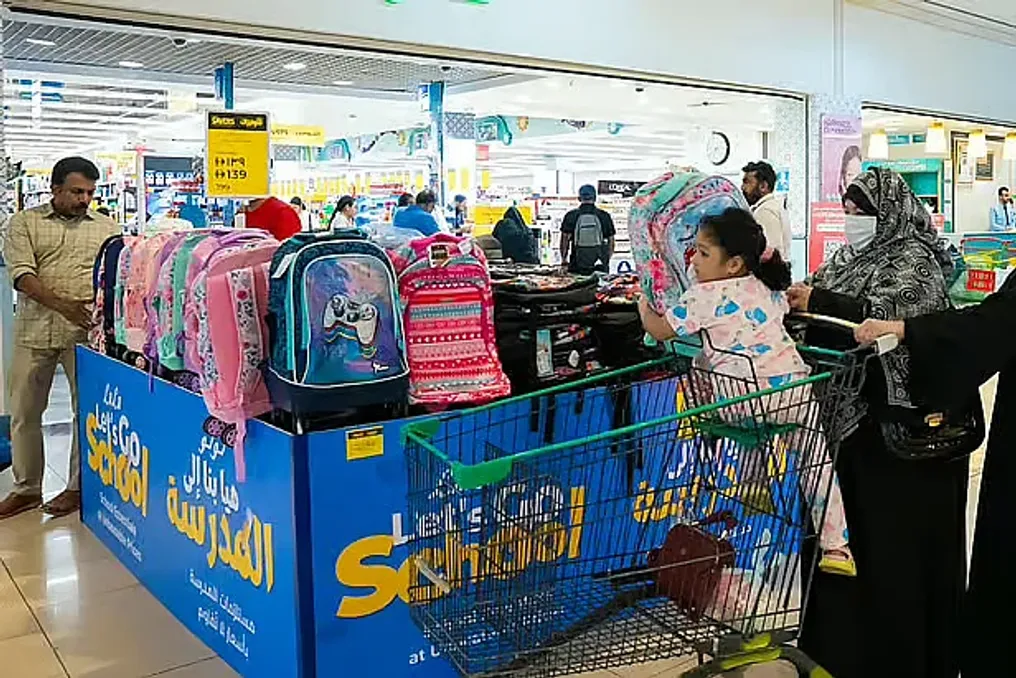
As the 2026-2027 academic year approaches, parents are seeking ways to manage the expenses associated with the start of the school year. These methods include price comparison, budgeting, reusing school supplies, and utilizing discounts.
Om Hasher, a mother of two children from Dubai, begins the process by checking the school supplies already available at home before visiting stores. She reviews her children's items from the previous year and creates a list only of what needs replacement. She notes that she separates purchases into necessary and optional items, setting a budget for each child to avoid buying unnecessary or duplicate goods. Sometimes she buys certain supplies in bulk if it is more cost-effective, especially those that will be used throughout the year.
Planning has also helped other parents distribute costs and avoid spontaneous purchases. Maryam Hajji Mohammed, a mother of two daughters entering the 7th and 4th grades in Ras Al Khaimah, began preparing for the new academic year as early as July. Before ordering uniforms, she checked with the school and teachers whether the uniform and logos would remain unchanged. She then ordered official and sports uniforms according to her daughters' measurements, which allowed her to choose a longer and more modest style instead of buying ready-made clothes in a larger size.
Maryam also donated her daughter's old school uniform to a local Charity Fund that organizes exhibitions for needy students, thereby giving the clothing a second life instead of letting it sit unused at home. Regarding stationery, bags, labels, and other accessories, she preferred to shop online. This allowed her daughters to choose what they wanted using filters to compare prices. Living in an area with limited access to nearby shops, she noted that online shopping also helped avoid crowded stores, parking issues, and long queues during the rush at the beginning of the school year.
Price comparison across different stores and online platforms is part of Om Hasher's approach. She has noticed significant differences in the prices of school bags, lunch boxes, colored supplies, and stationery featuring popular characters. She emphasizes that sometimes items of the same quality are available much cheaper in another store, so she does not buy from the first place she finds.
For Amna, another mother from Dubai with five daughters, checking last year's supplies is also the starting point for her back-to-school purchases. She first inspects all the items from the previous year, separating damaged or unnecessary ones, and then buys only what is missing. Amna also monitors online promotions and recently took advantage of discounts on school bags, lunch boxes, and other necessities. However, she believes that product quality remains an important criterion when deciding if a discount is worth it.
Om Hasher warns parents against blindly following large discounts, advising them to check the original price and compare it with prices elsewhere before making a purchase decision. She argues that not every discount means the price is truly lower. Furthermore, she asks herself questions about the actual necessity of the item, its quality, and its potential use. If the item is already owned or not needed, she will not buy it, even at a big discount, because buying something unnecessary is not saving money.
Reusing supplies is another common way to reduce costs. Om Hasher says that school bags, pencil cases, and lunch boxes can often last for more than one year if they are in good condition, and leftover paints, pens, folders, and rulers can also be reused. Amna agrees that this applies to school bags, although children sometimes want to change them. She adds that bags can remain useful outside of class, for example, for carrying toys and other items during family outings.
Maryam also tries to minimize school supply waste. At home, she keeps partially used notebooks, colored pencils, stationery, and craft materials in a special corner for her daughters' drawing and other activities. Items that are in good condition but no longer needed are either donated or given to relatives and friends. Such habits help extend the lifespan of school supplies and reduce the need to replace everything at the beginning of each school year.
Overall, the approach in these three families is not about completely foregoing spending, but about making every purchase meaningful: by checking existing stock, planning ahead, comparing prices, evaluating discounts, and finding ways to reuse or pass on items that are still in good condition.
As schools in the United Arab Emirates prepare to resume classes in the last week of August, parents begin preparing for numerous events associated with the start of the academic year. After a quiet July, many families go through a period of transition that includes completing summer assignments and adjusting sleep schedules.
However, the most significant change most families face is the need to plan their finances considering the start of the school year. From tuition fees and uniforms to stationery and extracurricular activities—the start of the school year creates serious financial difficulties for many parents. Nevertheless, experts argue that with proper planning, this month can pass easily.
Below are approximate estimates and practical tips to help plan the 2026-2027 academic year without excessive spending. Tuition fees and related expenses are one of the largest fixed costs for families in the UAE. Although the main cost is tuition, the total amount can increase by 10–25 percent after including all additional charges.
According to Mike Cody, CEO and Private Equity Partner at Skybound Wealth Management, one of the most important steps parents should take is financial planning for education. This will help avoid panic and rushing to find money at the last minute.
He advised parents to create an education cash flow calendar that accounts for all known payments: registration fees, tuition, transportation, uniform, books, devices, events, and trips. Next, subtract any confirmed employer subsidy, divide the remaining amount by the number of paychecks until the payment deadline, and automatically transfer this amount to a separate education account on payday.
The cost of schooling in the UAE varies greatly due to the presence of different categories of schools catering to various nationalities. Below is a general overview of the types of schools in the country and their average annual fees.
Budget Schools
Annual fee: AED 4,100 to AED 30,000. Some schools in the UAE, such as Crescent English School following the CBSE curriculum in Dubai, list a total annual fee of AED 3,628 for Grade 1. A British curriculum school, Al Sadiq Islamic English School, charges from AED 10,000 to AED 16,000 per year, including books and uniform.
Mid-Range Schools
Annual fee: AED 35,000 to AED 60,000. For example, Arcadi Global School in Dubai charges from AED 25,865 for FS1 to AED 33,788 for Grade 9, while GEMS Founders School in Al Mizhar charges from AED 24,877 for FS1 to AED 37,856 for Grade 13. These schools may have additional costs for optional activities and technology.
Elite Premium Schools
Annual fee: AED 55,000 to AED 95,000+. The North London Collegiate School in Dubai may require up to AED 143,681 for Grade 12. Premium IB schools can also exceed AED 110,000 annually.
Mike advised parents to choose a school based on its long-term cost, not just the first-year tuition fee, as these costs usually increase annually and with grade level.
Many parents are shocked when 'additional' school fees are added to the bill. For the 2026-2027 academic year, parents can expect additional expenses ranging from AED 2,000 to AED 10,000 per child just for supplementary costs at the start of the school year, although this amount may be higher depending on preferences.
Approximate estimate: AED 600 to AED 2,000 per child. Details: A complete set of two uniforms can cost around AED 600. However, if parents add sports kits, blazers, and shoes, the total amount quickly increases. Some parents reported to Khaleej Times that they spend nearly AED 5,000 annually just on uniforms at some schools.
Approximate estimate: AED 1,500 to AED 4,000. Details: Textbooks can be very expensive; middle school parents report spending up to AED 1,200 for a set of textbooks. Stationery and a new backpack can cost AED 300 to AED 500. Many schools also require students to have learning devices, which can significantly increase the total bill.
Approximate estimate: AED 150 to AED 500. Details: A quality lunchbox and water bottle can cost from AED 50 to over AED 400. Some parents advise avoiding the 'trendy expensive bottles' and choosing local insulated brands.
Approximate estimate: AED 1,000 to AED 8,000+ per year. Details: Many schools offer some free activities, but premium programs in sports, robotics, or performing arts incur costs. KHDA data shows that optional extracurricular activities can range from AED 100 to AED 8,000 per year. When budgeting for ECAs, Mike's expert advice is key: 'Think like an investor, not just a parent: determine the future cost, date, and currency, and then fund it automatically.'
Based on Mike's advice and UAE parents' data, here is a step-by-step budgeting plan:
August does not have to be a month of financial anxiety. By understanding the true costs, planning in advance, and using smart saving tips, such as buying second-hand items, parents can approach the 2026-2027 academic year confidently and with control over the family budget.
Mike concluded: 'Education matters, but the plan will not succeed if it depletes the emergency fund or foregoes retirement savings. It only postpones the financial pressure to the next generation.'