Residents of the United Arab Emirates may begin to notice gradual changes in the weather in the coming weeks as the country exits the most intense phase of summer, but cooler conditions will not arrive suddenly.
Residents of the United Arab Emirates may begin to notice gradual changes in the weather in the coming weeks as the country exits the most intense phase of summer, but cooler conditions will not arrive suddenly.
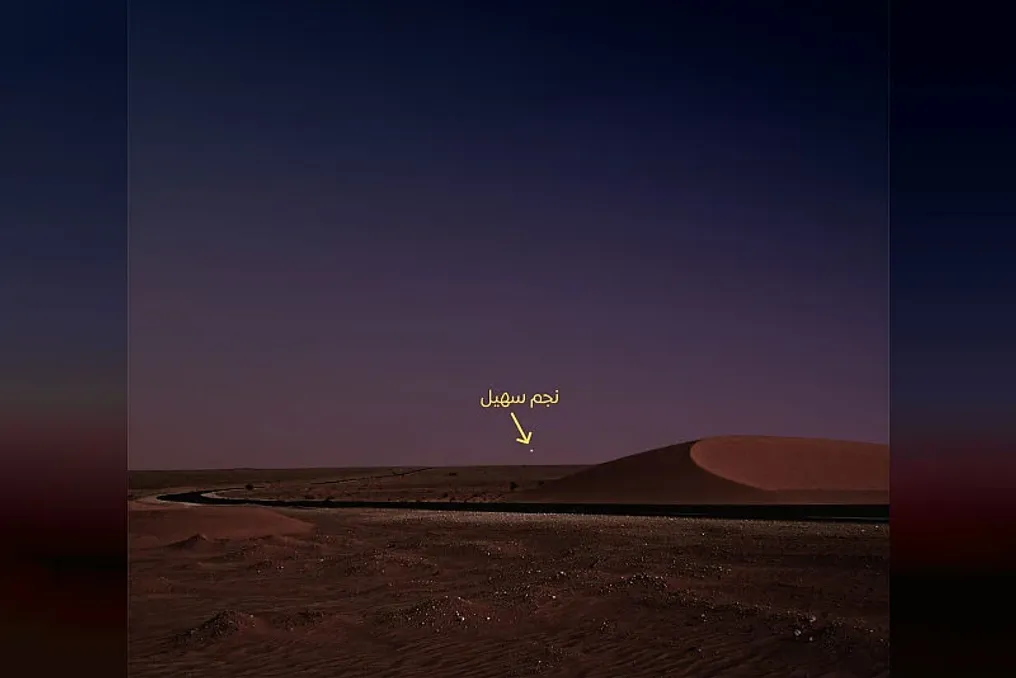
The appearance of the star Suhail, expected on August 24th, has long been considered a seasonal marker in the region. Ibrahim Al Jarwan, Chairman of the Emirates Astronomy Society, noted that the days following this star's rising should bring a steady, rather than sharp, drop in temperature.
Al Jarwan emphasized that this is not about cold weather, but rather that people will feel a change in the atmosphere and a softening of conditions. This change should become more noticeable around the time Suhail rises, which will be in about 10 days. Although actual temperatures are likely to start dropping, high humidity may occasionally make conditions uncomfortable.
The UAE has just experienced the peak of the traditional summer heat period, known locally as Ayyam Al Ghais, which usually lasts about six weeks, starting from early July until around August 10th. During this period, the highest temperatures in the UAE peaked, exceeding 51°C on August 5th. Nighttime lows also rose to 35°C.
As temperatures begin to fall, an increase in humidity is expected. Al Jarwan explained that this means residents may still experience a strong feeling of heat even if thermometer readings are lower than in the height of summer.
He clarified that humid summer air contains significantly more moisture than equally humid winter air, making conditions more exhausting. At 40°C and 80% humidity, a cubic meter of air can contain about 50 grams of water, compared to less than 15 grams at 20°C with the same relative humidity.
September and October are typically among the most humid months in the UAE. Increased humidity may also lead to morning fog and dew, with the first signs possible in late August and becoming more frequent in September.
Residents should also not rule out short periods of intense heat. Al Jarwan mentioned the traditional concept of Zafarat Al Ghais—heat spikes in late summer that can occur after the peak season ends.
He noted that such episodes do not change the overall seasonal trend but can cause a temporary rise in temperature until conditions stabilize around the autumn equinox on September 23rd. After this evening, it should gradually become more pleasant. Cooler daytime conditions will take longer to arrive, and a more noticeable softening is expected in November, with the overall seasonal cooling trend continuing until mid-December.
Suhail, known internationally as Canopus, does not cause weather changes by itself. Rather, its appearance has served as a reliable marker in the traditional Arabic calendar for generations, coinciding with the gradual transition from peak summer conditions.
Al Jarwan also stressed that traditional references to constellations such as Virgo, Libra, and Scorpius are used as indicators of time and season, not as factors influencing the weather. In local seasonal knowledge, these markers generally correspond to the months of September, October, and November.
At present, the worst summer heat is beginning to recede, but patience will be required. Temperatures may drop slightly in the coming weeks, while humidity, fog, and occasional heat spells remain part of the transition to a cooler season.
The star Suhail is expected to rise over the skies of the United Arab Emirates (UAE) on August 24. This event has been observed for generations as a sign that the most intense summer heat is behind.
The arrival of this star is particularly anticipated after another unbearably hot summer in the UAE, when temperatures exceeded 50°C. Ibrahim Al Jarwan, chairman of the Emirates Astronomy Society, noted that the appearance of Suhail marks the beginning of a transitional period lasting about 40 days, known as Sufriya. During this time, the country gradually exits the state of the most intense summer heat.
There is an old Arabic proverb associated with this phenomenon: 'If Suhail rises, the night will cool.' However, the validity of this belief is questioned: can the appearance of the star truly inform the residents of the UAE about the approaching cooler weather?
No, the star plays no physical role in cooling the UAE. Suhail, known internationally as Canopus, is located approximately 300 light-years from Earth. Its appearance cannot alter the temperature, wind, humidity, or any other element of the weather on Earth.
Professor Hamid Al Naimi, director general of the Sharjah Academy of Astronomy, Space Sciences and Technologies, previously stated that Suhail 'has absolutely nothing to do' with weather changes, although its appearance coincides with the start of seasonal changes. In fact, Suhail functions as a natural calendar in the sky; it does not end the summer, but appears around the time the summer heat begins to subside.
Residents should not expect to wake up to sharply reduced temperatures on August 25. Al Jarwan compared this process to a cooking pot that remains hot after the fire beneath it is turned off. The intensity of heating may begin to decrease, but the accumulated heat persists. This is why temperatures may remain high until September, even after Suhail appears.
Changes are traditionally noticed first at night. The Arabic proverb about Suhail specifically states that the night cools, not that the summer temperatures completely disappear. After Suhail appears, the UAE enters the Sufriya transitional period, which lasts about 40 days. Weather conditions may fluctuate during this time before stabilizing around mid-October with the onset of the traditional season of Wasm. Winter arrives much later.
Stars have provided something that the weather itself could not—regularity. Although one year might bring rain earlier and another later, temperatures fluctuate, and winds change, the visible seasonal movements of bright stars repeat with exceptional predictability. Thanks to this, communities have observed for generations that the appearance of a certain star at dawn usually precedes certain changes.
Suhail has become one of the most important celestial landmarks throughout Arabia. Academic studies of traditional Arab systems demonstrate how deeply astronomical observations were linked to seasons. In the UAE, Suhail is closely connected to the traditional astronomical calendar known as Al Durur. This ancient system divides the year into 36 ten-day periods, each associated with astronomical and climatic conditions. This allowed people to determine suitable times for sowing and harvesting, predict winds and rains, as well as fishing and aquaculture seasons, and the migration of wild and marine birds.
The calculations of Al Durur are tied to the rising of Suhail. The Sheikh Zayed Mosque center even formed a special committee to monitor and document this star due to its importance for the traditional calendar, as well as for astronomy and meteorology. The work of this center includes entities such as the National Center of Meteorology, the Sharjah Academy of Astronomy, Space Sciences and Technologies, the Emirates Astronomy Society, and the International Astronomical Center.
This tradition is actively preserved today. Later publications by the 'Durur' and 'Tawali' centers record seasonal cycles, star risings, prevailing winds, sea conditions, lunar phases, and tides, and their heritage programs specifically include the ancient practice of observing Suhail. Thus, before modern forecasts, the discovery of Suhail was not just a cultural celebration; it helped people make decisions about future actions. Farmers could use celestial calendars to plan land cultivation. Fishermen and sailors could link stars to changing sea conditions and seasons. People traveling overland could determine suitable periods for journeys and livestock grazing. The arrival of the star was also linked to the agricultural cycle, harvest dates, and preparation for falconry and raptor migration. Modern meteorology measures climate transitions using satellites, weather stations, and computer models, but the ancestors of the UAE simply looked at the sky.
According to astronomical experts, the rising of the star Al-Mirzam, which traditionally marks the peak of summer heat, signals the beginning of a transitional weather period in the United Arab Emirates (UAE).
This star, also known as Sirius, the brightest star in the sky, recently appeared over the eastern horizon, indicating the concluding phase of intense summer heat, commonly referred to as 'Jumhur Al-Qait' (the embers of summer).
On Friday, temperatures in the UAE reached up to 50°C, with the highest recorded by the National Center of Meteorology (NCM) being in Al-Shahmah, Abu Dhabi, at 14:30.
Ibrahim Al-Jarwan, Chairman of the Emirates Astronomy Society and a member of the Arab Union of Astronomy and Space Sciences, explained that the appearance of Al-Mirzam is a significant astronomical event that has long served as a guide for residents of the Arabian Peninsula.
Al-Jarwan stated: 'Al-Mirzam is scientifically known as Sirius, the brightest star in the sky. After disappearing for about four weeks at the end of June, it now rises in the east approximately 40–50 minutes before dawn.'
Despite the historical link between the star's appearance and the hottest time of the year, it also brings changes in atmospheric conditions. Al-Jarwan noted that the UAE will soon face an influx of highly humid air masses.
He added: 'This humidity contributes to the formation of 'Al-Ruwaya' clouds (local summer clouds), which are expected to increase in the coming period. After Al-Mirzam, dry conditions will gradually give way to high humidity.'
For generations, UAE residents have relied on astronomical observations to manage their daily lives, including agriculture and maritime activities. Historically, the rising of Al-Mirzam coincided with the best season for pearl diving. Although this practice has largely faded, the star's appearance remains important for farmers as it coincides with the peak of fig harvesting.
Al-Jarwan explained: 'Farmers have always associated the best varieties of figs and the highest yields with the time of Al-Mirzam. There is a traditional saying that when Al-Mirzam rises, baskets of harvest are filled to the brim with figs.'
Despite expectations of cooler weather, Al-Jarwan warned that the transition will not happen instantly. He referenced a traditional Emirati saying by late Farid bin Butti Al-Muhairbi, who compared the end of summer heat to turning off the fire under a pot.
'Just as a pot remains hot for some time after the fire is extinguished, the heat persists even when the star Suhail begins to rise, following Al-Mirzam. The intensity of the heat lessens, but the warmth remains,' Al-Jarwan specified.
He clarified that the real cooling in the region usually occurs only in November. However, the period from the rising of the star Suhail until November represents a transitional phase characterized by temperature fluctuations.
Looking ahead, Al-Jarwan shared an optimistic forecast for the upcoming season. He concluded that 'there are signs, particularly related to El Niño, suggesting a promising and favorable rainy season for the Arabian Peninsula this year.'