The United Forum for Minorities, which was led by a delegation of church representatives who met with Home Minister Amit Shah last week, characterized the government's decision to send the Foreign Contribution Regulation Act (FCRA Amendment Bill 2026) to the Joint Parliamentary Committee as a 'positive step,' providing a 'valuable opportunity for a comprehensive, point-by-point review of its provisions and implications.'
Previously, several church organizations gathered and strongly urged Home Minister Amit Shah either to withdraw the amendment to the Foreign Contribution Regulation Act or to refer it to the joint parliamentary committee for thorough examination.
The delegation, representing Catholic, Protestant, and Orthodox churches from across India and organized under the aegis of the United Forum for Minorities, chaired by DMK MP P. Wilson, demanded either the complete withdrawal of the bill or its referral to the Joint Parliamentary Committee along with a review of the main FCRA 2010 Act.
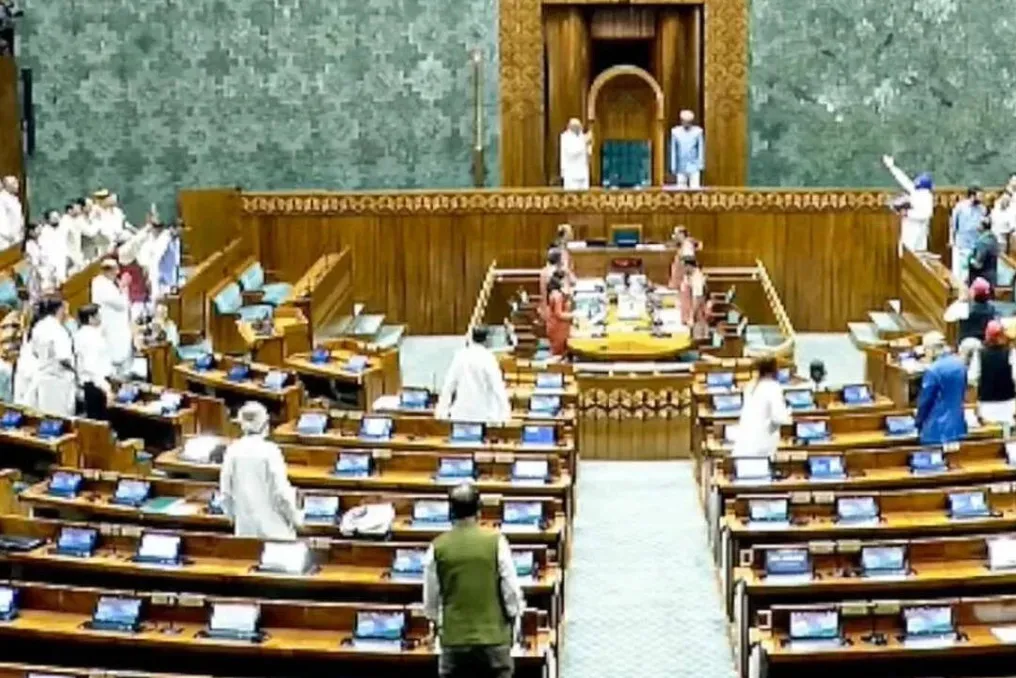
On Wednesday, P. Wilson thanked DMK President M. K. Stalin and all opposition parties in the Lok Sabha in a statement on X for their unified demand to withdraw the FCRA 2026 amendment, despite the majority decision to refer it to the Joint Parliamentary Committee.
He added: 'Although the government did not agree to completely withdraw the FCRA 2026 law, the Union Government's decision to send the bill to the Joint Parliamentary Committee is a positive step.' He emphasized that this is a delicate issue requiring a balance between the government's power in financial control and the minority's right to receive charitable donations. He noted that this funding supports schools, colleges, hospitals, and other public service institutions, and the government would be unable to fund this activity if the receipts ceased.
Wilson stated that referring the bill to the JPC opens an important opportunity for detailed analysis of its provisions and consequences. He expressed hope that the Committee would listen to all stakeholders and carefully consider the constitutional, legal, and practical issues raised by religious, educational, medical, charitable, and civil institutions.
The National Council of Churches in India, General Secretary Asir Ebenezer, welcomed the bill and announced that they are ready to engage with the 'JPC in preparing a report for the Winter Session.' The NCCI was part of the delegation that met with the Home Minister as part of the United Forum for Minorities.
He added on behalf of the 'historic and nationally affiliated Protestant and Orthodox churches in India, representing the religious and missionary aspirations of 19 million Christians,' that they thank the Home Minister and the government for their attention to the Christian community's request.