A survey conducted by MapBiomas, using satellite imagery, revealed that the area dedicated to agriculture and livestock farming in Brazilian territory increased from 18% to 32% between 1985 and 2025.
Over these 41 years, approximately one-third of the national territory experienced some alteration in its land cover or use, while 67% remained stable. In total, 241 million hectares underwent transitions in land cover and use, of which 136 million hectares of native vegetation were converted into agricultural areas.
The Amazon was one of the most affected regions, losing 53.9 million hectares of native vegetation during this period. The Cerrado also registered significant losses, totaling 51.7 million hectares, representing the largest absolute declines among the biomes, according to MapBiomas. In percentage terms, Cerrado and Pampa showed the largest reductions, reaching 34% and 32%, respectively. The Atlantic Forest saw a decrease of 12%, but still has the smallest proportion of native vegetation.
Despite the general trend of loss, the rate of modification of natural areas has recently slowed down. In 2025, Brazil recorded less than one million hectares deforested, which represents a 20.6% drop compared to 2024 and marks the first recording below one million hectares since the start of the MapBiomas Alerta series in 2019.
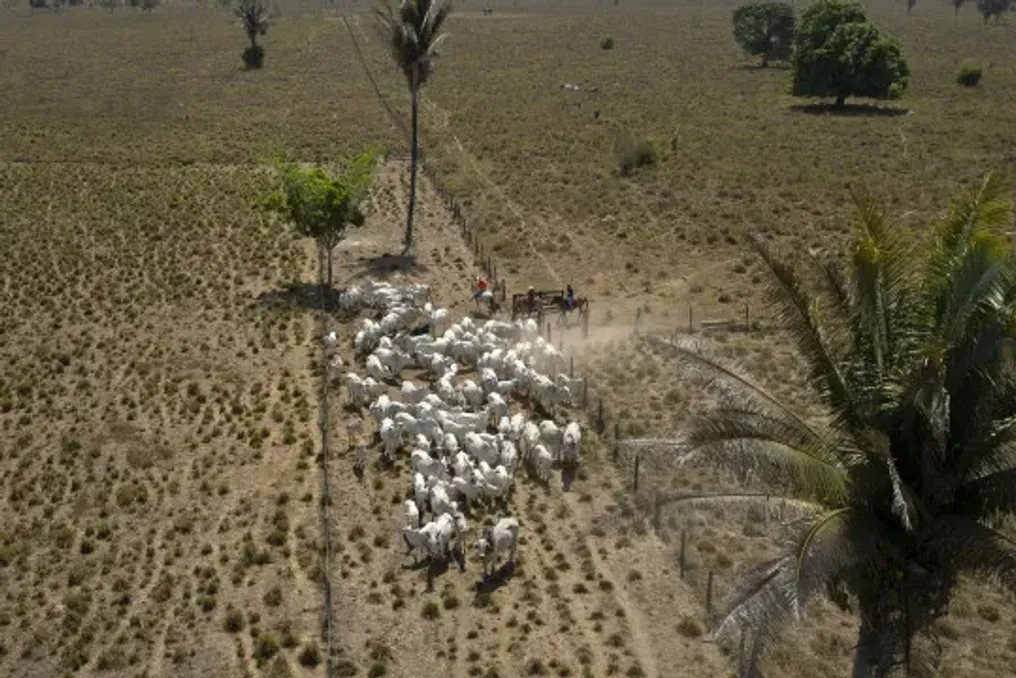
In 2025, agriculture and livestock farming occupied 273.3 million hectares, a significant increase compared to the 150.2 million hectares recorded in 1985. Of this total, pastures accounted for 60.6% of the area, and agriculture occupied 66.5 million hectares.
The collected data warns of the greater vulnerability of land use to extreme weather events, such as floods and droughts, whose effects are intensified during El Niño years. Cross-analysis of land cover and use maps with precipitation data demonstrates that the impacts of El Niño are more severe in regions dominated by agriculture and livestock farming than in areas covered by forests.
This disparity is particularly notable in the Amazon, according to the survey, which examined three recent high-intensity El Niño episodes: 1997/98, 2015/16, and 2023/24. The results indicate that Brazilian biomes are facing progressively more intense droughts or rains during stronger El Niño periods, a situation expected for 2026. Among the three analyzed events, the Amazon showed the largest precipitation deficit among all biomes.