In 1972, then Chinese Premier Zhou Enlai presented White Rabbit milk candies as a state gift to visiting US President Richard Nixon. More than half a century later, this Shanghai sweet is undergoing a new journey abroad, and this journey is happening through its packaging.
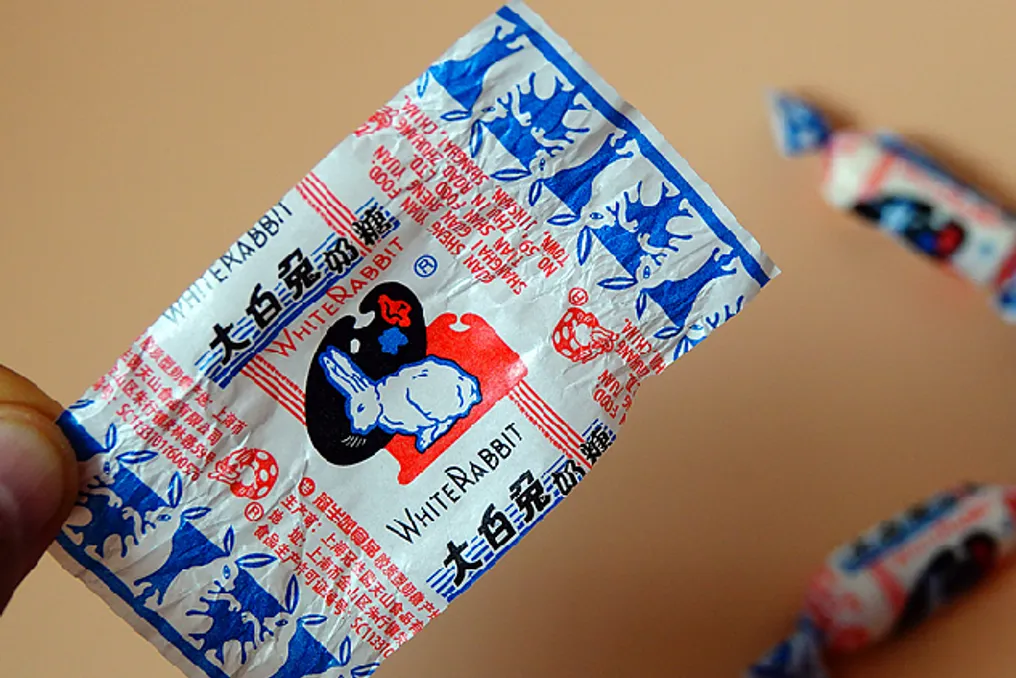
Earlier this month, a user on X posted two photos. One showed the White Rabbit candy in its familiar red-blue-white wrapper, and the other showed the paper unfolded and laid flat. The user noted: 'It is an absolute masterpiece of graphic design...'
Within days, this post garnered about 6 million views and 265 thousand likes. Comments quickly filled with images of tattoos, T-shirts, phone cases, and White Rabbit wrappers saved in notebooks.
These two moments demonstrate different aspects of how Chinese culture spreads. If White Rabbit was initially presented as a diplomatic gift, now ordinary people are opening, sharing, and reinterpreting it.
The Discovered Design
For many Chinese people, the excitement abroad was unexpected. What was praised as a design discovery was merely the wrapper of a children's candy—one that was previously folded into school textbooks to preserve the faint milky aroma, or thrown away after eating the candy.
Now, this item, deeply rooted in the cultural consciousness of the Chinese people, has entered a different sphere where people value it, collect it, and make it their own. This is a very encouraging development.
White Rabbit adopted its current name and rabbit design in 1959, replacing an earlier Mickey Mouse design used by the Shanghai confectionery factory. Its wrapper received a national packaging award in 1983 and has been used ever since.
When unfolded, it resembles a miniature poster. A white rabbit sits in the center against a red background. Rows of small blue-and-white rabbits run along the sides, and Chinese and English characters occupy the remaining space.
Zhang Di, a professor at Peking University who studies transcultural content dissemination, told The Straits Times that the visual language of this design does not require special cultural knowledge to understand and is aesthetically accessible to different cultures. Viewers may be attracted to the image even before they learn its history.
The history adds another layer of meaning to the image. In China, White Rabbit evokes memories of an era of candy shortages, when it was a special treat during family gatherings and holidays, and its milky taste and chewy texture delighted young children. In contrast, today's young consumers abroad often encounter it in a different context. It seems fresh to them precisely because its classic design has stood the test of time: it is a specimen of commercial art untouched by the polished uniformity of many modern packages.
Its handmade quality can also attract attention. In an era where artificial intelligence can create a polished image in seconds, the hand-drawn rabbit and old-fashioned letters carry the imprint of a specific designer and era. Wu Weihua, a professor at the China University of Communications, believes that vintage designs with cultural depth can resonate in an era increasingly filled with AI-generated content.