In over 600 million years, Earth will lose one of the most impressive celestial sights. The ongoing, albeit subtle, transformation will permanently change how the Sun, Moon, and Earth align.
The occurrence of a total solar eclipse depends on a coincidence: from Earth's perspective, the apparent size of the Moon must be very close to the size of the Sun. However, the outcome of this alignment depends on the distance of our natural satellite relative to the planet.
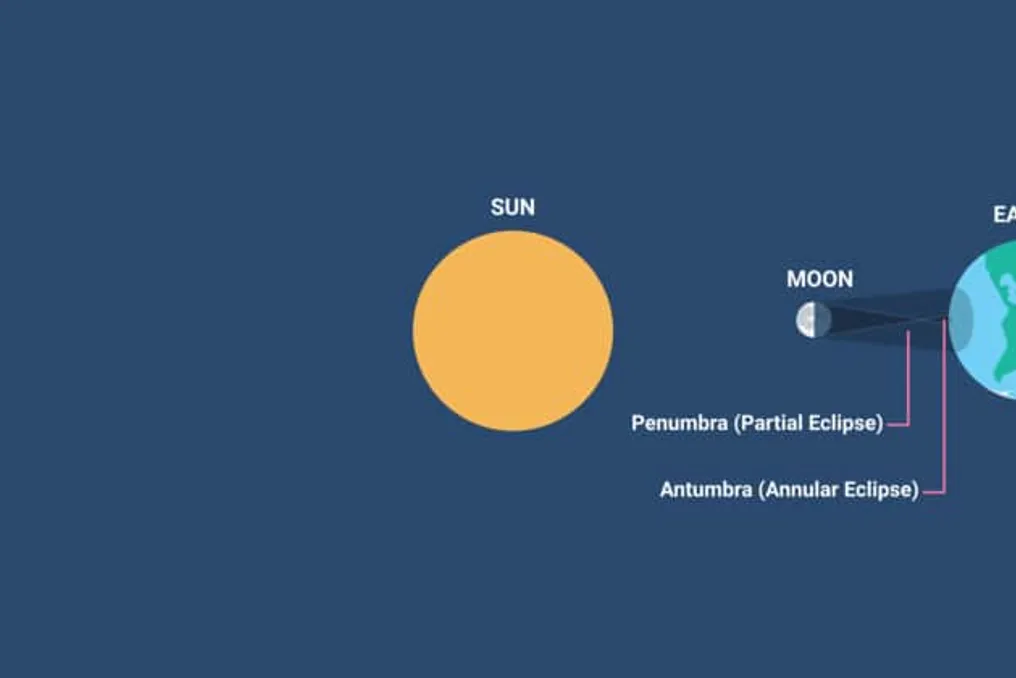
During a partial eclipse, only part of the star is covered. In an annular eclipse, the Moon is farther away and appears too small to completely hide the solar disk, leaving a visible glowing ring. A total eclipse occurs when the Moon completely covers the Sun for observers in its darkest shadow zone, revealing the solar corona. There is also a hybrid eclipse—a rare type where the phenomenon varies between annular and total depending on the observer's location.
This Thursday (the 12th), a total solar eclipse will be observed in parts of the Arctic, Greenland, Iceland, Spain, and Portugal, while other regions of Europe, Africa, and North America will only see a partial version.
The reason this phenomenon is not visible in locations outside this trajectory, such as Brazil, lies in the cosmic geometry itself, explains Josina Nascimento, an astronomer from the National Observatory (ON) with over 45 years of experience and head of the Communication and Science Popularization Department (DICOP).
Details from the specialist
In an interview with Olhar Digital, the specialist specified that the zone of totality is narrow and no wider than 300 kilometers. She explained that 'the Sun illuminates the Moon, which casts a tiny shadow on Earth, which is the complete opposite of a lunar eclipse, when the Moon enters Earth's large shadow.'
The problem is that this dynamic is changing due to the Moon's recession from Earth. Since the lunar orbit is elliptical, the current distance already fluctuates approximately between 356 thousand kilometers at perigee (closest point) and more than 406 thousand kilometers at apogee (farthest point).
Laser measurements directed at reflectors placed on the Moon's surface as part of the Apollo missions confirm that the satellite is receding by an average of 3.8 centimeters per year. This movement is the result of gravitational interaction and tidal forces between the two bodies.
As the Moon moves farther away, it begins to appear smaller in our sky. As the astronomer notes, there will come a time when even a perfect alignment cannot completely cover the solar disk. Josina confirms: 'Since the Moon is moving away from Earth, it will never again have an apparent diameter equal to or greater than that of the Sun. Therefore, at a certain point, we will no longer observe a total solar eclipse.' She adds that 'this will not happen now; there is still a long time left.'
In the book 'Mais dicas de astronomia matemática' (2002), astronomer Jean Meus calculated that if the current rate of recession continues, total solar eclipses will cease to occur in approximately 1.21 billion years.
However, this timeframe is not exact. The rate of recession changes throughout geological epochs, and the Earth's orbit itself undergoes changes. Therefore, the transition will be gradual: between 620 million and 1.21 billion years in the future, there will be periods when totality is still possible, and others when it will temporarily disappear.
Ultimately, the Moon will become permanently too distant to cover the Sun. Solar eclipses will continue to exist in partial and annular forms, but the total phase will become merely a memory of Earth's astronomical past.