
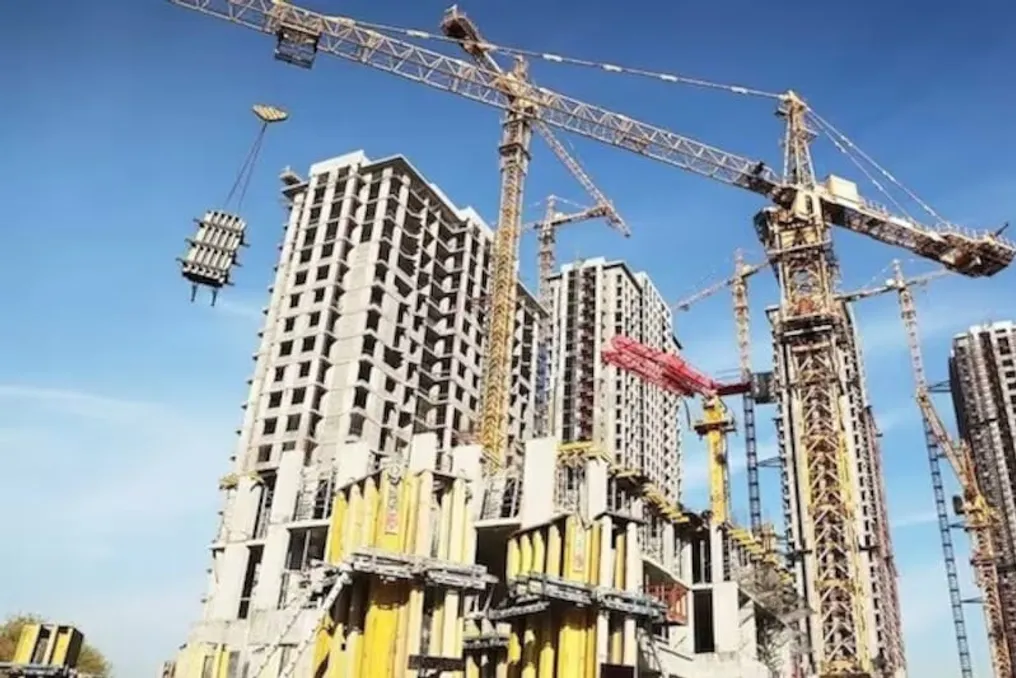
Delhi Deputy Governor Tarnajit Singh approved the 'Delhi Master Plan 2047' on Wednesday. This plan paves the way for increasing the supply of affordable housing and banning the construction of concrete structures in the main flood zone of the Yamuna River. The plan was revised to align with the central government's vision of 'Developed India 2047,' as it previously functioned as MPD 2041 after the completion of MPD 2021.
At the meeting chaired by Singh, the Delhi Development Authority (DDA) also approved amendments to the 'Unified Building Regulations 2016' to simplify the process of approving building plans. Officials noted that this measure aims to reduce administrative burden, decrease procedural delays, and accelerate project approvals.
Under these amendments, applicants will no longer need to obtain building permits from the Delhi Pollution Control Committee, the Chief Inspector of Factories, the Delhi Jal Board, and the Forest Department. The goal of this step is to improve the 'ease of doing business.'
The new master plan is intended to shape the capital over the next two decades, providing for an increase in housing stock under the 'Transit-Oriented Development' (TOD) policy. This policy allows for the construction of high-rise buildings along metro and railway corridors. According to sources, a significant population growth in Delhi is expected by 2047, and approximately 1.7 million housing units will be developed within ten years under the TOD policy.
A part of the new MPD will be the large-scale development of new sectors in the city's green zones using a land pooling model. In July, the DDA opened applications for real estate developers under its TOD policy. This corridor approach covers an area of 207 square kilometers, including a 500-meter zone on both sides of the metro corridor, as well as within a 500-meter radius of RRTS and railway stations, primarily for affordable housing.
To further reduce the housing deficit, the MPD 2047 may include high-rise residential buildings within 250 meters on both sides of Urban Extension Road II (UER II).
The DDA also approved the demarcation of the Yamuna zone (O-Zone). The construction of any concrete structures will be prohibited in the main floodplain, while the remaining area, described as Part Two, will be exclusively designated for recreational activities.
One official stated that according to MPD 2047, the O-Zone will be divided: concrete structures are not allowed in the main floodplain, but some recreational facilities, such as parks, are permitted in Part 2. Furthermore, the official added that under the land pooling policy, the DDA will develop road networks where the lane width is 30 meters or more. Sources also reported that MPD 2047 will see the development of more green spaces in 174 villages of the national capital.
Singh emphasized that the new master plan 'will create a roadmap for sustainable and inclusive urban development with greater ease of doing business, ease of living, and a clean, green capital for all. Delhi plays a crucial role in this journey.' He noted that the goal of these reforms is to reduce bureaucratic delays and speed up project approvals. During the same meeting, Singh decided to introduce a unified policy for the redevelopment of old two-story residential buildings constructed by the DDA.
The DDA reported that many two-story houses built under older DDA plans, designed according to MPD-1962, are located on various plots, are over 50 years old, and are structurally weakened. Although there were clear guidelines for redevelopment near vacant residential plots according to existing MPD norms, there was no uniform structure for the constructed two-story objects. Officials clarified that the number of apartments in such residential complexes can be increased within redevelopment projects. The DDA stated that with the approval, it is now granted the right to redevelopment equivalent to a vacant residential plot, even for constructed two-story buildings.
This plan will be submitted to the central government's Ministry of Housing and Urban Affairs for final approval and publication. The first Delhi Master Plan was adopted in 1962 under the Delhi Development Act of 1957, followed by plans in 2001 and 2021, which provided the foundation for the planned development of the capital over a 20-year period.