A leading British conservation charity is participating in an urgent crowdfunding campaign to purchase a vast area of rolling heathland and forests. This deal represents the largest land sale in England in the last three decades.
A leading British conservation charity is participating in an urgent crowdfunding campaign to purchase a vast area of rolling heathland and forests. This deal represents the largest land sale in England in the last three decades.
The Wildlife Trusts organization needs to raise 30 million pounds to acquire the entire Rothbury Estate, covering 3,800 hectares in northern Northumberland. So far, £20.6 million has been raised in less than two years, leaving less than £10 million to be found by the end of September.
Peter Batchelor, the acquisition plan manager for Wildlife Trusts, emphasized that this is 'a once-in-a-lifetime opportunity, and we cannot let it slip away.' He noted that over 20,000 people have contributed so far, with some donating as little as £5 and others as much as £5 million.
Wildlife Trusts previously acquired part of the estate, including the famous Simonside hills, at the end of 2024. The sale caused surprise, as the Percy family, Dukes of Northumberland, had owned the land for nearly eight centuries, using it for droffing hunting until 2022.
The current Duke's son, Max Percy, stated that managing the land from his home in southern England was too complicated and agreed to give the charity two years to raise funds for the purchase of the remaining part.
Nature conservationist Duncan Hutt, who works on the estate, described what the entire area could look like if acquired, comparing it to central London. He suggested that there could be 'new scrub vegetation, trees, forests,' restored peatlands, and grazing pastures. These plans are being considered in the area located about 50 kilometers north of Newcastle.
In case the fundraising fails, the charities fear that the estate will be divided and sold to various owners who might use the land for commercial purposes. Katie Nichols, secretary of the Rothbury Women's Institute, expressed concern about who the buyer would be and what they would do with the land.
Famous British naturalist David Attenborough supported the initiative in a video message, which triggered a sharp rise in donations—£1 million in one week. Wildlife Trusts and owners of neighboring nature reserves dream of creating a 65-kilometer biodiversity corridor stretching inland from the estate to the North Sea, which would be a vital refuge for wildlife in densely populated and nature-damaged Britain.
According to the 'State of Nature 2023' report, compiled by numerous conservation organizations and research institutes, the country 'is currently one of the most nature-depleted countries on Earth.' The report indicates that 'intensive agricultural management' is 'the most significant factor influencing species population change.'
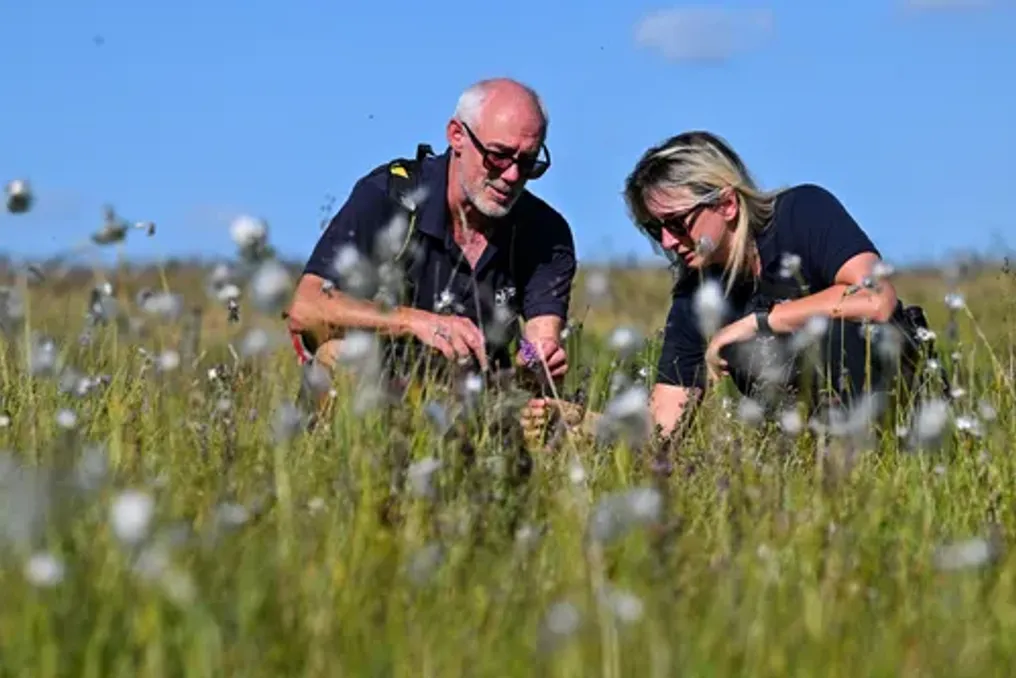
Katie Bark, head of nature restoration at Northumberland Wildlife Trust, observed swifts flying over a blooming meadow. Other species mentioned include red squirrels, cuckoos, rabbits, and butterflies; pine martens and buzzards, which already inhabit the region, could potentially return. Introducing beavers could create water bodies abundant in insects and invertebrates, as well as increase flood resilience, which has become more frequent due to climate change impacts. Furthermore, the land contains archaeological treasures, including valuable Neolithic rock carvings.
Bark noted that the size and 'integrity' of the Rothbury estate set it apart from others. She stressed that 'for England, it is probably the largest piece of land that can be obtained... so it is truly special.'
The sale caused 'some unease' among local residents regarding the change of ownership, admitted Sophie Bullgin, estate project manager. There were rumors of a possible reintroduction of wild animals, such as bison, but the coalition stated that any such decision would be put to public consultation.
Wildlife Trusts aim to encourage twelve farmers, mainly involved in sheep farming, to adopt more ecological methods, using fewer pesticides and chemical fertilizers. The charity insists on involving local communities in its efforts to promote nature and biodiversity. For recreation, the Trusts also plan to convert the old railway line running through the estate into a cycle path and walking trail.
Residents of Jamestown, a quiet village on the outskirts of Stellenbosch, are expressing concern about how new construction projects might affect the cultural character and heritage of the community. Many families have lived in Jamestown for centuries, cultivating strawberries on small farms. This heritage is celebrated annually at the Strawberry Festival, which is planned to resume next year after a hiatus caused by the Covid pandemic.
The area's proximity to Stellenbosch has made it attractive to developers. In 2014, the gated complex Aan De Weber, consisting of 102 homes, was built on the edge of Jamestown, and new development is planned on the city outskirts, which some residents are opposing.
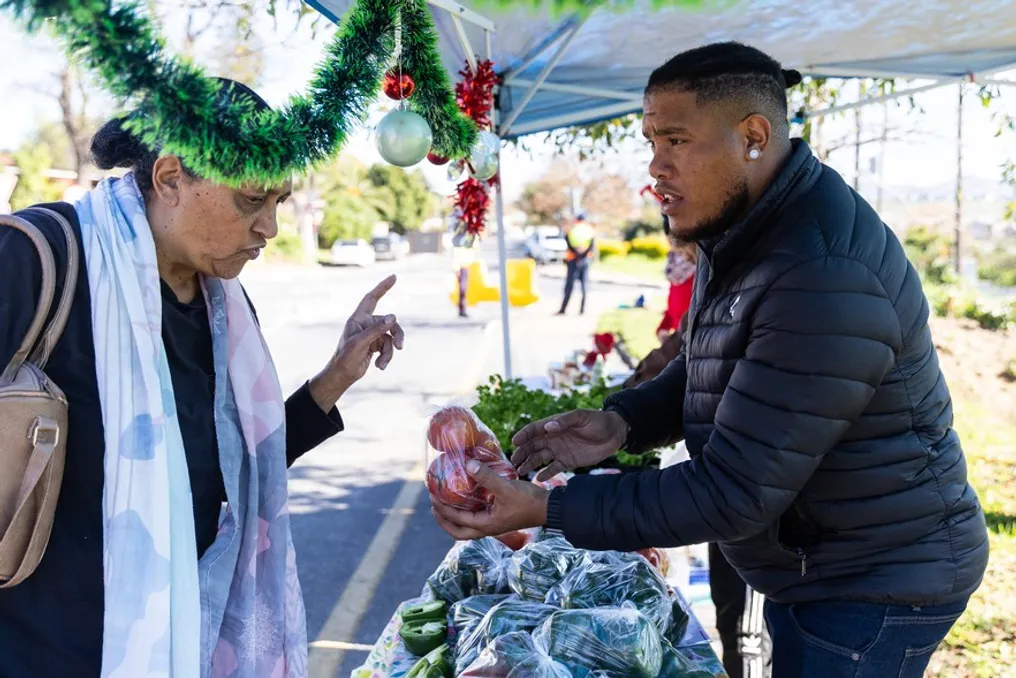
A monthly street market brings together neighbors and local farmers offering fresh vegetables, herbs, homemade food, and other handicrafts. Dale Simons, Chairman of the Jamestown Council, who organizes the market and annual festival, stated that the goal was to give people who grow produce a platform to showcase their goods, thereby raising awareness of the living agricultural heritage.
Simons noted the market's popularity among residents, emphasizing that people value connection, involvement, and community ties. The council was established to ensure the safety and health of Jamestown and protect its heritage. He also spoke out against the growing number of gated communities around Stellenbosch, stating they are not the best alternative.
Jamestown resident Amy Lewendal, whose family has lived and farmed here for generations, stresses the importance of preserving the community as 'cohesive' and 'diverse,' insisting that new developments should not change the character of the community. She is worried about plans to build a new gated estate along the irrigation ditch ('leivoor') that supplies water to about 40 small farms.
Jamestown resident Rene van Rooijen warns that if this ditch is somehow blocked, all these farmers will be left without water. The building application from First Plan Town and Regional Planners proposes dividing Blaauwbosch Estate into 19 plots, including 15 residential homes, two agricultural zones for 'rural lifestyle,' and two private open spaces.
According to the application, the development 'should not negatively impact heritage resources, as the site contains no structures or features of cultural or historical significance.' However, in her objection to the project, van Rooijen pointed out that the application lacks a clear plan to mitigate pollution from sewage or ditch runoff.
She also expressed concerns about the construction of a pond to reduce stormwater runoff and a pumping station near the ditch. Van Rooijen emphasized that any disruption, however minor, could have devastating financial consequences for the farmers dependent on this water. Stellenbosch municipality representative Stuart Grobel stated that the municipality will 'carefully consider' the heritage issues and residents' comments before making a decision.
Wealthy investors in India are re-evaluating the role of real estate in their portfolios. Their focus has shifted from simply generating profit to ensuring capital preservation. Industry experts note that individuals with high and ultra-high net worth are now viewing real estate not just as a luxury item, but as a reliable tool for portfolio diversification, stable income generation, and long-term value retention.
As assets grow, investment decisions become more measured. People seek a balance between wealth growth, stability, planning for the next generation, and regular income. Real estate plays a key role in this process due to its tangible material value and its ability to generate consistent income.
According to Gaurav Mavi, co-founder of BOP.in, the approach to investing changes as wealth increases. He emphasized that in the initial stages of asset accumulation, the main focus is on rapid money growth; however, over time, the focus shifts to security, sustainability, risk reduction, and creating assets beneficial for future generations. In this process, real estate occupies an important place, as its purpose transforms along with the growth of capital.
For new investors, purchasing real estate often symbolizes significant financial success. However, for affluent families and wealthy individuals, it serves as a tool to strengthen a portfolio alongside the stock market and other financial instruments. Unlike directly linked investments such as stocks, elite residential real estate, commercial properties, land plots, and income-generating assets not only offer potential price appreciation but also provide fixed income.
This trend is reinforced by the growing number of wealthy people in India. According to Knight Frank's 'Wealth Report', India ranks among the countries with the fastest growth in UHNIs (Ultra High Net Worth Individuals) globally. Consequently, the role of real estate in asset management strategy is becoming increasingly significant.
Experts point out that affluent investors have become very cautious when selecting real estate. Instead of buying properties solely based on location or personal connections, they meticulously analyze factors such as infrastructure development, Rental Yields, demand prospects, developer reliability, and potential for future resale.
Commercial real estate has gained significant advantage due to this approach. High-end office spaces, organized retail areas, and mixed-use projects attract investors seeking regular rental income. There is high demand from multinational corporations and Global Capability Centers (GCCs).
The luxury housing market is no longer limited to a prestigious address. Wealthy buyers now prioritize privacy, wellness, eco-friendliness, smart home technology, security, superior architecture, and lifestyle amenities. In Gurugram areas like Golf Course Road and Golf Course Extension Road, as well as in certain parts of Central Delhi and Noida, luxury housing attracts buyers by offering a combination of privacy and good connectivity.
As portfolios grow, investors increasingly seek help from professional consultants. They consult on property selection, location analysis, developer evaluation, rental strategy development, and sale planning. According to Mavi, the future of HNI and UHNIs investing will depend less on accumulating the maximum number of assets and more on wisely placing funds in the right places. In this context, properly selected real estate will always remain an important part of the portfolio, providing stability, regular income, and long-term value alongside other financial assets.