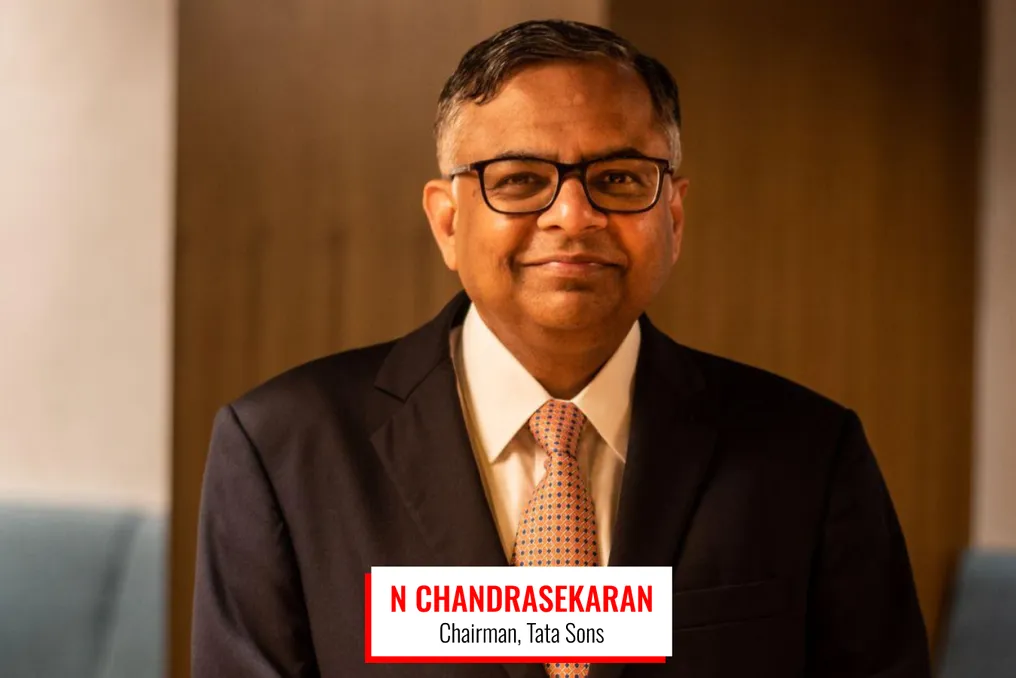
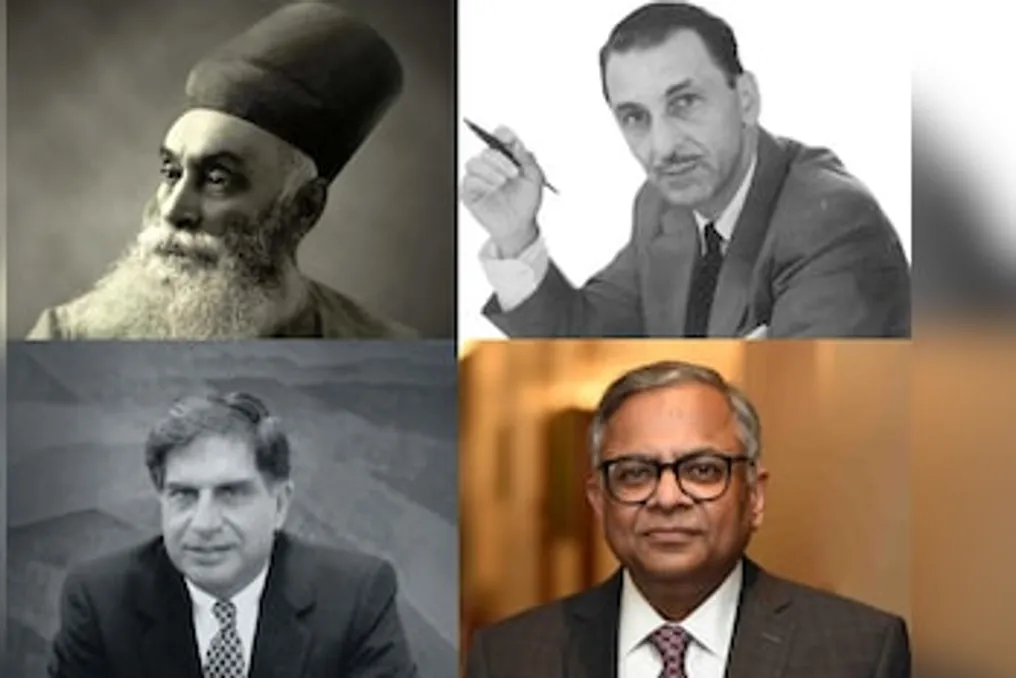
The departure of N. Chandrasekaran as chairman of Tata Sons has drawn attention to the long history of leadership changes within Tata Sons. He submitted his resignation just before the company's crucial Annual General Meeting (AGM), scheduled for August 18th.
Chandrasekaran took office in February 2017 and is the latest in a line of leaders who have guided Tata Sons, and consequently the entire Tata group, since Jamsetji Tata headed the enterprise in 1868.
History of Tata Sons Leadership
The first head of the Tata group was Jamsetji Nusserwanji Tata, the founder of the group. Born on March 3, 1839, he began his entrepreneurial journey in 1868 at the age of 29 when he established a trading company with a capital of 21,000 rupees. He later expanded operations into textiles, steelmaking, hydroelectric power, and education, laying the foundation for one of India's largest business groups.
Jamsetji's vision extended beyond business, encompassing employee welfare and philanthropy, which became an important part of his legacy. Although Jamsetji passed away in 1904, many of his major undertakings, such as the Tata Steel project and the Indian Institute of Science, were realized after his death.
The Era of Sir Dorabji Tata
Sir Dorabji Tata, Jamsetji Tata's eldest son, took over the leadership of the group after his father's death in 1904. He played a key role in realizing his father's vision of establishing the Indian steel industry, as the Tata Iron and Steel Company, now Tata Steel, began production in 1912. In 1910, he was knighted for his contribution to the industry of British India.
Under his leadership, the group expanded into sectors such as energy, hospitality, and insurance. In 1932, Dorabji Tata also founded the Sir Dorabji Tata Trust, laying the foundation for the institutional philanthropic activities of the Tata group. He died in 1932.
Successors in Leadership
Sir Navroji Saklatwala succeeded Sir Dorabji Tata as chairman of the Tata group in 1932, becoming the third leader. Being Dorabji Tata's cousin, he joined the Tata organization in 1901 and advanced through the ranks, playing an important role in expanding Tata's business. Saklatwala unexpectedly died in France in 1938 and was replaced by J. R. D. Tata.
Jehangir Ratanji Dadabhoy Tata (J. R. D. Tata) became chairman of Tata Sons in 1938, succeeding Sir Navroji Saklatwala. He led the group for over five decades, witnessing its transformation from a predominantly industrial enterprise to a diversified conglomerate. During his tenure, Tata entered sectors such as aviation, chemicals, automotive, hospitality, and information technology. Several major companies, including Tata Motors and Tata Consultancy Services (TCS), were established during his chairmanship. J. R. D. Tata received the Bharat Ratna, India's highest civilian award, in 1992.
The Ratan Tata Period
Ratan Naval Tata succeeded J. R. D. Tata as chairman of Tata Sons in 1991, taking charge during India's economic liberalization for global competition. During his 21-year tenure, the Tata group increased its global presence through acquisitions such as Tetley, Corus, Jaguar Land Rover, and Brunner Mond, while TCS grew into a major global IT services company.
Under his leadership, the group entered new markets and strengthened its presence in sectors such as automotive, steel, telecommunications, and hospitality. Ratan Tata stepped down as chairman in December 2012, handing over to Cyrus Mistry.
Cyrus Mistry and N. Chandrasekaran
Cyrus P. Mistry succeeded Ratan Tata as chairman of Tata Sons in December 2012, becoming the sixth chairman of the company. During his tenure, Mistry aimed to optimize the group's operations and increase capital efficiency while reviewing several enterprises and investments. His term abruptly ended in October 2016 when the Tata Sons board removed him from the chairmanship. Ratan Tata was appointed interim chairman after Mistry's removal and remained in that position until Chandrasekaran took over in February 2017.
Natarajan Chandrasekaran became chairman of Tata Sons on February 21, 2017, succeeding Ratan Tata, who served as interim chairman. He became the first non-Tata family member to lead the group in nearly 80 years. Previously, Chandrasekaran worked as CEO and Managing Director of TCS. During his tenure, the group expanded its presence in areas such as semiconductors, electronics manufacturing, electric vehicles, batteries, and aviation. Chandrasekaran will hold this position until the end of his current term in February 2027.