About two thousand years ago, communities inhabiting modern-day Colombia developed extensive infrastructure composed of canals and raised fields, designed to manage both water surplus and scarcity. Research conducted by the University of Cambridge suggests that this monumental work was achieved through community collaboration, without the need for coordination from a central government.
This system, known as La Mojana, covered approximately five hundred thousand hectares in the Colombian Caribbean. The technology employed served to regulate rainwater flow, ensure agricultural productivity during dry spells, and additionally allow for fish capture.
Pre-Hispanic agricultural methods were used from the early centuries BC until the 11th century. The impressive scale of these structures led researchers to speculate about construction organization by powerful leaders. However, the study published in the journal Communications Sustainability offers a different perspective, arguing that the local communities themselves likely organized the work cooperatively.
Although the grandeur of these fields led to suppositions that they were the result of hierarchical leadership, the data presented by the study indicates a different scenario. Jasmine Vieri, the lead author of the research and a researcher at the University of Cambridge, commented on the topic.
The design of the raised fields was functional for dealing with large volumes of water during rains, while the canals helped redistribute this resource during dry periods. Furthermore, the model altered soil conditions to favor agriculture and could have generated opportunities for fishing.
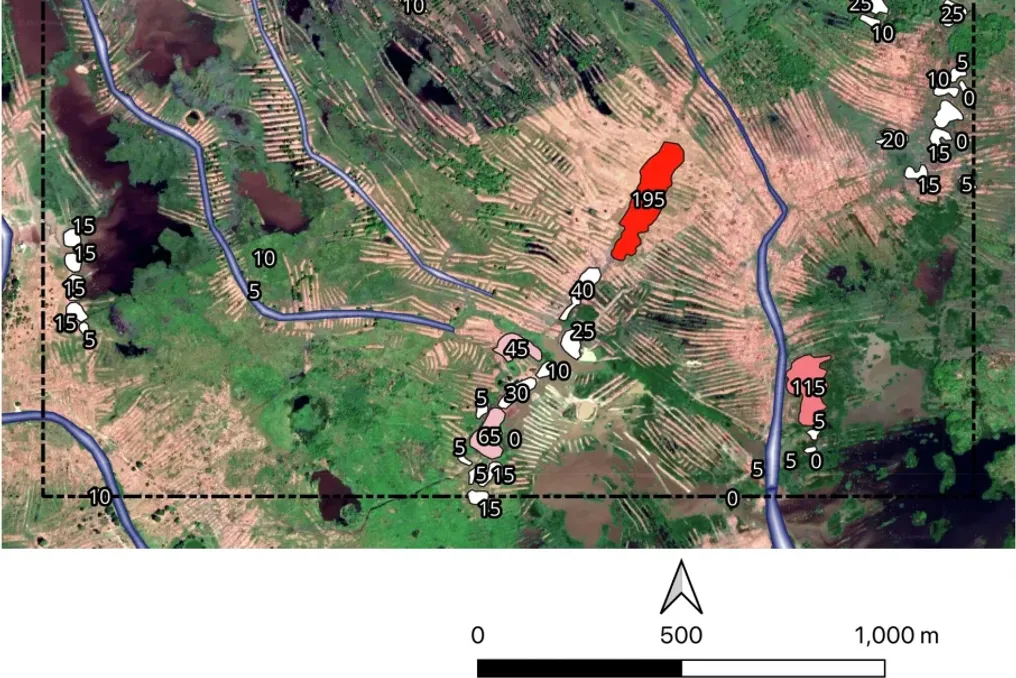
Using satellite imagery, it was possible to map an area of 500 hectares in the municipality of San Marcos, located in Sucre. In this specific section, 1,600 elevations and 63 platforms designated for housing were identified. These formations reached an approximate height of 1.4 meters.
To estimate the effort required, researchers considered the volume of earth moved, soil characteristics, available population, and technologies known at the time. The initial projection started with a population of 1,600 inhabitants, with 800 workers involved. Even considering dense soil and the absence of metal shovels, the team calculated that such a complex could be completed in less than two months.