A student from the United Arab Emirates has created an artificial intelligence-based platform designed to overcome language barriers during medical emergencies among pilgrims performing Hajj and Umrah.
A student from the United Arab Emirates has created an artificial intelligence-based platform designed to overcome language barriers during medical emergencies among pilgrims performing Hajj and Umrah.
The application, named Suhba, was developed by Nasima Mohammed Khalil, a fourth-year Biomedical Engineering student at Ajman University. Suhba allows pilgrims to describe their symptoms in their preferred language, assess the urgency of care needed, and locate the nearest medical facilities.
The current prototype version supports seven languages, including Arabic, Bengali, and Urdu. In case of an emergency, the system can generate an Arabic SOS card summarizing the pilgrim's medical needs, which can be shown to rescuers, officials, or passersby.
Khalil stated that the idea for the application originated from her personal childhood experience in Saudi Arabia, where she observed how language differences complicated communication. She noted that during Hajj and Umrah, this problem is exacerbated by the massive scale and diversity of crowds arriving from all over the world.
She emphasized, 'In a medical emergency where every second counts, language barriers can prevent patients from clearly describing their symptoms or needs, potentially delaying critical care.'
Millions of pilgrims from different countries, age groups, and linguistic backgrounds travel to Saudi Arabia to perform Hajj and Umrah. Due to the large concentration of people and high temperatures, they may face heat exhaustion, heatstroke, dehydration, cardiovascular problems, or complications from chronic diseases.
Even if a pilgrim realizes something is wrong, Khalil warned that they might be unable to explain their symptoms, request help, or understand instructions from emergency services. She added that a language barrier, which seems minor in daily life, can become life-threatening in an emergency situation.
Suhba aims to bridge this gap. Users input data on symptoms, existing conditions, location, and stage of pilgrimage. The platform then uses AI to analyze this information, determine the possible level of urgency, and provide recommendations for further action.
The system also takes into account factors such as ambient temperature and physical exertion related to various Hajj rituals. If the situation is deemed an emergency, the platform creates an Arabic SOS card with a brief summary of the person's medical issue. Furthermore, it displays nearby Red Crescent medical facilities along with distance and navigation information.
The goal, Khalil explained, is to help pilgrims transition faster from recognizing a potentially serious problem to reporting it and receiving professional assistance.
Khalil specifically stressed that Suhba is not intended for diagnosis or replacing doctors. 'Safety was one of the most important considerations in developing Suhba,' she stated. 'I did not want the AI to simply generate unlimited medical responses.'
The system was based on official medical information and designed to guide people in high-risk situations toward professional or emergency care. It should help a person understand when a situation might be serious, communicate their need more effectively, and receive appropriate medical support faster.
Balancing patient utility and safety became one of the biggest challenges of the project, as an inaccurate AI-generated medical response could have serious consequences. Multilingual accessibility was also a technical challenge, especially when designing right-to-left interfaces for Arabic and Urdu. The platform must also remain simple enough for use by people of different ages and levels of technical proficiency in stressful circumstances.
Khalil developed Suhba while participating in the Kanz AI hackathon, where she ranked in the Top 20 globally. For the application, she used Replit, working with React and TypeScript through prompt engineering. She also utilized NotebookLM to organize official medical guidelines into the platform's knowledge base.
Other tools presented during the hackathon included ElevenLabs, n8n, and Claude. She noted that one of her goals was to integrate the tools and concepts learned during the Kanz AI Hackathon.
As a biomedical engineering student, Khalil said that the competition allowed her to apply academic knowledge to a real healthcare problem and learn how new technologies can solve social issues. Being in the Top 20 globally was very significant to her because it showed that an idea developed by a student and focused on a very specific healthcare problem could resonate globally.
This experience also strengthened her determination to continue exploring the intersection of biomedical engineering, AI, and healthcare innovation. However, Suhba remains a prototype and will require extensive testing, clinical review, and collaboration before it can be implemented during Hajj or Umrah.
Khalil stated that the next phase will involve integrating verified data on medical facilities and local data. The AI system must also be further developed using confirmed information, and its results must be carefully reviewed by clinicians and specialists. Following this, a pilot study with real users will assess the platform's accuracy, safety, and usability before any wider deployment.
Her long-term goal is to work with clinicians, technical experts, and other partners to determine if Suhba can support pilgrims and help prevent the worsening of medical situations. She strongly believes in preventive medicine, asserting that technology can help identify risks before a situation becomes critical and direct people to the necessary support before escalation.
When considering matter and force, we establish a distinction between what constitutes objects, such as a soccer ball, and the invisible property that determines their movement. However, at subatomic scales, this separation is not as strict as it seems. A proton, for example, is composed of two up quarks and one down quark. Quarks are considered elementary particles, functioning as building blocks that cannot be decomposed into smaller units.
These particles are bound by the strong nuclear force, one of the four fundamental forces, along with gravity, electromagnetism, and the weak nuclear force. This force is transmitted by another elementary particle called the gluon, which acts as a binding agent between quarks, hence the name derived from 'glue.'
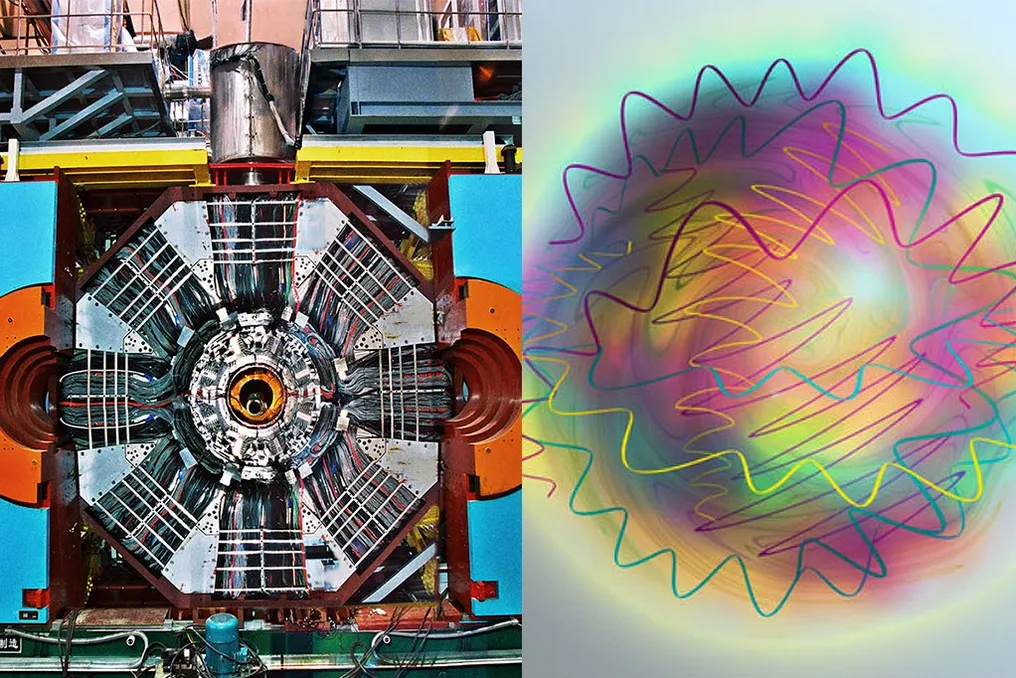
Chinese researchers claim to have proven the existence of a particle composed almost entirely of gluons, known as a 'glueball'. Physicists have been searching for this particle for over five decades.
The evidence for this particle was obtained at the Beijing Electron–Positron Collider II (BEPC II), a particle accelerator located in the Chinese capital. The paper detailing these findings is available as a preprint on the arXiv repository but is still awaiting peer review in a scientific journal.
Despite this, the discovery has generated great interest in the scientific community. During the International Conference on High Energy Physics (ICHEP), held in Natal (RN), Brazil, the researchers presented preliminary data on the particle designated as X(2370). This particle was generated through the collision of electrons with positrons at high energy, exhibiting characteristics consistent with those expected for a glueball.
It is important to note that the glueball differs from the Higgs boson, discovered in 2012. While the Higgs is classified as an elementary particle, incapable of being fragmented, the glueball can be broken down into multiple gluons, which in turn are elementary particles.
The BEPC II, located at the Institute of High Energy Physics in Beijing, is considered an ideal location for the search for glueballs because it generates large volumes of the J/Ψ particle. The products resulting from the decay of J/Ψ are rich in gluons, thus facilitating the investigation. According to Shan Jin, one of the scientists who led the study, it is estimated that X(2370) possesses approximately 90% gluons in its composition.
The new study involved the analysis of more than ten billion J/Ψ decays. The researchers observed that X(2370) associates similarly to particles containing various types of quarks. This behavior is expected, given that gluons interact uniformly with all species of quarks.
Characteristics of X(2370) had already been documented before. The particle was first identified in 2011 and has been the subject of subsequent studies to confirm if it corresponds to the glueball theorized by physicists. In 2024, the researchers demonstrated that its mass, angular momentum (spin), and other properties were aligned with theoretical glueball models.
Colin Morningstar, a particle physicist from Carnegie Mellon University, who did not participate in the research, commented in an interview with Science that the confirmation of these three expected properties for a glueball represents 'the greatest evidence that particles dominated by a glueball component can exist in nature.'
Although science requires verification in independent experiments, which may take years, the Beijing accelerator remains one of the few facilities dedicated to the search for glueballs.
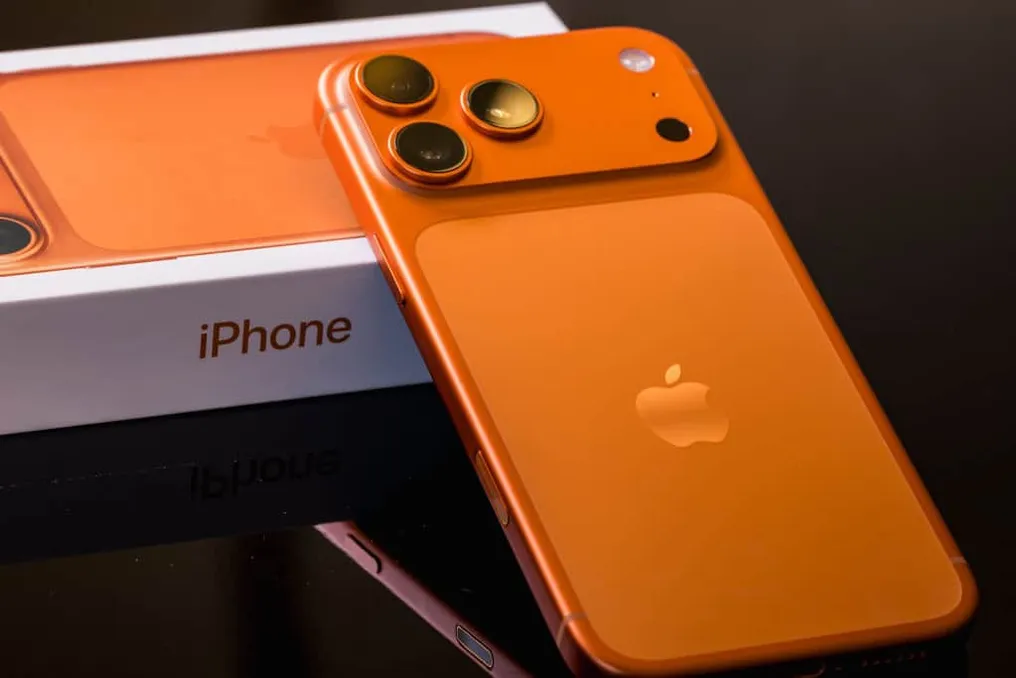
Apple may modify its usual smartphone launch schedule. Information from supplier Pegatron suggests that the iPhone 18 Pro models will be available in the second half of 2026, while the standard version would only be released in the first quarter of 2027.
This calendar change would also affect other devices planned for the next generation. The iPhone 18e and a new model called iPhone Air are considered candidates for later release, as is a possible foldable iPhone from the Ultra line, expected among this autumn's premium products.
The main reason for this shift would be linked to limitations in component supply, specifically memory and chips. With more restricted parts availability, both manufacturers and customers like Apple would be restructuring production peaks, prioritizing the more expensive devices that generate higher profit margins.
The idea of a staggered launch is not new. Last year, analyst Ming-Chi Kuo and the portal The Information had already mentioned that Apple was considering concentrating the launches of its most advanced equipment for the fall of 2026.
More recently, another company supplier indicated that one of its clients was postponing a smartphone launch until early 2027. This new report, published by Economic Daily News and reported by MacRumors, adds an important detail: statements made by Pegatron executives during a presentation on the company's results.
According to the meeting report, the manufacturer confirmed that the iPhone 18 Pro series devices should be launched in the second half of this year. On the other hand, the conventional iPhone 18 would have its launch rescheduled for the first months of 2027.
This division in the calendar is consistent with previous rumors about the iPhone 18e and the iPhone Air. These devices are also expected to be part of the batch arriving after the professional models.
The strategy would be directly related to the difficulties encountered in component supply. According to the Pegatron executives' report, the shortage of memory and chips would be altering corporate behavior during periods of high demand.
In this context, companies like Apple would be optimizing the distribution of available components among various products. Priority would be given to higher-value smartphones, as these have superior margins and consequently represent a more efficient use of a limited stock of parts.
If this schedule is confirmed, Apple would cease concentrating the entire next generation of iPhones in a single annual period. The most sophisticated models would be presented initially, while the more accessible positioning devices would be reserved for a second phase in 2027.
Among the premium launches expected for the second half is also the rumored Ultra foldable iPhone. The inclusion of this device alongside the Pro line would reinforce the possibility of the company dedicating its main showcase of 2026 to higher value-added products.
Google has implemented an extensive restructuring of its artificial intelligence division, relocating parts of the Google DeepMind teams to the corporate structure and concentrating strategic decisions under the leadership of Koray Kavukcuoglu. This information was reported by Reuters on Wednesday, the 12th.
This change occurs amid intense competition, where Google seeks to regain lost ground against competitors such as Anthropic and OpenAI. Furthermore, the move reduces the historical autonomy of the lab, established after its acquisition in 2014, aligning Gemini's development more closely with the company's commercial objectives.
In parallel, Sergey Brin resumed his influence on model training efforts, advocating for greater acceleration to reach technological frontiers. However, Google faces challenges, including delays in the launch of the next major version of Gemini and restrictions on available computational capacity.
The transformation gained public visibility on August 5th, the date Google announced changes in the management of Google DeepMind. Demis Hassabis stepped down from the executive leadership of the lab and assumed the presidency, while his successor, Koray Kavukcuoglu, took on the central role in the unit's direction.
This new setup formalized a power transition that was already underway. Kavukcuoglu had held the position of Google's principal artificial intelligence architect since 2025, a role created specifically to expand Gemini's presence in the company's products. Sources close to the operation informed Reuters that his influence over the model's direction has grown significantly since then.
Kavukcuoglu's position also brought him closer to the divisions responsible for AI revenue generation. Even before moving from London to Mountain View, he was seen as the main link between DeepMind and Google Cloud, a sector considered vital to Google's AI business.
The new arrangement impacted other prominent names. Jeff Dean and Oriol Vinyals, who were part of the original Gemini technical team, left the company to join a new startup. The departure of these executives raised questions about the future of groups that had greater freedom to conduct research outside of direct model training.
During a general meeting held on August 6th, employees were notified that certain non-technical teams would be removed from the DeepMind structure, reporting directly to the corporate organization of Google. This measure reinforced among lab members the feeling that their independence was diminishing.
Management attempted to calm these concerns, assuring that the lab's daily activities would remain essentially unchanged. Hassabis would continue to focus on long-term issues related to the science and social impacts of artificial intelligence, while Kavukcuoglu would maintain control over Gemini.
However, this change comes amidst growing pressure for results. According to reports gathered by Reuters, internal tests forced Google to postpone the arrival of the next major version of Gemini by two months due to lower results compared to those achieved by competitors in areas such as programming.
Recent history contributed to this pressure. Gemini briefly led among competing models after an update released in November 2025, but subsequently lost ground against advances made by rival companies.
Sources involved in development attributed part of this difficulty to structural problems. Limitations in computational capacity availability and disagreements among project leaders hindered the concentration of resources in crucial areas, such as programming. Internal bureaucracy was also cited as a factor contributing to a slower release pace than that of more agile competitors.
In this scenario, Brin informally intervened with the teams responsible for model training. According to someone familiar with his involvement, the co-founder spent months pressuring employees for a faster approach to state-of-the-art systems.
Brin's influence also extended to resource allocation. Among the topics that received his attention was the concept of recursive self-improvement, linked to the possibility of AI systems improving their own capabilities without human intervention.
Although he no longer holds an executive position, Brin maintains influence due to his status as a co-founder. Reuters mentioned that he also adopted a posture of internal mobilization after the launch of ChatGPT in 2022, when OpenAI's progress generated a strong internal reaction at Google.
For his part, Hassabis had reduced his direct involvement in Gemini's management after assisting with the model's launch in 2023. Sources cited by Reuters indicated that development responsibilities were progressively transferred to his subordinates.
The concentration of authority in Kavukcuoglu may also influence the dynamic between DeepMind and Google Cloud. A report obtained by Reuters suggests that cloud computing executives expect the change to minimize conflicts related to the distribution of artificial intelligence chips, known as TPUs.
Thus, the new design positions model strategy, Gemini's integration into products, and commercial requirements within a structure closer to Google headquarters. A company spokesperson confirmed to Reuters that Kavukcuoglu will have the final say on important decisions involving DeepMind.