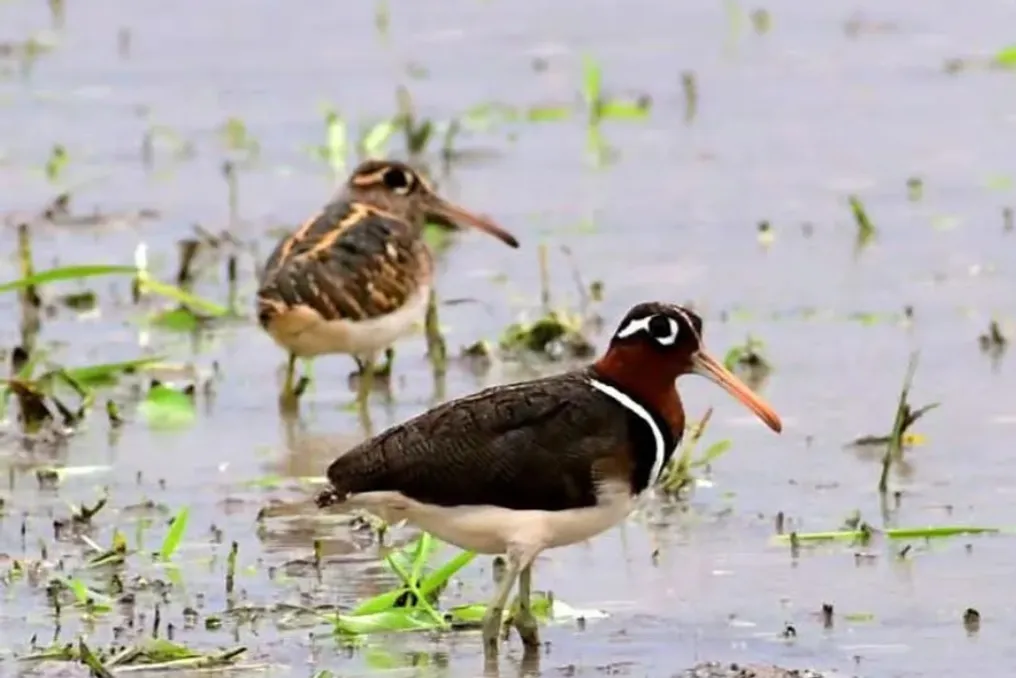
Those who grew up near bodies of water probably remember them for various phenomena: fish disturbing the surface, frogs calling after the rain, dragonflies hovering over the water, or a heron standing on the edge awaiting prey. Throughout India, these familiar places have different names.
In Bengal, they are called 'pokur,' in Rajasthan, 'johad,' in Tamil Nadu, 'eri' and 'kulam,' in Karnataka, 'kere,' in Odisha, 'pokhari'; in other places they might be called 'talao,' and in Assam, 'beel.' These water bodies differ in their water source, depth, duration of water retention, and how they transform throughout the seasons. These differences, in turn, shape the composition of fish, amphibians, insects, reptiles, and birds that inhabit them and their surroundings.
Below are eight examples of such water bodies from different parts of India.
1. Pokur, West Bengal: An Entire Food Chain in One Pond
A pond may be located near residential houses, fields, or village paths, but many processes occur beneath its surface. Fish feed on algae, plants, insects, and small organisms. Frogs hunt insects along the edges, while dragonfly and damselfly young spend part of their lives underwater with beetles, mosquito larvae, snails, plankton, and other tiny creatures.
Predators follow: water snakes eat fish and frogs, while kingfishers, pond herons, and egrets arrive in search of their next meal. For instance, in a freshwater body in the Sundarbans, local species of fish, frogs, snakes, birds, and dozens of varieties of dragonflies and damselflies have been recorded to preserve nature.
2. Johad, Rajasthan: When Rain Brings Life
The johad collects runoff from monsoon rains, aiding in the percolation of water into the soil. In the arid landscape of Rajasthan, this is of great importance. As soon as rainwater is collected, algae and plants begin to support insects and other small creatures. Tadpoles can develop in temporary water bodies, frogs arrive to breed, and birds and other animals come to drink and feed.
Here, even a simple phenomenon like collecting water after rain can create food and shelter for numerous animals in an area where water is scarce.
3. Eri, Tamil Nadu: A Pond That Changes with the Seasons
Traditional eris are irrigation reservoirs that collect and distribute rainwater, and their level fluctuates depending on rainfall and usage. When the water is deeper, fish, frogs, and insects use the open water and vegetation. As the level drops, small patches and muddy areas appear. These edges become feeding grounds for birds looking for fish, frogs, and small creatures. Herons, egrets, jakals, flamingos, and other resident and migratory birds can use different parts of these reservoirs as conditions change.
4. Kere, Karnataka: Water for People and Animals
Keres are part of Karnataka's long history of water collection and use, especially near villages and farms. Their open water, plants, and shallow banks can support fish, insects, frogs, and birds. The condition of the water and its banks plays a key role in determining the volume of life that can utilize it.
5. Pokhari, Odisha: Part of Village Life
In Odisha, pokharis are traditional village reservoirs that collect runoff and help water seep into the ground. For generations, these communal ponds have also been part of daily village life. Land, water, plants, animals, and people converge around one space, making the pond part of a much larger living system.
6. Kulam, Tamil Nadu: Water Moving from One Pond to Another
Along the Tamirabarani river, kulams can be part of interconnected systems of reservoirs, canals, and sluices. Water moves between them, accumulating rainwater and river water and supporting agriculture along the way. This same network can provide habitat for fish and other aquatic fauna, as well as for local and migratory birds.
7. Talao: Life Gathers at the Edges
Talao is a word many used to refer to a pond or lake. Most of the life in it is concentrated around the perimeter. Plants and muddy shallows provide breeding grounds for frogs, emergence sites for dragonflies, and feeding spots for birds. Freshwater turtles can feed in the water, while snakes hunt fish and frogs. Even dead leaves and plants are important, as their decomposition on the bottom returns nutrients to the water and feeds the tiny organisms at the base of the food chain.
8. Beel, Assam: A Lake Following Floods
Beels are closely linked to the floodplains of Assam and change depending on the season. During monsoons, water can spread onto the surrounding land, opening up new areas for fish and frog feeding and breeding. Freshwater turtles and water snakes use these wet areas for food and shelter, and otters can move through connected water sections. When the water recedes, shallow areas and exposed mud provide new feeding grounds for birds.
And What Happens When These Places Change?
A pond may continue to exist on the map but lose much of the life it once supported. Removing plants from the edges leads to the loss of breeding sites for frogs. Concrete lining of muddy banks deprives waterfowl of feeding areas. Sewage, agricultural chemicals, and invasive plants can negatively affect water quality, and excessive water withdrawal can alter water levels.
When many such water bodies disappear, the consequences can spread further. Along farms and in villages, small ponds can function as a chain of resting, feeding, and breeding sites between larger lakes, fields, and forests. Protecting these water bodies can start with quite simple solutions: preserving the natural state of some banks, allowing plants to grow along parts of the edge, and preventing the entry of dirty water and waste.
So, the next time you see a pond, look at it more closely. The call of frogs, the dragonfly, the fish beneath the surface, or the bird waiting by the bank may testify to the existence of an entire world of life sharing that water.