Every morning, millions of children risk their lives to get to school by crossing rivers, slippery embankments, and flooded streams due to a lack of basic infrastructure. However, across India, proactive individuals are creating safer routes to education.
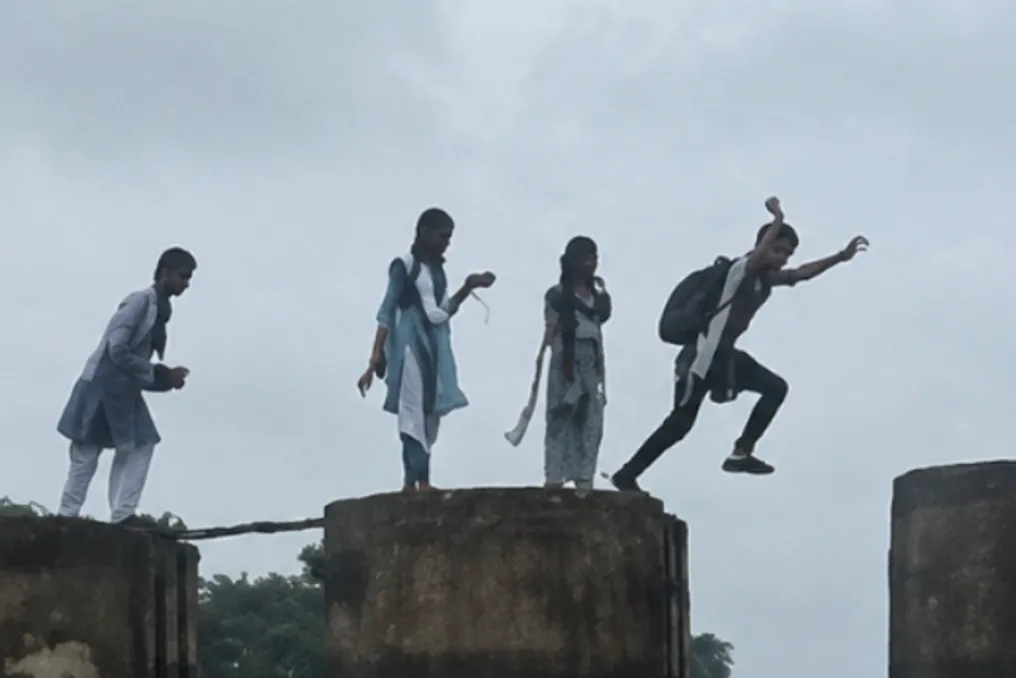
In Vidisha, Madhya Pradesh, nine students daily cross concrete pillars over the Betwa River. The local village school ends at Grade 8, and the nearest secondary school is 13 kilometers away. This risky shortcut reduces their journey to just 1.5 kilometers.
Similar situations are observed elsewhere. In Palghar, Maharashtra, children hold hands while crossing the fast-flowing Rakhadi River on an embankment because there is no bridge yet. Nevertheless, local communities are already finding solutions.
Every monsoon, the Nagabali River cuts off villages in Rayagada, Odisha, from schools, hospitals, and roads. After years of waiting for a permanent bridge, residents built a temporary 100-meter bridge themselves.
In Mumbai, 17-year-old Eshan Balbale watched children swim through a canal filled with sewage to reach school. Instead of turning away, he and his NGO built a 100-foot bamboo bridge in just eight days.
Between 2015 and 2016, Indian Civil Service officer Shahid Iqbal Choudhary built 142 pedestrian bridges in Udhampur, providing nearly 10,000 people, six schools, and remote villages with year-round access to education and essential services.
The solution is clear: safer crossings, reliable school transport, more secondary schools, and improved rural roads so that no child has to risk their life for an education. Every child deserves a safe path to school. India has already demonstrated what is possible when people take action. Now, it is necessary to ensure that a child's education does not begin with danger.