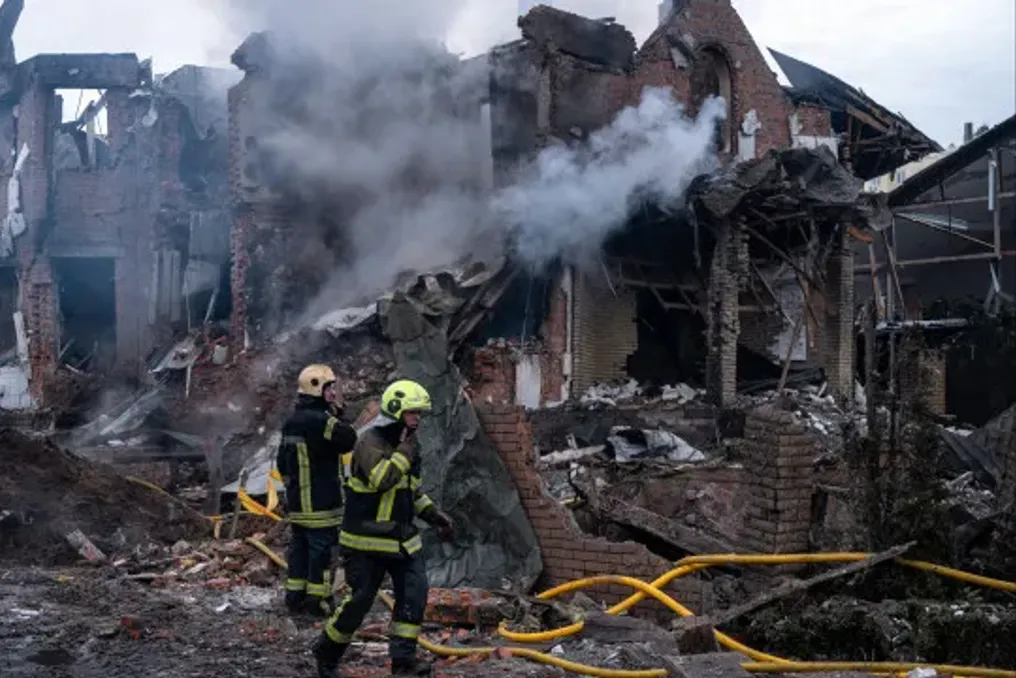
Kyiv information services estimate that the targeted drone attack campaign against Wildberries has affected at least 14 of the company's distribution centers. According to these sources, the action destroyed the business model of Russia's largest e-commerce platform, which annually traded products equivalent to 3% of the national Gross Domestic Product (GDP).
Through the Telegram social network, information services revealed that Wildberries suffered a loss of at least 20% of its storage capacity in just a few weeks, accumulating losses exceeding 100 billion rubles, with more severe projections indicating double this amount. Furthermore, Kyiv calculates that Wildberries' total financing needs have already reached 1.3 trillion rubles, which corresponds to approximately 13.6 billion euros.
Ukrainian President Volodymyr Zelensky justified the attacks on Wildberries since mid-July, alleging that the Russian company stores military supplies and components for drones. In another update, Zelensky reported that Ukrainian forces recovered 26 localities in the Zaporizhzhia region, located in the south of the country, as well as in adjacent areas such as Dnipro and Donetsk, as part of an offensive launched last January.
The Ukrainian leader stated on social media, after a meeting with military commanders, that this military operation enabled the liberation of 745 square kilometers of territory. Zelensky also mentioned that the army attacked what was described as 'the last great bastion of the Russian fleet in the Black Sea,' located at the naval base of Novorossiysk, in the Krasnodar region, where there is a relevant international oil terminal, as well as grain storage and export facilities.
Russian authorities reported that the attacks resulted in two fatalities. The governor of Krasnodar, Veniamin Kondratiev, detailed that Russian air defenses managed to repel 'a massive attack of hundreds of drones' during the night, an event that 'unfortunately caused deaths and injuries,' including an 8-year-old in Novorossiysk.
Zelensky, for his part, posted on social media, praising the success of the attacks, and confirmed impacts on air defense positions, docks, and port infrastructure. He highlighted the use of Palianitsia drones and Neptune missiles at facilities more than 300 kilometers from the front line. The Ukrainian president warned that 'the occupation fleet and all supporting infrastructure will not be safe as long as the Russian aggression continues,' but reaffirmed that 'all reasonable diplomatic proposals remain on the table' to seek a quick end to the war.
In recent months, aerial attacks have intensified on both sides of the front line, leading to an increase in the number of civilian casualties. Advanced drones developed by Kyiv since the Russian invasion, which occurred more than four years ago, have been repeatedly targeted against the Russian fleet in the Black Sea, covering warships and oil tankers.
Ukrainian authorities believe that Russian President Vladimir Putin remains determined to continue the invasion of Ukraine, despite the accumulation of casualties and the absence of significant territorial gains, coupled with a struggling economy focused on the war effort. However, Zelensky reported on social media, citing Ukrainian intelligence sources, that Putin plans 'an additional rapid mobilization of several hundred thousand Russians by the end of the year.'