As the 2026-2027 academic year approaches, parents are seeking ways to manage the expenses associated with the start of the school year. These methods include price comparison, budgeting, reusing school supplies, and utilizing discounts.
As the 2026-2027 academic year approaches, parents are seeking ways to manage the expenses associated with the start of the school year. These methods include price comparison, budgeting, reusing school supplies, and utilizing discounts.
Om Hasher, a mother of two children from Dubai, begins the process by checking the school supplies already available at home before visiting stores. She reviews her children's items from the previous year and creates a list only of what needs replacement. She notes that she separates purchases into necessary and optional items, setting a budget for each child to avoid buying unnecessary or duplicate goods. Sometimes she buys certain supplies in bulk if it is more cost-effective, especially those that will be used throughout the year.
Planning has also helped other parents distribute costs and avoid spontaneous purchases. Maryam Hajji Mohammed, a mother of two daughters entering the 7th and 4th grades in Ras Al Khaimah, began preparing for the new academic year as early as July. Before ordering uniforms, she checked with the school and teachers whether the uniform and logos would remain unchanged. She then ordered official and sports uniforms according to her daughters' measurements, which allowed her to choose a longer and more modest style instead of buying ready-made clothes in a larger size.
Maryam also donated her daughter's old school uniform to a local Charity Fund that organizes exhibitions for needy students, thereby giving the clothing a second life instead of letting it sit unused at home. Regarding stationery, bags, labels, and other accessories, she preferred to shop online. This allowed her daughters to choose what they wanted using filters to compare prices. Living in an area with limited access to nearby shops, she noted that online shopping also helped avoid crowded stores, parking issues, and long queues during the rush at the beginning of the school year.
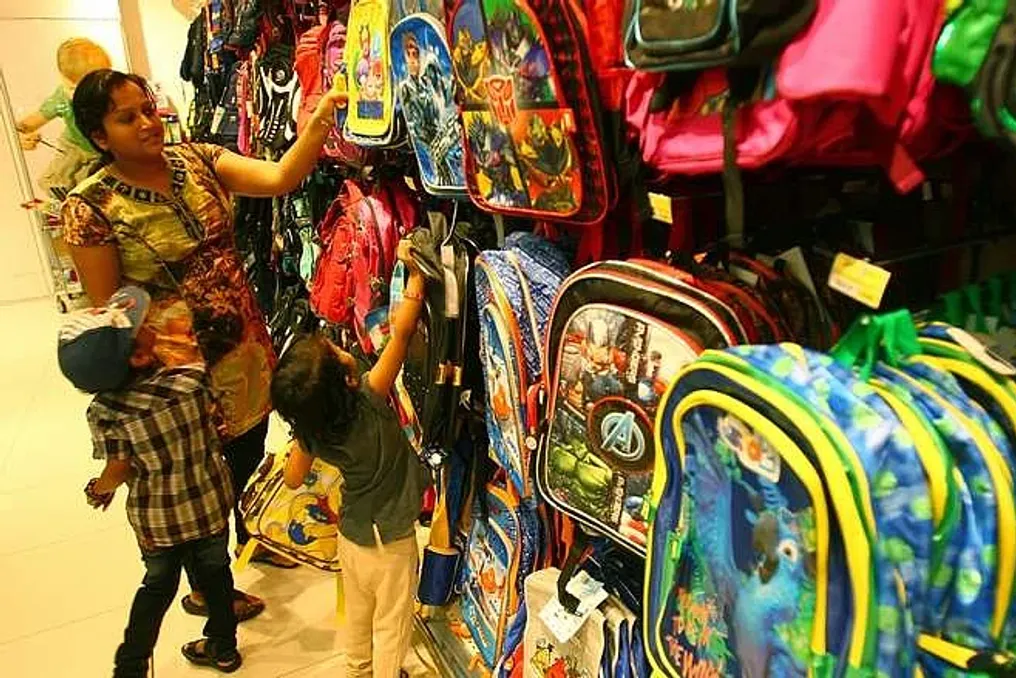
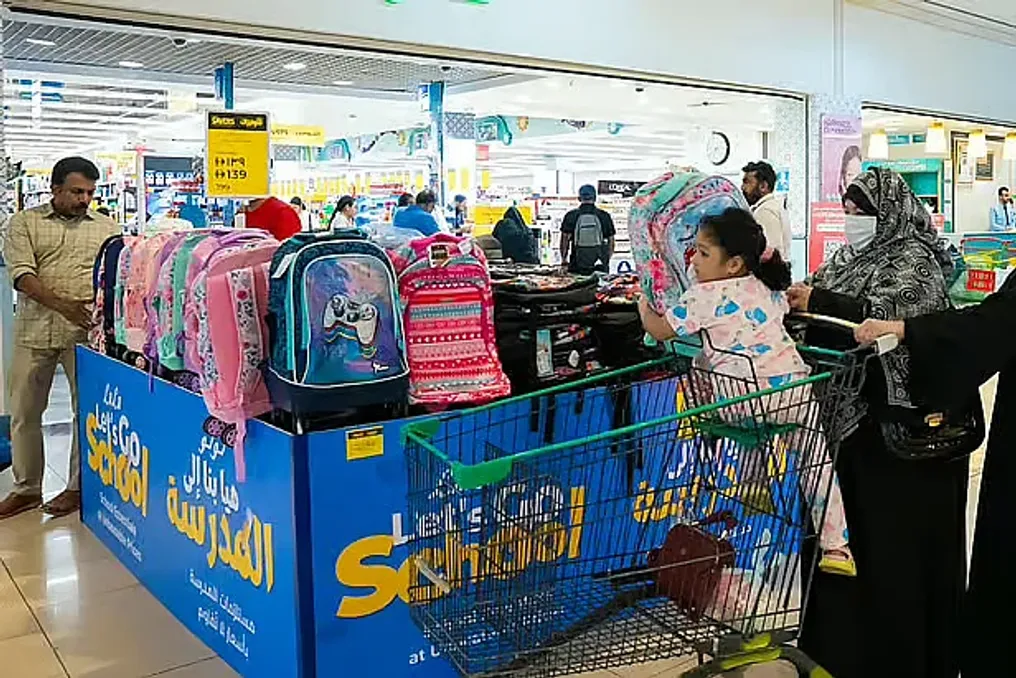
Price comparison across different stores and online platforms is part of Om Hasher's approach. She has noticed significant differences in the prices of school bags, lunch boxes, colored supplies, and stationery featuring popular characters. She emphasizes that sometimes items of the same quality are available much cheaper in another store, so she does not buy from the first place she finds.
For Amna, another mother from Dubai with five daughters, checking last year's supplies is also the starting point for her back-to-school purchases. She first inspects all the items from the previous year, separating damaged or unnecessary ones, and then buys only what is missing. Amna also monitors online promotions and recently took advantage of discounts on school bags, lunch boxes, and other necessities. However, she believes that product quality remains an important criterion when deciding if a discount is worth it.
Om Hasher warns parents against blindly following large discounts, advising them to check the original price and compare it with prices elsewhere before making a purchase decision. She argues that not every discount means the price is truly lower. Furthermore, she asks herself questions about the actual necessity of the item, its quality, and its potential use. If the item is already owned or not needed, she will not buy it, even at a big discount, because buying something unnecessary is not saving money.
Reusing supplies is another common way to reduce costs. Om Hasher says that school bags, pencil cases, and lunch boxes can often last for more than one year if they are in good condition, and leftover paints, pens, folders, and rulers can also be reused. Amna agrees that this applies to school bags, although children sometimes want to change them. She adds that bags can remain useful outside of class, for example, for carrying toys and other items during family outings.
Maryam also tries to minimize school supply waste. At home, she keeps partially used notebooks, colored pencils, stationery, and craft materials in a special corner for her daughters' drawing and other activities. Items that are in good condition but no longer needed are either donated or given to relatives and friends. Such habits help extend the lifespan of school supplies and reduce the need to replace everything at the beginning of each school year.
Overall, the approach in these three families is not about completely foregoing spending, but about making every purchase meaningful: by checking existing stock, planning ahead, comparing prices, evaluating discounts, and finding ways to reuse or pass on items that are still in good condition.
Families in the United Arab Emirates are starting preparations for the beginning of the academic year well in advance, and their searches extend beyond standard school supplies and uniforms. An analysis of new search trends on the Dubizzle marketplace shows that parents are actively investing time and money in setting up complete study areas at home, with used furniture becoming a very popular choice.
The highest demand on the platform is observed in the category of desks. Furthermore, families are looking for ergonomic chairs, bookshelves, and ready-made desk and chair sets, reflecting a growing emphasis on creating specialized learning spaces at home.
Figures demonstrate the priorities of UAE families this season. Searches for chairs for desks showed a sharp increase of 1450 percent, while interest in bookshelves increased by 248 percent compared to the previous month's data.
The data also indicates a growing interest in multifunctional furniture, particularly loft beds with built-in desks, as households seek practical solutions that maximize space while supporting children's educational needs.
Alongside items for home study, buyers are increasingly turning to used and free furniture for lessons. The search for free study desks rose by 163 percentage points month-on-month, highlighting a growing tendency towards circular consumption as families aim to control back-to-school expenses while giving quality items a second life.
Matt Gregory, Senior Director of Strategy at Dubizzle, noted: 'Back-to-school purchases today go far beyond traditional school supplies. Families are planning ahead and preparing more thoughtfully for the new academic year, from creating comfortable study spaces at home to considering used furniture and learning materials.'
He added that there is also a greater openness to circular consumption. 'This allows consumers to save money while extending the lifespan of quality products,' he stated. 'It is a practical shift that benefits both families and the environment.'
School bags remain another significant area of demand. While everyday backpacks continue to be among the most sought-after items, interest in premium models is also growing. According to Dubizzle, searches for TUMI backpacks increased by almost 65 percent compared to last month, and Louis Vuitton backpacks are also among the most popular premium items. Some sellers are even listing items such as original Dior notebooks and Gucci backpacks ahead of the start of the school year.
In addition to furniture and accessories, textbooks are one of the most actively browsed categories, as parents and students look for affordable alternatives to buying new editions. Some parents are also searching for notebooks—sellers are listing both laptops and unused notebooks on the marketplace.
These results underscore a broader shift in consumer behavior, as residents of the UAE increasingly embrace re-commerce as a practical way to prepare for seasonal events. By choosing used furniture, textbooks, and school supplies, families are not only reducing costs but also helping to minimize waste, supporting a more circular economy.
As schools in the United Arab Emirates prepare to resume classes in the last week of August, parents begin preparing for numerous events associated with the start of the academic year. After a quiet July, many families go through a period of transition that includes completing summer assignments and adjusting sleep schedules.
However, the most significant change most families face is the need to plan their finances considering the start of the school year. From tuition fees and uniforms to stationery and extracurricular activities—the start of the school year creates serious financial difficulties for many parents. Nevertheless, experts argue that with proper planning, this month can pass easily.
Below are approximate estimates and practical tips to help plan the 2026-2027 academic year without excessive spending. Tuition fees and related expenses are one of the largest fixed costs for families in the UAE. Although the main cost is tuition, the total amount can increase by 10–25 percent after including all additional charges.
According to Mike Cody, CEO and Private Equity Partner at Skybound Wealth Management, one of the most important steps parents should take is financial planning for education. This will help avoid panic and rushing to find money at the last minute.
He advised parents to create an education cash flow calendar that accounts for all known payments: registration fees, tuition, transportation, uniform, books, devices, events, and trips. Next, subtract any confirmed employer subsidy, divide the remaining amount by the number of paychecks until the payment deadline, and automatically transfer this amount to a separate education account on payday.
The cost of schooling in the UAE varies greatly due to the presence of different categories of schools catering to various nationalities. Below is a general overview of the types of schools in the country and their average annual fees.
Budget Schools
Annual fee: AED 4,100 to AED 30,000. Some schools in the UAE, such as Crescent English School following the CBSE curriculum in Dubai, list a total annual fee of AED 3,628 for Grade 1. A British curriculum school, Al Sadiq Islamic English School, charges from AED 10,000 to AED 16,000 per year, including books and uniform.
Mid-Range Schools
Annual fee: AED 35,000 to AED 60,000. For example, Arcadi Global School in Dubai charges from AED 25,865 for FS1 to AED 33,788 for Grade 9, while GEMS Founders School in Al Mizhar charges from AED 24,877 for FS1 to AED 37,856 for Grade 13. These schools may have additional costs for optional activities and technology.
Elite Premium Schools
Annual fee: AED 55,000 to AED 95,000+. The North London Collegiate School in Dubai may require up to AED 143,681 for Grade 12. Premium IB schools can also exceed AED 110,000 annually.
Mike advised parents to choose a school based on its long-term cost, not just the first-year tuition fee, as these costs usually increase annually and with grade level.
Many parents are shocked when 'additional' school fees are added to the bill. For the 2026-2027 academic year, parents can expect additional expenses ranging from AED 2,000 to AED 10,000 per child just for supplementary costs at the start of the school year, although this amount may be higher depending on preferences.
Approximate estimate: AED 600 to AED 2,000 per child. Details: A complete set of two uniforms can cost around AED 600. However, if parents add sports kits, blazers, and shoes, the total amount quickly increases. Some parents reported to Khaleej Times that they spend nearly AED 5,000 annually just on uniforms at some schools.
Approximate estimate: AED 1,500 to AED 4,000. Details: Textbooks can be very expensive; middle school parents report spending up to AED 1,200 for a set of textbooks. Stationery and a new backpack can cost AED 300 to AED 500. Many schools also require students to have learning devices, which can significantly increase the total bill.
Approximate estimate: AED 150 to AED 500. Details: A quality lunchbox and water bottle can cost from AED 50 to over AED 400. Some parents advise avoiding the 'trendy expensive bottles' and choosing local insulated brands.
Approximate estimate: AED 1,000 to AED 8,000+ per year. Details: Many schools offer some free activities, but premium programs in sports, robotics, or performing arts incur costs. KHDA data shows that optional extracurricular activities can range from AED 100 to AED 8,000 per year. When budgeting for ECAs, Mike's expert advice is key: 'Think like an investor, not just a parent: determine the future cost, date, and currency, and then fund it automatically.'
Based on Mike's advice and UAE parents' data, here is a step-by-step budgeting plan:
August does not have to be a month of financial anxiety. By understanding the true costs, planning in advance, and using smart saving tips, such as buying second-hand items, parents can approach the 2026-2027 academic year confidently and with control over the family budget.
Mike concluded: 'Education matters, but the plan will not succeed if it depletes the emergency fund or foregoes retirement savings. It only postpones the financial pressure to the next generation.'