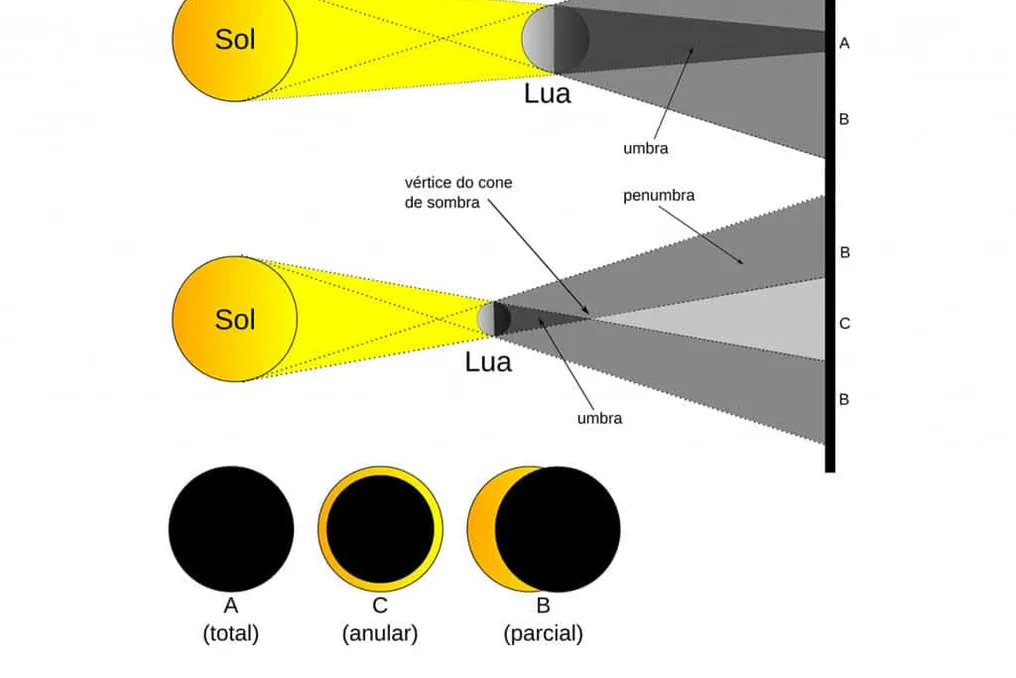
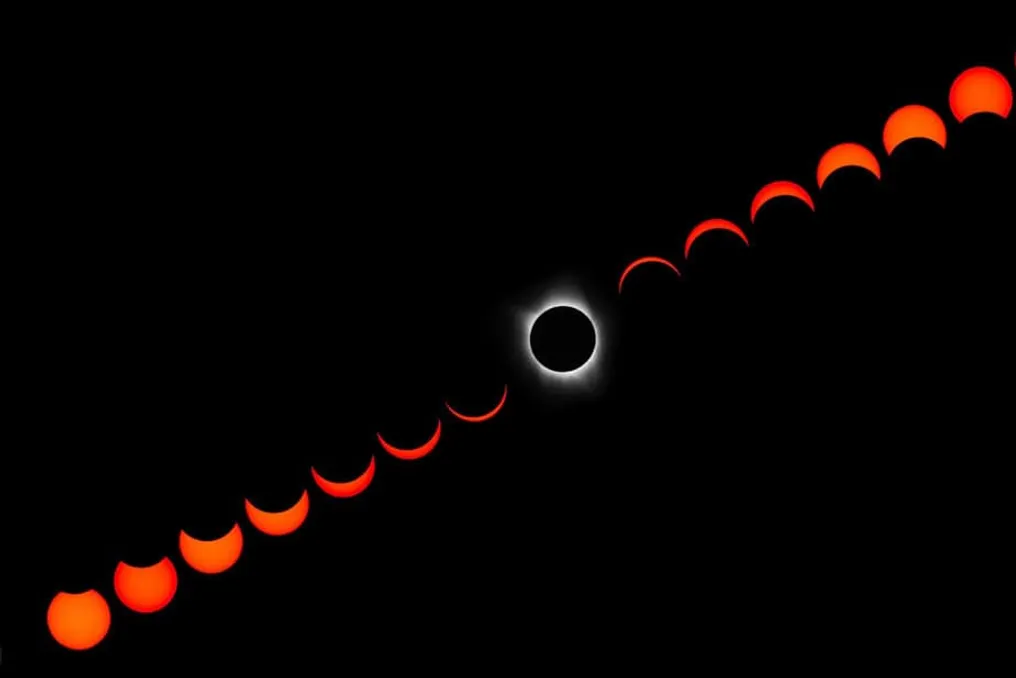
When the Moon blocks sunlight during a total solar eclipse, the day turns into night for several minutes, temperatures drop, and animals change their behavior. However, the influence of this phenomenon goes beyond that. According to NASA data, the phenomenon temporarily alters the invisible layer of the atmosphere responsible for radio wave propagation.
The question arises: can these changes lead to internet failure, GPS errors, or communication interruptions? The short answer is yes, but it happens temporarily, locally, and is very different from panic scenarios about 'technological shutdowns.'
Next Wednesday (the 12th), millions of people in privileged locations around the world will be able to witness one of the most impressive astronomical sights: a total solar eclipse. This event possesses characteristics that make it one of the most significant of the last decade.
Impact of the event on communication technologies
To understand how such an event affects communication technologies, it is necessary to consider the ionosphere—a layer of the atmosphere located at an altitude of 60 to 1000 km. This region is saturated with electrons and ions (electrically charged particles) formed under the influence of ultraviolet radiation from the Sun.
During the day, constant solar radiation maintains a high charge level in the ionosphere. When the Moon casts its shadow on Earth during a total solar eclipse, solar radiation suddenly ceases in that specific zone. Within minutes, the ionosphere cools down, and the electron density sharply decreases, creating a temporary 'artificial night' in the upper layers of the atmosphere.
GPS satellites orbit at an altitude of about 20,000 km above Earth and continuously send radio signals to ground receivers. These signals must pass through the ionosphere to reach smartphones, cars, and airplanes. When the electron density in the ionosphere changes rapidly due to the eclipse, the trajectory of radio waves is slightly distorted or slowed down—this phenomenon is called ionospheric refraction.
The most noticeable effect of the eclipse is observed in the high-frequency radio band (HF or shortwave), which is used by amateur radio operators, transoceanic aviation, and armed forces. Typically, these frequencies depend on the ionosphere for reflecting waves and their passage beyond the horizon. Since the eclipse changes the particle density, the wave behavior changes.
Global scientific initiatives, such as the HamSCI project, in partnership with NASA, use networks of volunteer radio amateurs during eclipses to map the propagation of these disturbances in the atmosphere in real time.
According to global network traffic analytical reports, such as those from the infrastructure company Cloudflare, the basic internet infrastructure—such as undersea fiber optic cables, power distribution networks, and Wi-Fi routers—is not directly affected by the eclipse shadow, as it operates via light signals in protected wires or radio signals over very short distances.
Nevertheless, human error, rather than a physical one, might occur: network overload. When thousands of people gather in the 'path of totality' to watch the event and try to stream live broadcasts or send photos simultaneously, local cellular antennas may become overloaded, causing a slowdown in mobile internet access.
In summary, although a total solar eclipse causes real physical disturbances in the upper layers of the atmosphere, they are well-studied by science, geographically limited by the shadow, and cease as soon as the sunlight returns.