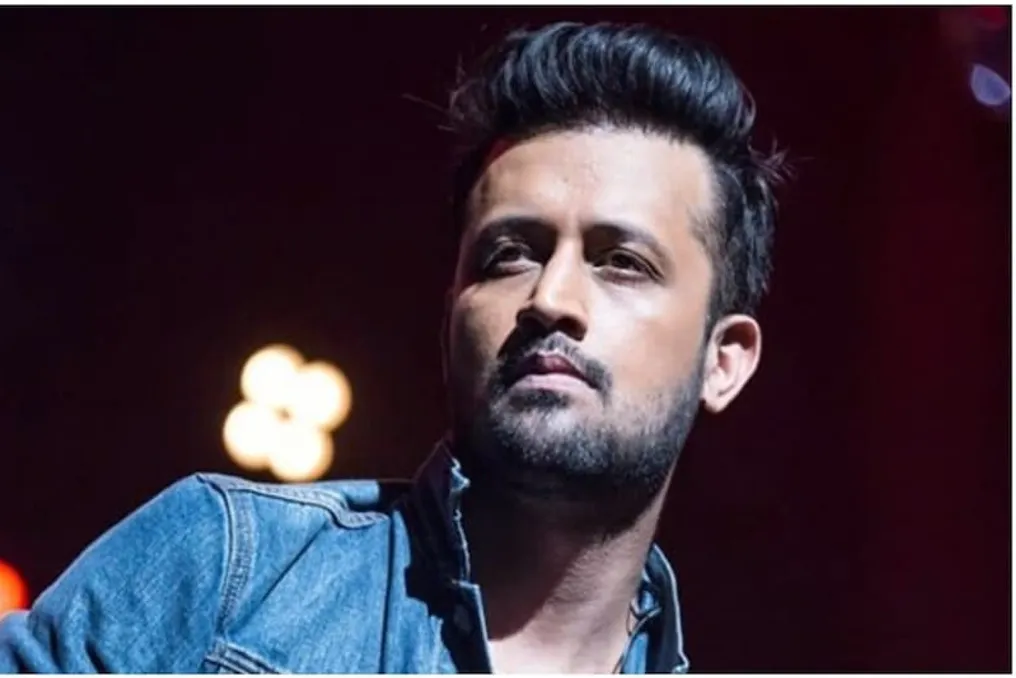
Pakistani singer Atif Aslam shared his opinion regarding the restrictions imposed in India on Pakistani artists. He noted that despite having worked in India for about ten years, his music continues to reach Indian listeners.
Atif believes that the ban in India turned out to be a kind of blessing for him, as it allowed him to find himself as an independent artist and create his own music. Discussing the availability of his music in India, Atif spoke in an interview with Chris Fed's YouTube channel, 'One On One With Chris Fed.' He stated that he has not released songs in India for the last ten years, but his fans listen to his music via VPN or distribute it on CDs. He emphasized that he does not support piracy but believes that music always finds its way.
Speaking about the inability to work in India, Atif clarified that this decision did not apply only to him but to all Pakistani artists. He recalled that the ban on his activities in India has lasted for about ten years and was implemented by the Indian government, which introduced restrictions on Pakistani artists. He also mentioned that similar bans exist against Indian artists in Pakistan now.
Tensions surrounding the work of Pakistani artists in India significantly escalated after the Uri attack in 2016. In the same year, Atif Aslam's concert in Gurugram was canceled upon the recommendation of the district administration, and political organizations protested against events featuring Pakistani artists in India.
In September 2016, the Indian Motion Picture Producers Association passed a resolution calling for not hiring Pakistani artists, actors, and technical staff until relations between the two countries improve. Protests intensified after the Pulwama attack in 2019, when the All India Film Producers Association announced a ban on Pakistani artists working in the Indian film industry.
Furthermore, following the Pahalgam attack in 2025, entertainment relations between India and Pakistan faced another serious impact. Many projects involving Pakistani artists were suddenly suspended. A prominent example was the film 'Abir Gulal' starring Fawad Khan and Rani Kapoor, whose premiere was halted in India due to growing boycott demands just before its release.
The issue was not limited to cinema. Instagram accounts of many popular Pakistani artists were also blocked for Indian users, including names such as Hania Amir, Mahira Khan, and Ali Zafar, affecting these artists' direct contact with Indian fans through social media.
Atif recalled that the current situation, where his music reaches Indian listeners, reminds him of the early stages of his career when people first listened to his songs and then started getting to know him. His music quickly gained popularity through radio, CDs, and cassettes.
Addressing his Indian fans, Atif stated that if they truly want to listen to his music, they will find a way. He noted that although sometimes people are given the opportunity to listen to certain artists, if they like him, they know where to look. He assured his fans that his music will definitely reach them.
He also asked his Indian fans not to be upset because he cannot work in India. Atif added that he always wanted to tell them that he misses them. He doesn't miss working there, but he misses the people.
Atif viewed the experience of distancing himself from playback singing in India as positive for his career. He believes that if there had been no ban, he might not have sought his own music so seriously. He acknowledged that he learned a lot from playback singing and thinks that without the ban, he might not have created his own music, so he is grateful for it.
He also thanked the people who prevented him from working in India. Atif expressed gratitude to those who banned him, as without it, he would not have been able to explore himself so deeply. He concluded by thanking his fans for continuing to love his music and albums, emphasizing that the support of Indian fans means a great deal to him.