Uzbekistan plans to legally introduce a mortgage bond system for the first time, concurrently with an increase in the volume of stock and corporate bond issuance.
Uzbekistan plans to legally introduce a mortgage bond system for the first time, concurrently with an increase in the volume of stock and corporate bond issuance.
According to information provided by S. Toreshev, head of the National Agency for Advanced Projects, the mortgage bond system will be implemented in Uzbekistan. Under this new mechanism, banks sell assets formed from mortgage loans to a specialized financial company. This company, in turn, issues mortgage bonds. Investor income, including interest and principal, will be repaid through payments received from mortgage loans over several years.
Toreshev noted that this mechanism allows banks to refinance previously issued mortgage loans and attract additional funds. Furthermore, a mechanism to protect investors in case the loans are not repaid is provided.
The expected draft law also considers the possibility of granting international financial institutions the right to issue bonds in the national currency.
Currently, capital market indicators show growth. The volume of stock and corporate bond issuance demonstrates significant progress: it amounted to 1.6 trillion sums in 2023, 1.9 trillion sums in 2024, and 3.9 trillion sums in 2025. It is projected that this figure will exceed 7 trillion sums in the first half of 2026.
The total trading volume on the Stock Exchange is expected to reach 17.6 trillion sums by the end of 2025, corresponding to a sixfold growth rate. In the first half of 2026, the trading volume was 6.9 trillion sums.
Additionally, the draft law proposes exempting the income of investment funds received as dividends from dividend tax. According to S. Toreshev, transactions involving the sale and purchase of assets secured by covered and securitized bonds may also be exempt from taxes.
Moreover, it is planned to exempt interest income and exchange rate differences on corporate bonds held by individuals and legal entities, whether residents or non-residents of Uzbekistan, from personal income tax until 2038. These benefits will also apply to income from securities denominated in foreign currency, as well as from sukuk.
Updated banking supervision rules came into force on August 9, concerning minors' accounts, large money transfers, and certain international operations.
According to the new regulation, one of the signs of a suspicious transaction is the deposit or withdrawal of funds, as well as cash withdrawal from an account belonging to a person under 16 years old, in an amount exceeding 40 BHD (16.48 million UZS) within two business days.
Upon detection of such suspicious signs, the bank's internal supervisory body examines information about the client and the transaction; the determination of suspicion is made based on a comprehensive analysis of each case.
Another new criterion is conducting large transactions with countries under enhanced FATF monitoring. A transaction is considered suspicious if an amount of 1000 BHD (412 million UZS) or more is received or transferred to the account from such countries within 30 days.
At the same time, some requirements have been eased. Previously, a customer check was required if they purchased currency exceeding $100, but this threshold has been increased to $500.
A new limit of 175 million UZS has been set for one-time operations conducted without opening a bank account, instead of the previous 500 BHD. Furthermore, banks are obliged to ensure the ability to monitor payments made by card, from the sending financial institution to the recipient.
In the case of suspicious transactions that do not have a set quantitative limit, banks must conduct a comprehensive analysis of the source of funds, participants, their business reputation, relationships, and the actual purpose of the transaction within 10 business days.
Amid global changes and intensive integration processes, a powerful new macro-regional structure is forming, which is under the close attention of the entire world. Modern requirements and trends of renewal demand an increase in the quality of interstate relations.
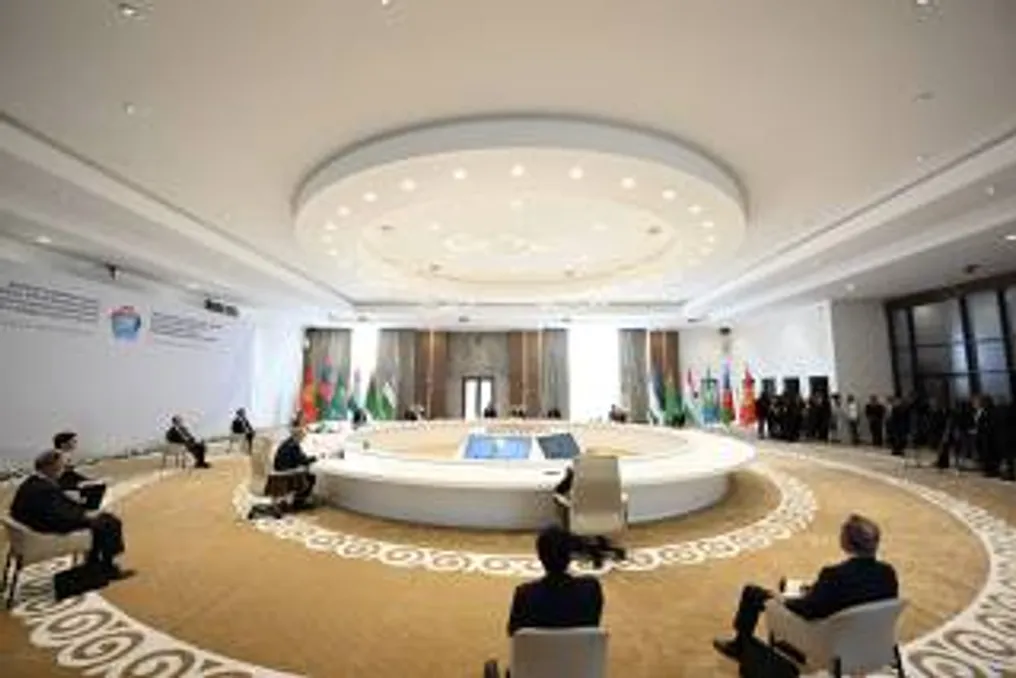
The informal meeting of leaders of Central Asian countries and Azerbaijan, held on the coast of Khorgos, marks a historic event in the era of global transformations. The countries of the region are approaching the 35th anniversary of their independence; over these years, each has found its unique path in shaping statehood, economic growth, and national revival.
Central Asia, which was previously often fragmented and had limited contacts, is now uniting towards common development goals through joint efforts. However, the complex and unpredictable international situation requires states to take more decisive action and be able to counter external threats together.
One of the most important aspects of the meeting was Azerbaijan's accession to the consultation format. This step elevates cooperation to a new macro-regional level. Historic opportunities open up for the formation of a unified development space encompassing Central Asia, the South Caucasus, and neighboring Afghanistan. Utilizing this vast geopolitical and economic potential is an urgent task for creating a solid foundation for sustainable development, interconnectedness, and good neighborliness in the heart of Eurasia.
As emphasized by the leader of Uzbekistan, building a stable architecture for regional cooperation requires relying on the principles of establishing effective summit and meeting institutions, developing close and continuous ties between network bodies, activating direct contacts between territories, and implementing long-term joint programs in key areas of development.
Furthermore, it is crucial to strengthen coordination within interstate organizations and 'Central Asia Plus' formats while simultaneously strengthening the region's status as an international subject. The modern world has reached a level where development cannot be imagined without science, digitalization, and technology. Therefore, a priority task is strengthening interconnectedness in trade and transport, expanding continuous industrial and technological chains, and launching investment platforms.
The leader of Uzbekistan promoted the idea of transforming Central Asia into a competitive hub in education, science, and Big Data. Achieving this goal requires creating an integrated infrastructure that combines human potential, artificial intelligence technologies, modern data centers, and energy capacity.
On the other hand, environmental protection has always remained at the center of the regional agenda. The abnormally hot summer of this year showed that climate change is not just an abstract concept but a factor directly threatening economic, energy, and water security, health, and people's quality of life. Only through joint adaptation to such cross-border natural risks and the search for long-term, scientifically based solutions can stability be maintained.
Moreover, regardless of the importance of economic and political projects, the force that truly brings nations closer is the pan-humanitarian connection between peoples. The peoples of the region have lived side by side for centuries, preserving common cultural values and exchanging knowledge. Deepening cooperation today raises the sense of solidarity in our societies to a new level.
A common regional identity is gradually forming while fully preserving the unique national identity of each people. This will serve as a solid spiritual foundation for future generations.
Overall, the informal meeting of leaders of Central Asian countries and Azerbaijan has been a historic event that has raised regional cooperation to a qualitatively new level in the era of global changes. Strengthening institutional mechanisms between states and deepening pan-humanitarian solidarity serves as a solid basis for creating a space of stable development and good neighborliness in the heart of Eurasia.