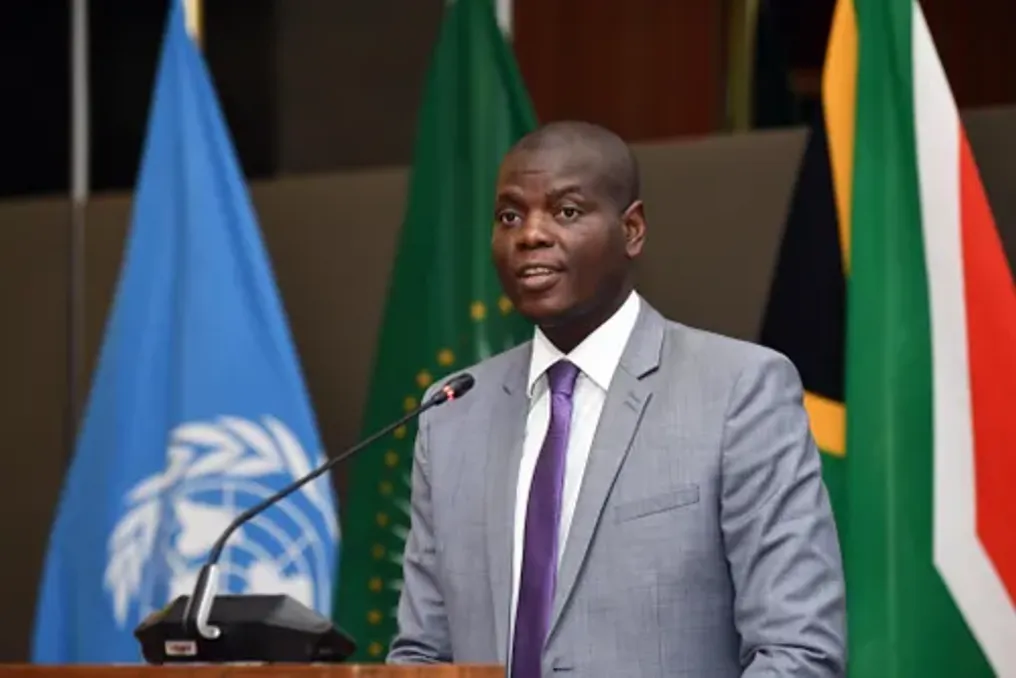
Minister of International Relations and Cooperation Roland Lamola announced that South Africa will focus primarily on developing regional trade, infrastructure, industrialization, and the processing of critical minerals, taking over the chairmanship of SADC for the 2026–2027 period.
Lamola spoke in Durban on Wednesday, when South Africa officially assumed the chairmanship of the Southern African Development Community (SADC) at a Council of Ministers meeting. He emphasized that South Africa's priorities will be ensuring peace, security, and stability, accelerating industrialization, expanding regional trade, developing infrastructure, and strengthening social and human capital.
South Africa aims to boost regional trade
The Minister noted that South Africa's focus will be on transforming agriculture, processing critical minerals, increasing regional trade, and forming regional value chains. The SADC region holds nearly 30% of global proven critical mineral reserves, including about 50% of global cobalt reserves and 20% of graphite reserves.
Nevertheless, Lamola stressed the need for the region's wealth in minerals to contribute to economic and social progress, rather than continuing a model where resources benefit economies outside the region. He stated that changing this trend requires processing domestic resources, creating regional supply chains, and increasing trade between countries.
Currently, trade between SADC countries accounts for only about 20%, which Lamola believes is insufficient given the region's potential. He mentioned that the African Export-Import Bank assessed the untapped potential of intra-African trade at $84 billion in 2018, of which the SADC region accounted for $53 billion. Lamola assured that during his term, the goals of the Scucuce summit would be realized to achieve a 50% share of intra-regional trade and utilize critical minerals for local processing.
Infrastructure and jobs are key SADC tasks
Infrastructure development will also be part of the priorities as South Africa seeks to modernize and expand the systems connecting the region's countries. This includes ensuring reliable energy, efficient transport corridors, modern ports, integrated digital networks, and stable water supply systems. Lamola emphasized that without these foundations, regional production expansion is impossible.
He noted that production currently accounts for only 10% of GDP and cannot generate jobs on the scale required by the region. Furthermore, South Africa's agenda will include the development of social and human capital, especially considering Africa's young population. The average age in Africa is 19 years, and almost 60% of the population is under 25. Lamola predicts that by 2030, one of every four young people globally will come from Africa, so the economy and job creation must match population growth.
Priorities will also be based on gender equality, climate change resilience, and disaster risk management. Lamola insisted that these aspects must permeate all elements of the regional program, as development cannot be inclusive if it ignores gender issues, leaves youth behind, or fails to prepare communities for climate and other shocks.
Lamola calls on SADC states to support orderly migration
The issue of migration is also expected during South Africa's chairmanship. Lamola reported growing public discussions in South Africa regarding irregular migration, the integrity of state borders, access to economic opportunities, and pressure on communities and state institutions. Acknowledging citizen concerns, he rejected vigilantism and human rights violations, stating that solving issues related to irregular migration must be done within a legal and orderly approach.
He added that migration cannot be viewed solely as a security issue, as the movement of people across the region is also linked to economic opportunities and employment. Lamola cited the example of Durban, noting that the country's industrial development significantly benefited from a large labor pool from the region and beyond. The Minister urged SADC member states to sign a protocol on the free movement of people to ensure regular and orderly migration, expressing hope for a joint search for comprehensive solutions to the region's migration problems.
Peace, security, and stability will remain key tasks during South Africa's tenure as chairman. Lamola stressed that the security of one state is inextricably linked to the security and stability of the entire SADC community. He recalled the rich history of the regional bloc in collective response to threats to peace and security, asserting that regional solidarity remains the greatest strength in resolving emerging political and security challenges.
South Africa assumes the chairmanship amid great power competition, rising external shocks, climate disasters, the threat of pandemics, and the internal focus of developed economies. SADC must ensure that its regional development framework leads to an improved quality of life for its population. Lamola called for this moment to renew commitment to bridging the gap between ambitions stated in regional documents and the capacity of institutions to implement them. He also noted that South Africa recognizes its responsibility as the region's most industrialized economy to contribute to regional integration and common prosperity, approaching the chairmanship with humility, determination, and a willingness to work with all member states.