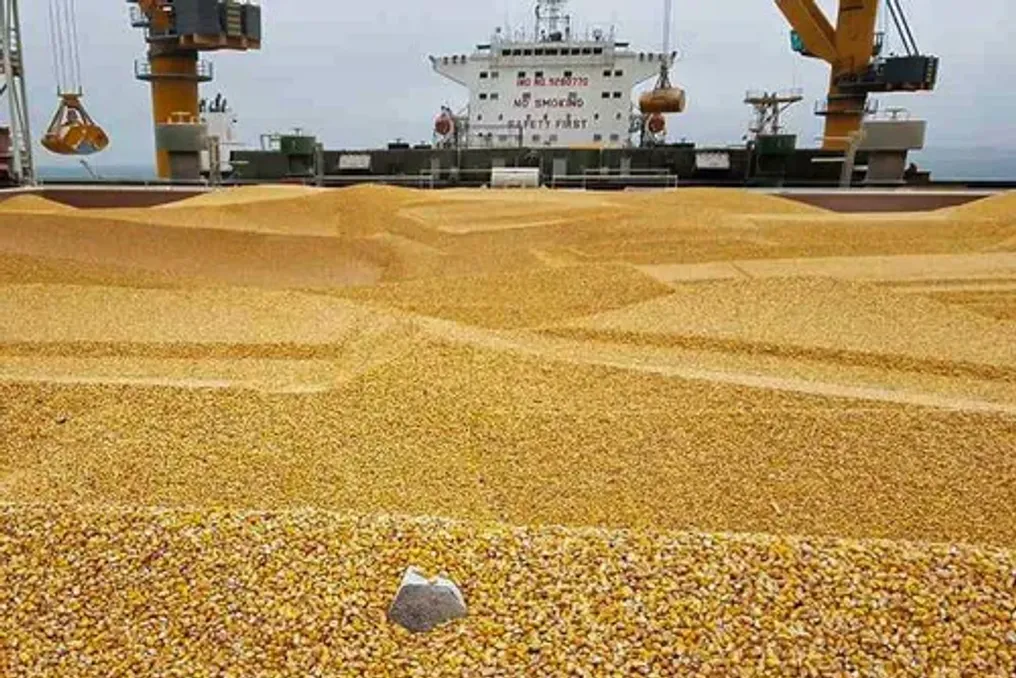
Despite the approaching end of the 2025/26 maize harvest in South Africa, experts note a record yield that is overshadowed by rising production costs and market pressure. A paradox emerges: although the country has significant reserves, food prices remain high, creating serious difficulties for households.
For low-income families, the more expensive trip to the store forces them to reduce consumption or make difficult choices regarding bill payments. This contrast is particularly noticeable against the backdrop of the expected record maize harvest, about 68% of which, or approximately 11.9 million tonnes, was delivered to commercial silos by the end of July. Meanwhile, South Africa consumes about 12 million tonnes of maize annually, which should provide a sufficient supply for the domestic market and exports.
Costs Exceeding Many Budgets' Capacity
According to the latest data from the Pietermaritzburg Economic Justice and Dignity Group, the average cost of a household's food basket in June 2026 was R5,502.42, with the basic food basket being even higher at R6,705.31. These figures reflect purchases made by low-income women. Thus, the problem is not only inflation but whether household income is sufficient to afford an adequate diet after paying rent, electricity bills, transport, education, and other necessary expenses.
The Maize Paradox
The situation with maize illustrates this problem. Vandile Sichlobo, chief economist at the Agricultural Business Chamber of South Africa, reported that the harvest is in good condition despite unusually prolonged rainfall that continued until mid-May 2026. He noted that the yield volume is abundant, considering the annual consumption of 12 million tonnes, which is favorable for export accessibility.
Abundance Does Not Equal Cheap Food
Professor Simphiwe Madikizela from UNISA's School of Graduate Business and Leadership emphasizes the need to distinguish between having sufficient food and the profitability of production for farmers. He explains that a bumper harvest benefits food security and exports, but it creates a paradox: consumers benefit from abundant supply and lower maize prices, while farmers face margin pressure due to high production costs and commodity price pressures.
Madikizela points out that the price of groceries in supermarkets depends on much more than just the cost of raw materials. Diesel fuel, which powers agricultural machinery and the transport moving food, plays a special role. After a sharp spike in diesel prices in April, prices stabilized in July but rose again in August. The increase in fuel costs can be passed throughout the supply chain, so even a drop in crop price due to abundance does not guarantee a reduction in the final retail price.
The Harvest Was Not Without Problems
Furthermore, the harvesting process proceeded slower than usual. David Mari, head of agricultural marketing at FNB, reported that the harvest of summer grains was completed by about two-thirds, with maize remaining the largest unharvested crop. The delay was linked to the late start of the season due to rainfall delays, but the pace accelerated by the end of July. Nevertheless, current wet conditions may cause further slowdowns.
Dr. Christian Moster, senior research fellow in agricultural economics at the University of Pretoria, warned that the remaining part of the harvest carries risks, especially due to unfavorable timing for the resumption of rainfall in the summer grain region.
Maize Is Only Part of the Grocery Bill
The situation is complicated by the fact that maize is only one of the staple foods. South African families are also forced to buy bread, vegetable oil, meat, dairy products, vegetables, fruits, and other goods subject to completely different price pressures. The UN Food and Agriculture Organization's food price index reached 131.1 points in July 2026, the highest level since January 2023, with cereal prices rising throughout the month.
Purchasing Power
Ultimately, the issue is not the availability of food, but people's ability to purchase it. PMBEJD data for June shows that the average household food basket exceeds R5,500. For low-income families, this amount can constitute a significant portion of the monthly income before accounting for transport, electricity, and housing. This forces decisions that are not always reflected in inflation statistics, such as reducing meat consumption or buying cheaper alternatives.
The situation is felt most acutely by families with children; PMBEJD data for June indicates that the average cost of feeding one child is R977.52. For a family with several children, these expenses quickly become substantial.
Bumper Harvest Is Still Good News
Nevertheless, the abundance of maize in South Africa cannot be ignored. The record harvest serves as an important buffer against shortages, supports food security, and opens up export potential. However, the task is to turn this agricultural abundance into affordable nutrition. This requires not only sufficient production but also functioning logistics, competitive markets, managed input costs, and an adequate level of household income.
Thus, South Africa may have a record maize harvest, yet families continue to struggle to secure adequate nutrition. The problem disappears if food security and food affordability are separated: the former asks if there is enough food, and the latter asks if people can afford it. Currently, there is encouraging data on the former, while the latter remains significantly more complex.