During a video conference held on August 11, 2026, Uzbekistan and Denmark discussed the potential for joint work in the field of pharmaceutical product regulation. This was reported by the Center for Pharmaceutical Product Safety.
During a video conference held on August 11, 2026, Uzbekistan and Denmark discussed the potential for joint work in the field of pharmaceutical product regulation. This was reported by the Center for Pharmaceutical Product Safety.
Representatives from the Center for Pharmaceutical Product Safety of Uzbekistan, the Danish Medicines Agency (DKMA), and the Embassy of Uzbekistan in Sweden participated in the meeting. The Uzbek side presented information about its center's activities, its powers, and its main areas of work.
The main focus of the discussions was on state registration and inspection of medicines, pharmacovigilance, quality control of drugs, laboratory activities, ensuring the safety of pharmaceutical products, and implementing international standards.
Participants emphasized the importance of modern approaches and compliance with international norms in pharmaceutical regulation, as well as the importance of knowledge exchange and raising the professional level between regulatory bodies.
The Danish Medicines Agency acts as the state body of Denmark responsible for regulating medicines and medical devices. Its duties include licensing and inspecting pharmaceutical companies, registering medicines, conducting clinical trials, managing pharmacovigilance, and monitoring the safety of medical devices.
Special emphasis was placed on practical ways of bilateral interaction. The parties studied possibilities for direct expert-level participation, sharing experience in regulatory practice, holding training seminars and professional development programs. The possibility of joint projects aimed at improving the qualifications of pharmaceutical industry specialists was also discussed.
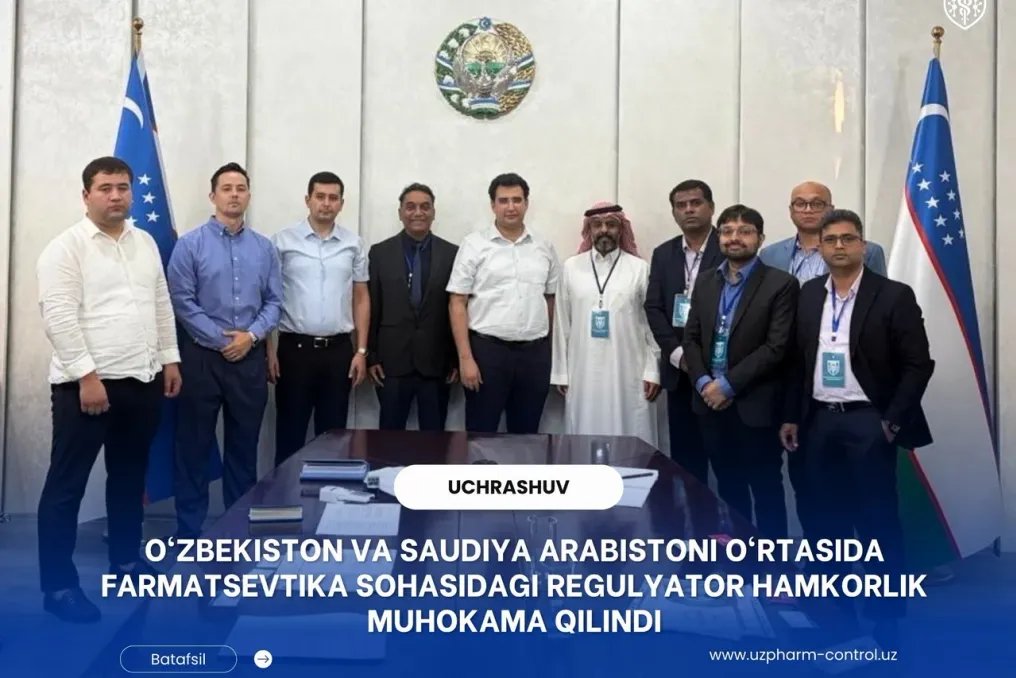
The Center for Pharmaceutical Product Safety of Uzbekistan held discussions on regulatory interaction issues in the pharmaceutical sector between Uzbekistan and Saudi Arabia. Aspects such as drug registration and certification were discussed.
As part of the meeting, the Center for Pharmaceutical Product Safety gathered representatives from pharmaceutical companies from Saudi Arabia and India. The parties examined in detail procedures related to the circulation of medicines in Uzbekistan, including state registration, recognition procedure registration, certification, documentation submission, and expert evaluation.
Center specialists provided foreign companies with information about the current state registration procedure for medicines in Uzbekistan. For their part, representatives from Saudi Arabia stated their readiness to support further cooperation between the Center for Pharmaceutical Product Safety and the Saudi Food and Drug Authority (SFDA).
Participants emphasized the significance of SFDA's experience for improving the Center's activities in accordance with international standards. This includes work aimed at achieving the WHO's ML3 maturity level in the future. At the end of the meeting, the parties agreed to continue practical interaction, exchange experiences, and discuss emerging issues through working-level contacts.
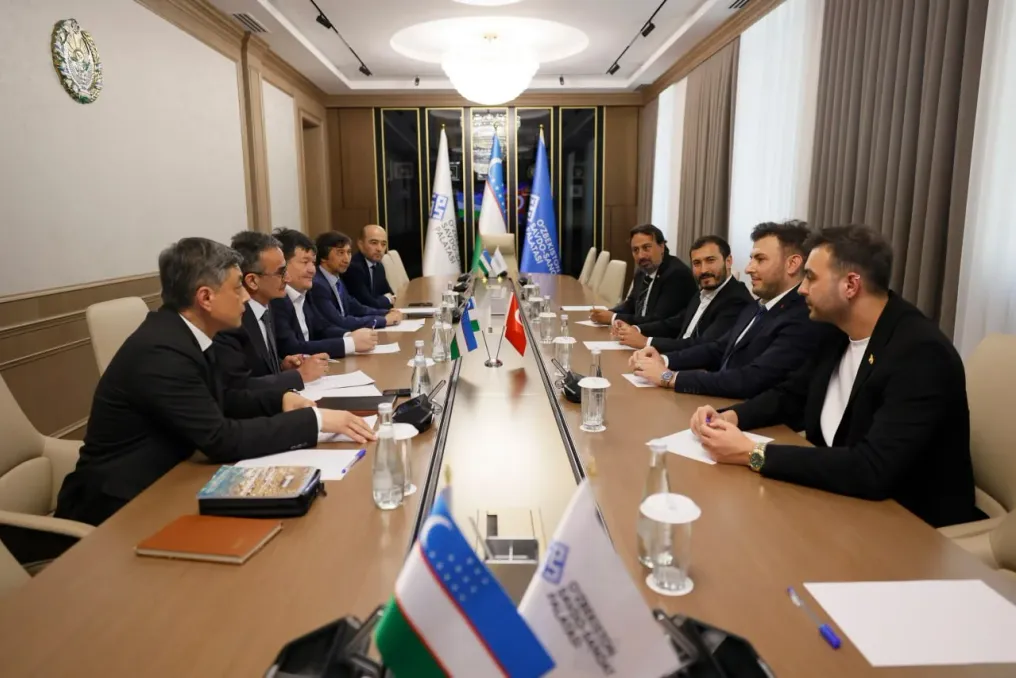
Representatives of the Chamber of Commerce and Industry of Uzbekistan held negotiations with a delegation from the Turkish pharmaceutical company Kiperin İlaç Gıda Sanayi ve Ticaret Limited Şirketi. The goal of the meetings was to discuss opportunities for deepening interaction in the field of pharmaceuticals.
The negotiations included Bakhrum Makhatramov, Deputy Chairman of the Chamber of Commerce and Industry of Uzbekistan, Advisor to the Chairman Alisher Shaykhov, as well as Tolga Pektaş, CEO of the Turkish company. Issues regarding strengthening trade and economic partnership between Uzbekistan and Turkey were discussed.
Participants focused on implementing joint projects in the pharmaceutical industry, increasing investment cooperation, expanding import-export operations, and establishing direct ties between the business communities of both countries.
Information about the investment climate of Uzbekistan and opportunities for localizing production was presented to representatives of the Turkish firm. Existing state support measures for investors, tax and customs benefits, as well as conditions for foreign trade operations were outlined.
Following the discussions, the parties reached an agreement on further joint work on practical pharmaceutical projects. Furthermore, it was decided to promote technology transfer and investments, as well as strengthen business ties between entrepreneurs from Uzbekistan and Turkey.
Kiperin İlaç Gıda Sanayi ve Ticaret Limited Şirketi was founded in 2019 and specializes in the production of vitamins, collagen, food additives, and other health products. The company's products are manufactured in accordance with international GMP, HACCP, ISO, and Halal standards and are exported to many foreign countries.
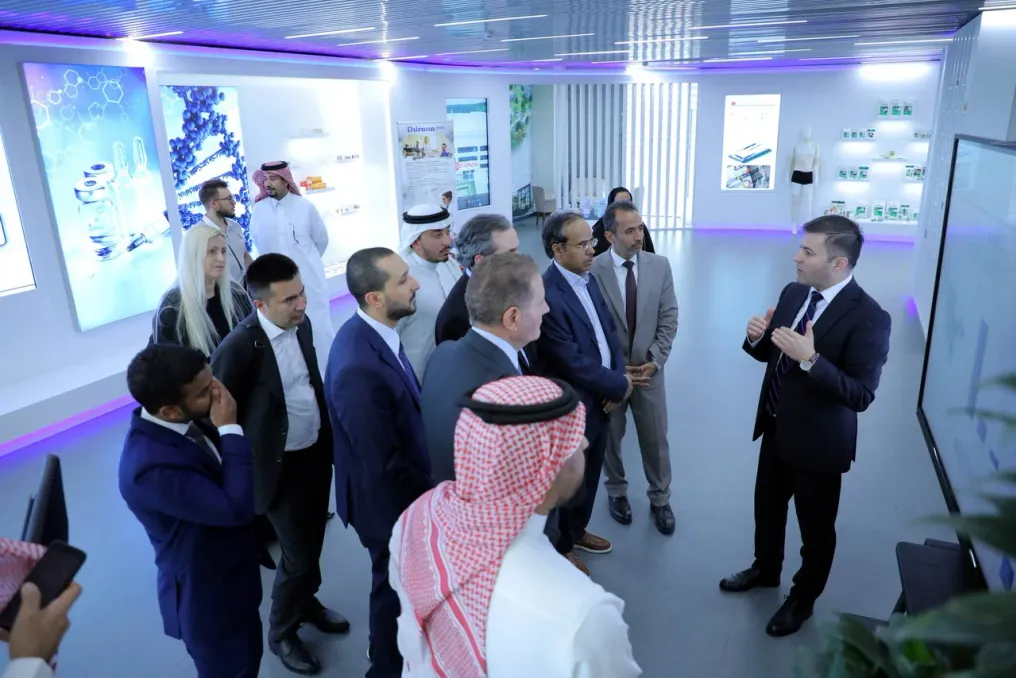
Abdulla Azizov, Director of the Agency for the Development of Medical and Pharmaceutical Industry of Uzbekistan, held talks with representatives of Saudi companies The Health Holding Company (HHC) and The National Unified Procurement Company (NUPCO). These representatives arrived as part of an official delegation from the Kingdom of Saudi Arabia.
The parties focused on several key aspects: modernization of Uzbekistan's medical and pharmaceutical sectors, implementation of projects in the BioPharma City pharmaceutical cluster, improving the investment climate, and creating high-tech production facilities with the participation of foreign partners.
During the meeting, issues regarding optimizing supply chains and the production of pharmaceutical products, implementing modern methods in state procurement systems, technology transfer, logistics development, attracting investments, and prospects for joint ventures were also discussed.
The Health Holding Company is a state entity of Saudi Arabia that participates in transforming the kingdom's national healthcare system in accordance with the Vision 2030 strategy. In turn, The National Unified Procurement Company acts as a state operator specializing in centralized procurement and uninterrupted supply of pharmaceuticals, medical devices, and healthcare technologies.