Vodacom Group has appointed the former CEO of Airtel Africa, a competitor from Africa, to its board of directors and has also identified a successor to the chairman nearly a year before his departure.
Vodacom Group has appointed the former CEO of Airtel Africa, a competitor from Africa, to its board of directors and has also identified a successor to the chairman nearly a year before his departure.
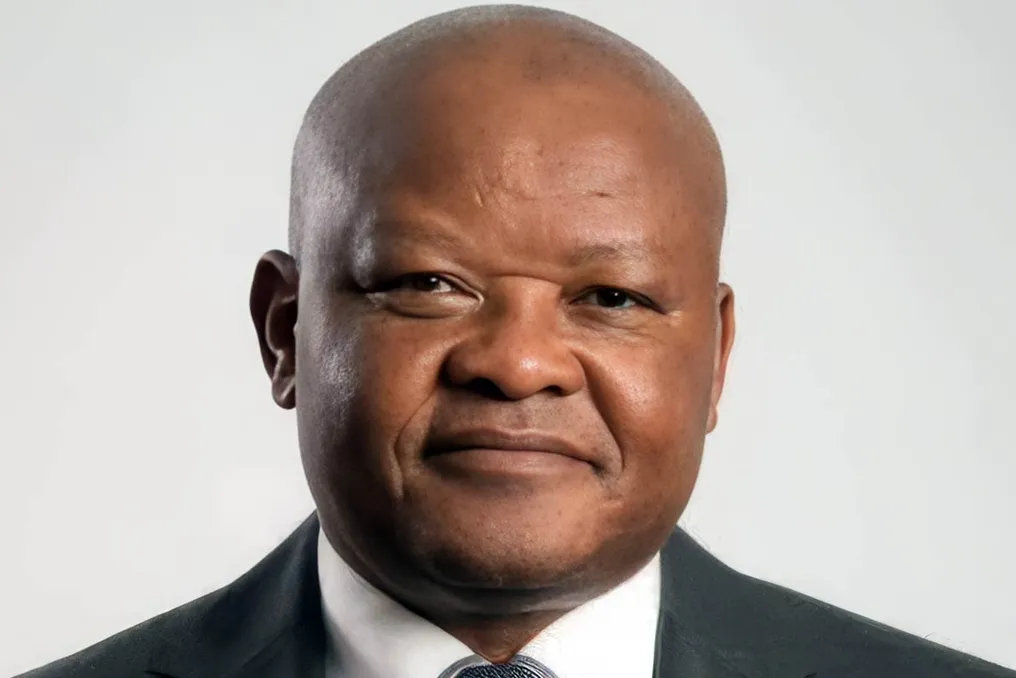
According to a notice published by Vodacom on the JSE stock exchange news service on Wednesday, Segun Ogunsan will join as an independent non-executive director on October 9. Ogunsan led Airtel Africa as CEO from October 2021 until his retirement on July 1, 2024, having spent 12 years at the company, nine of which were related to its business in Nigeria—Airtel's largest market, which Vodacom has not been able to fully capture.
Airtel Africa serves approximately 190 million customers across 14 African countries and directly competes with Vodacom in countries such as Tanzania, the Democratic Republic of Congo, and Mozambique. Furthermore, the Airtel Money platform is a major rival to M-Pesa in East Africa.
This appointment comes as Vodacom develops its Vision 2030 strategy, focused on financial services, an area where Ogunsan built a reputation through the expansion and deployment of Airtel Money across the continent.
He is a chartered accountant and a graduate of the Faculty of Electrical Engineering at Ife University, now Obafemi Awolowo University. Before working in the telecommunications sector, he managed Coca-Cola distribution operations in Nigeria, Kenya, and Ghana, and headed retail banking business in 28 African countries at Ecobank.
He currently chairs the Nigerian Sovereign Investment Authority, the country's national wealth fund, and co-chaired the B20 digital transformation task force for the G20 summit in South Africa last year.
Until recently, Ogunsan was also on the board of Optasia, a JSE-listed fintech company that manages airtime top-up businesses for both Vodacom and MTN, where he held a seat on the audit committee. Optasia informed shareholders on July 31 that he would step down as an independent non-executive director and leave the audit committee on September 1—five weeks before taking up his position at Vodacom. The company stated that it is seeking additional independent directors.
Meanwhile, Chairman Makozoma plans to retire from the Vodacom board at the annual general meeting on July 20, 2027, having participated in it in July 2017. Vodacom applies a self-imposed term limit of 10 years for directors. The next day, leadership will be taken over by lead independent director Humo Shuenyana.
The board acknowledged Makozoma's contribution to overseeing the implementation of the Vision 2025 strategy and the launch of Vision 2030.
Naspers South Africa CEO, Futi Mahanyele-Dabengwa, is leaving the board on October 8 after seven and a quarter years—less than the established term limit. She joined in January 2019 and chaired the remuneration committee while also serving on the nomination committee. Vodacom did not provide reasons for her departure.
Clive Thomson will take over the remuneration committee on October 9, while continuing to head the audit, risk, and compliance committee. The company reported that Ogunsan underwent JSE compliance assessment, and that his declaration contained no 'positive statements' regarding integrity information, meaning there were no adverse findings.
The Roads and Transport Authority (RTA) of Dubai has expanded Sheikh Zayed Road over a section more than two kilometers long to improve traffic flow in heavily congested areas.
As part of this expansion, a new lane of traffic has been added. This lane is located in the direction leading from Abu Dhabi towards the intersection with the World Trade Center, near the Burj Khalifa/Dubai Mall metro station.
VezoPay, a South African company that developed a battery-free smart ring for payments, quietly began collaborating with the banks Investec and Absa, increasing its number of banking partners to four in less than a year. A fifth major retail bank is expected to join by the end of 2026.
None of these new integrations were officially announced. The collaboration with Investec started about three months ago, and the company has begun promoting the product. Absa credit cards were recently activated, and the bank plans a full-scale consumer launch within the next month, accompanied by an advertising campaign extending into 2027.
The company, founded by Jake Pinks and Lawrence Baker, first released its rings in July 2024. Previously, FNB and RMB Private Bank started working at the end of last October. Baker noted that the main growth occurred in the last six months.
VezoPay reports having a waiting list of about 35,000 people whose banks are not yet supported, a significant portion of whom are clients of a major retail bank planning a later launch this year but has not yet disclosed its name.
The Investec integration demonstrates the clearest demand. The bank ran a discount promotion for private clients—20% off the basic ceramic ring and 30% off the gold one—and VezoPay recorded hundreds of sales in the first few days, with demand unusually skewed towards premium models.
The founders claim that the limitation to growth is not production or technology, but the process of connecting banks. Each financial institution undergoes its own internal governance and approval procedure, followed by approval from the South African Reserve Bank.
Pinks reported that approval from FNB took approximately nine months, while Investec required about four. As the company gained momentum, requirements tightened, as banks began requesting data on penetration and stress testing, and in some cases, conducting real international transactions to confirm the possibility of fund traceability.
The product line has been simplified since the launch. A wider ring option for mass distribution was eliminated in favor of a thinner profile across the entire line, which now consists of three main groups: X, a ceramic ring in black, white, and pink; Classic, made of matte or polished stainless steel; and the gold Signature.
Rose gold was discontinued after proving controversial, and the founders have kept it for possible limited releases. The gold ring was redesigned with more chamfered edges following customer complaints that it got stuck between fingers, and the gold content was reduced from 21 carats to 18 carats. Increased production capacity led to a decrease in the price of gold, while ceramic and stainless steel models slightly increased in price. Gold rings are now supplied with free engraving.
The ring is equipped with a programmable NFC chip without the need for charging, it is waterproof, dustproof, and shockproof. Payment data is not stored on the device itself: when a card is linked, a one-time token is recorded, similar to how a wallet works on a phone. Only one bank card can be tokenized simultaneously.
Since the token is within the payment systems, the ring inherits the issuer's fraud control mechanisms—location and transaction speed checks, as well as a PIN request for amounts over 500 Rand or at an unfamiliar store. The ring can be locked via the app, and VezoPay added an emergency PIN allowing the user to freeze the device from any browser without using a phone.
Additional NFC features are in beta testing, including business cards, retailer loyalty cards, and an emergency medical profile containing blood type, allergies, and health insurance data, accessible by tapping any NFC-compatible phone.
The shareholder registry has also significantly expanded. Futi Mahanjele-Dabengwa, CEO of Naspers South Africa, invested early through the Three Birds group. Jonathan Smith, founder of Payfast, joined as an investor and advisor in early 2025 and continues to participate in the project.
The latest round attracted two former senior executives from the well-known cybersecurity firm Mimecast, who now manage investment and family offices. Baker stated that Three Birds' investments are currently valued at approximately 10 times their initial cost, although the company has not disclosed the size of any of the rounds.
In addition to South Africa, two banks in Mauritius are testing the product, and beta programs are running in three other African regions. VezoPay states that its relationships with Visa and Mastercard have opened doors for issuers on another continent.
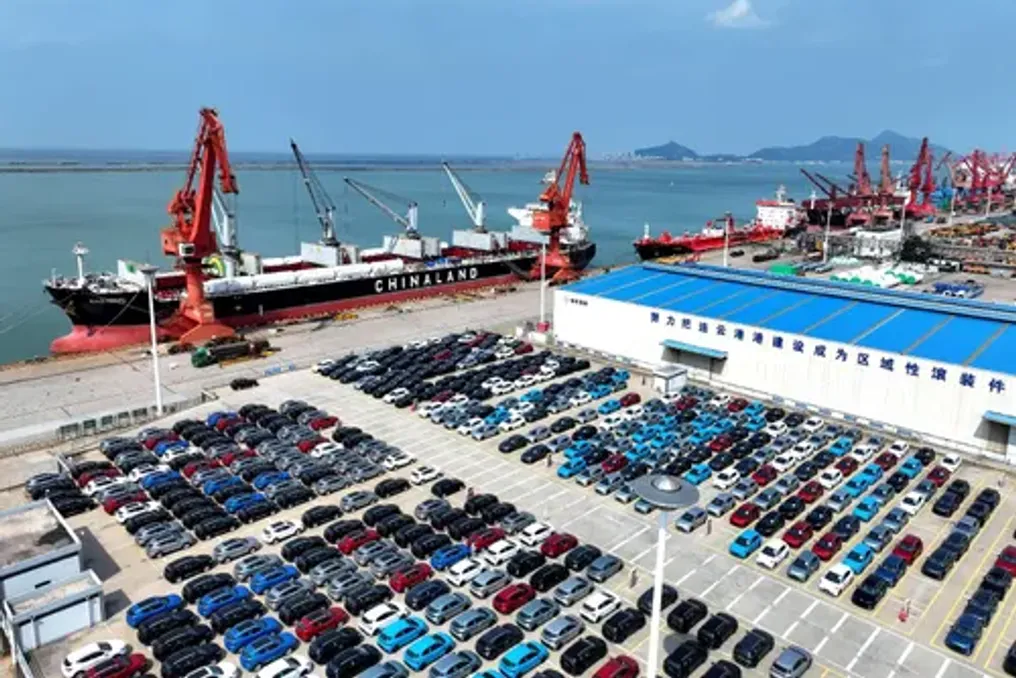
China is actively engaging with global stakeholders, striving to unlock new opportunities for development. For instance, in Jiangsu province in eastern China, a terminal is receiving next-generation Chinese electric vehicles ready for export.
According to data from the National Bureau of Statistics of China, the added value of the 'three new' economy—which includes new industries, formats, and business models—reached 25.79 trillion yuan ($3.82 trillion USD) in 2025, an increase of 6.2% compared to the previous year. This growth exceeded the GDP growth rate at current prices by 2.2 percentage points, and the sector's share in China's total GDP increased to 18.39%.
The continuous expansion of the 'three new' economy reflects China's transition to high-quality development and serves as a source of stability and momentum for the recovery of the global economy, which remains fragile and faces weakening traditional growth drivers.
In this context, the World Bank and the International Monetary Fund have identified technological innovation, digital transformation, and green development as key factors for future global growth. In central China, in Hunan province, electronic products are being manufactured at a company's factory in Xiaoyang.
Historically, assessments of the Chinese economy focused primarily on its scale and speed. However, today discussions are increasingly centered on innovative potential, industrial complexity, and sustainability. The Global Innovation Index for 2025, published by the World Intellectual Property Organization, showed that China has entered the top ten global leaders in innovation, and the Shenzhen-Hong Kong-Guangzhou innovation cluster ranked first globally.
The stable growth of the 'three new' economy demonstrates that China is making significant progress in transitioning from factor-based growth to innovation-driven development. In the new energy sector, for example, Chinese photovoltaic modules, battery packs, and electric vehicles benefit from the coordinated development of the entire industrial chain. This integration provides mature and reliable solutions for countries undergoing energy transitions.
Furthermore, the deep integration of digital technologies with the real economy—from industrial internet applications in manufacturing to flexible customization in sales—has opened viable pathways to improve the quality and efficiency of traditional industries. International observers have noted this. The Wall Street Journal observed that China's strengths in the new energy and digital economy sectors, built on the coordinated development of the entire chain, are reshaping global supply chains in related industries.
The Financial Times emphasized that China's innovations are not a collection of isolated technological breakthroughs but a systemic capability formed based on a complete industrial ecosystem and a vast domestic market, serving as a model for developing economies striving for transformation and modernization. With its large market, comprehensive industrial support system, and effective capacity for application and iteration, China is becoming an increasingly important hub of global innovative resources.
Breakthroughs in advanced fields such as artificial intelligence and green energy depend on cross-border exchange and cooperation. Unlike some countries that erect technological barriers, seek 'decoupling and supply chain fragmentation,' or create 'small, walled gardens,' China emphasizes openness, cooperation, and mutual benefit, continuing to build broad platforms for the global flow of innovative resources.
Examples of this trend include the British pharmaceutical company AstraZeneca, which established a global R&D center in Beijing, making China a key part of its global drug development network. Roche Diagnostics, a multinational pharmaceutical firm, expanded its manufacturing and research base in Suzhou, Jiangsu province, deepening the integration of advanced manufacturing and innovation. The cosmetics giant L'Oréal transformed its R&D center in China into a global R&D hub, leveraging knowledge of the Chinese market to drive product innovation worldwide.
The number of multinational corporations integrating China more deeply into their global innovation networks is growing, using the Chinese market to test new technologies, incubate new business models, and accelerate the global adoption of innovations. For many developing countries, China's experience in developing the 'three new' economy is highly relevant. Its proven practices in areas such as inclusive digital development and green transformation provide a valuable benchmark for countries seeking development paths suited to their own conditions.
Under the framework of high-quality cooperation under the Belt and Road Initiative, the Redstone concentrated solar thermal project in South Africa filled a gap in advanced solar thermal technologies in Sub-Saharan Africa. The Bukhara wind power plant project in Uzbekistan is expected to reduce carbon emissions by 1.6 million tons annually, supporting the country's transition to a green and low-carbon economy. China's digital mobility technologies were implemented in São Paulo, Brazil, helping to optimize urban transport management and improve public services.
These cooperation projects have translated China's strengths in new economic development into tangible results for sustainable development worldwide, demonstrating the essence of openness, interconnectedness, and mutual benefit. Moving towards new frontiers through greater openness and integration, China will continue to implement its innovation-oriented development strategy and is firmly committed to expanding high-standard opening-up. Together with countries around the world, China will contribute to the emergence of new growth drivers through innovative cooperation, create new space for development through openness and connectivity, and jointly write a new chapter of global development and prosperity.