The United Arab Emirates Astronomy Center issued a clarification regarding four astronomical events scheduled for August 12, 2026, in response to media reports that the Center claimed exaggerated or distorted the facts.
According to the Center's data, the mentioned events include a total solar eclipse, the Perseid meteor shower, planetary alignment, and a new moon. Although all these events will indeed occur on this day, the Astronomy Center noted that the degree of their visibility and significance were artificially inflated in media publications.
Reports about the total solar eclipse on August 12 are accurate. The Center indicated that this phenomenon will be visible in Siberia, at the North Pole, Greenland, Iceland, parts of the northeastern Atlantic, Spain, and the western Mediterranean Sea. Meanwhile, residents of North America, Western and Central Europe, Russia, and West Africa, including Mauritania, Morocco, Algeria, Tunisia, and northwestern Libya, will only see a partial eclipse.
During the eclipse, the chromosphere and corona of the Sun can be observed from certain territories. The shape of the corona changes from one eclipse to another, which is determined by the intensity of the Sun's magnetic field.
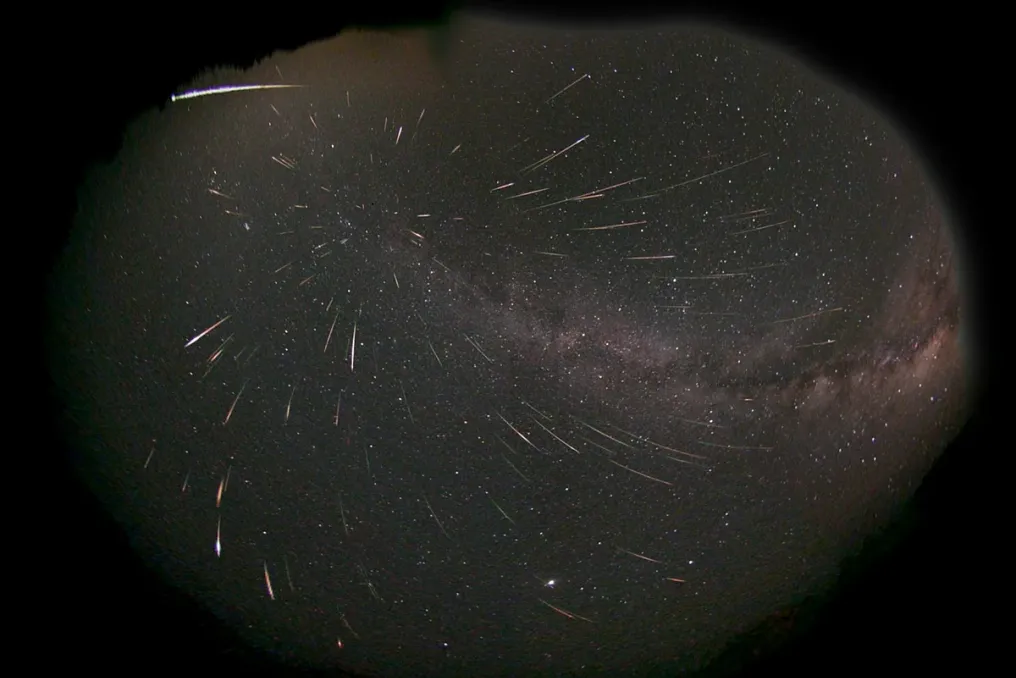
The Perseid meteor shower, named after the constellation Perseus, is observed annually from July 17 to August 24, with the number of meteors increasing between August 11 and 14. The Astronomy Center reported that conditions are particularly favorable for observing meteors in the Arab region this year because the absence of moonlight during the peak of the shower will be due to the new moon. Meteors will be visible on the night leading into Thursday morning. Nevertheless, the Center clarified that only a small number of meteors can be seen from urban areas due to light pollution.
The Astronomy Center refuted claims that a special planetary alignment would be visible on August 12, calling such reports 'exaggerations bordering on disinformation.' The Center explained that planets are always aligned along an imaginary line in the sky called the ecliptic, and during Wednesday, from the moment after sunset until the moment before the next morning's sunrise, Venus, Saturn, Mars, Mercury, and Jupiter will be visible above the horizon. However, proximity to the Sun will make the last two planets almost invisible, and the others will be difficult to spot for the untrained eye, with the exception of Venus, which can be noticed as a bright object on Wednesday evening.
The fourth event is a regular new moon, which holds no particular significance. According to the Astronomy Center, social media posts attributed special characteristics to the new moon, which is false.