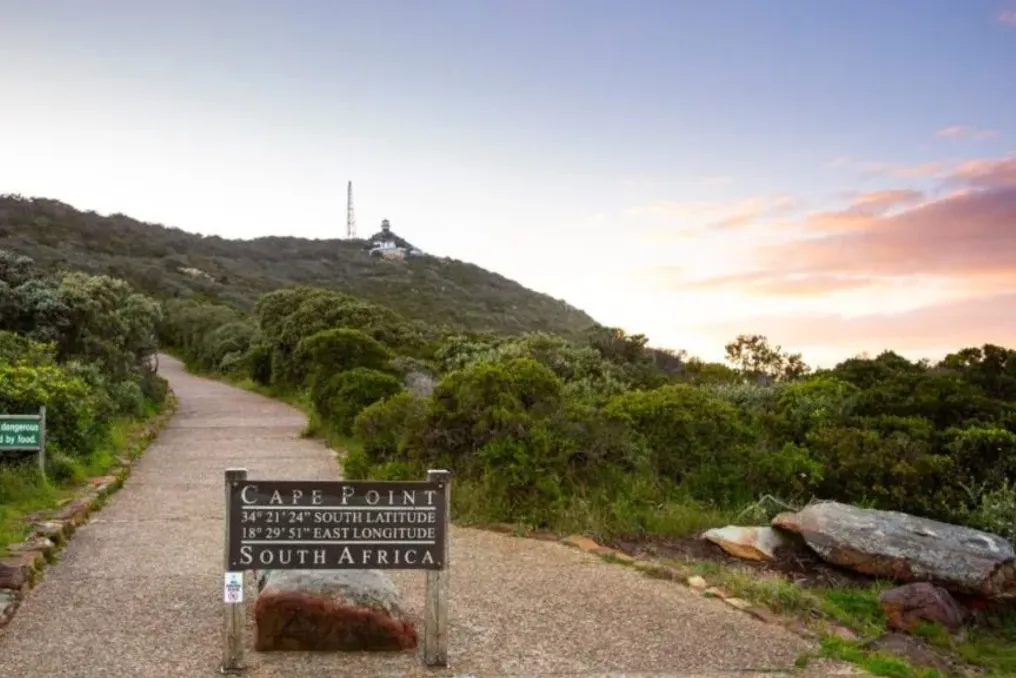
Cape Point remains a popular destination on the Cape Peninsula, but the cost of visiting depends on the visitors' citizenship. Various conservation fees are applied upon entry for South Africans, citizens of SADC countries, and foreign tourists.
Cape Point remains a popular destination on the Cape Peninsula, but the cost of visiting depends on the visitors' citizenship. Various conservation fees are applied upon entry for South Africans, citizens of SADC countries, and foreign tourists.
According to a statement from The South African, the current tariff period will extend until October 31, 2026. The ticket price for adult South Africans is R110, and for children aged two to eleven years, it is R55. Citizens of SADC countries pay R225 for an adult and R115 for a child. Foreign visitors are charged R515 for adults and R250 for children.
For those planning to visit the lighthouse, there is an additional fee for using the 'Flying Dutchman' funicular, which is calculated separately from the park entrance fee. Return tickets cost R115 for adults and R60 for children and pensioners from South Africa. One-way fares are R100 for adults and R52 for children and pensioners.
There is currently a temporary restriction for Cape Point visitors: the 'Flying Dutchman' funicular is closed from July 20 to August 31, 2026, due to scheduled maintenance and modernization. Cape Point has confirmed that the funicular will resume operation on September 1. Despite the funicular closure, Cape Point itself remains open, and visitors can reach the lighthouse area on foot.
During the maintenance period, a shuttle service is available. The cost for a return trip on the shuttle is R80 for an adult, and one way is R70. For students and pensioners, the rates are R40 for a return trip and R35 for a one-way trip. It should be noted that the shuttle is not equipped for wheelchairs.
For visitors using wheelchairs, the temporary closure has more serious implications. Cape Point reports that 'Flying Dutchman' is the only route to the lighthouse accessible by wheelchair; therefore, the lighthouse area will be inaccessible to wheelchair users during the works.
SANParks has also confirmed that the conservation fees for Cape Point are valid from November 1, 2025, to October 31, 2026. South Africans claiming the local rate must present proof of South African citizenship at the entrance. Regarding the funicular, the current published tariffs include R115 for a return trip and R100 for a one-way trip for adults, while children and pensioners from South Africa pay R60 for a return trip and R52 for a one-way trip. Children under six travel free when accompanied by a paying adult.
From April to September, Cape Point operating hours are from 7 am to 5 pm, and visitors must leave the premises before sunset. Infrastructure facilities such as the Two Oceans restaurant, grocery store, and retail outlets operate on their own schedules, so those planning to spend the whole day there should check the operating hours in advance.
The popularity among travelers sparked by TikTok has brought many destinations in South Africa to prominence. Although drone footage and cinematic edits often create the illusion of a perfect paradise, some locations showcase their beauty regardless of elaborate editing or trending audio tracks.
Several destinations across South Africa have gone viral not because of excessive hype, but because they genuinely meet expectations. These places offer breathtaking landscapes, unforgettable experiences, and an atmosphere that cannot be replicated with filters. In a sense, TikTok merely reminded travelers that these locations were worth visiting all along.
Lisbon Falls vividly illustrate the difference between what is shown on social media and reality. On screen, it is just another impressive waterfall shot in slow motion from a drone. However, standing at the viewpoint, one cannot ignore its scale. Lisbon Falls is the highest waterfall in Mpumalanga, reaching a height of 94 meters. It plunges into a forested canyon where the air is filled with mist, and the roar of the water drowns out all other sounds.
This waterfall is one of the iconic stops on the Panorama Route. Unlike many places whose popularity stems from skillful camera work, Lisbon Falls makes an equally strong impression upon personal visit. The appeal of this location also lies in the fact that the experience rarely ends with the waterfall itself. Most tourists continue along the Panorama Route, combining a visit to Lisbon Falls with stops at Berlin Falls, Bourke’s Luck Potholes, and God’s Window, turning one viral spot into one of South Africa's most delightful scenic journeys. Arriving early in the morning allows for softer light for photos and a calmer atmosphere before large tourist groups arrive. The overall feeling of this region is unique to Mpumalanga: lush, dramatic, and naturally photogenic.
One weakness of drone videography is its inability to convey the true size of a place. This becomes evident when visiting the Blyde River Canyon. Spanning approximately 26 kilometers, it ranks among the largest green canyons in the world, carved by majestic cliffs covered in dense subtropical vegetation. Videos often focus on the famous Three Rondavels viewpoint, but they fail to capture the immense depth of the landscape or the feeling of being above one of Africa's greatest natural wonders.
The beauty of the Blyde River Canyon lies in taking your time. Each viewpoint reveals something new—from vast escarpments to winding rivers below. Furthermore, cruises on Blyde Dam offer a completely different perspective of the canyon from the bottom level. It is a place that rewards curiosity, not quick photo stops. A quiet grandeur reigns here that no viral clip can fully capture.
Not all viral spots on TikTok are associated with dramatic landscapes. Dullstroom gained fame through something more measured. Videos showcasing misty mornings, cozy cafes, crackling fireplaces, and hot coffee introduced thousands of travelers to one of South Africa's beloved rural corners. Fortunately, the reality feels as tranquil as it does online.
Instead of chasing attractions, visitors immerse themselves in the rhythm of the town. Long breakfasts give way to leisurely days spent in local shops, tasting local whiskey, or fishing in the region's renowned fishing waters. Winter only enhances the atmosphere, enveloping the town in low clouds and giving every street a Highveld character. This proves that sometimes the destination itself is less important than the pace it encourages.
Some places seem made for social media, but Moonshine on Whiskey Creek gained popularity for reasons extending far beyond aesthetics. Nestled among local woodland near The Crags, the elevated wooden cabins appear to float among the trees, with floor-to-ceiling windows framing an unobstructed view of the surrounding forest canopy. It is easy to understand why these cabins became a favorite backdrop for content creators.
However, the real luxury here is the silence. The lodge runs entirely on solar power and offers an authentic off-grid living experience, where birdsong replaces notifications, and forest walks become the main event of the day. The cabins encourage slowing down, deep breathing, and appreciating how restorative a holiday without constant distractions can be. Proximity to hiking trails, nature reserves, and wildlife habitats allows for easy extension of the stay, but one can also be perfectly content doing almost nothing.
Some places look so flawless online that they seem artificial. Postcard Café, located at the Stark-Condé Wine Estate outside Stellenbosch, is one such example. Reflections shimmer on the lake, vineyards stretch towards the mountains, and it seems every table offers postcard-worthy views. Fortunately, reality does not fall short in beauty.
Unlike places where tourists come, take a picture, and leave, this location invites lingering. Long lunches transition into lazy afternoons, wine tastings turn into unhurried conversations, and the landscape quietly demands attention long after the camera is put away. It reflects everything people love about the Cape Winelands without being overly commercial.
In an era of increasingly crowded coastlines, Sardinia Bay beach feels refreshingly untouched. Located near Gqeberha, this beach has become a favorite among TikTok content creators looking for dramatic dunes, endless sandy expanses, and crashing surf. Despite growing online popularity, it retains the wild character that originally made it special.
There are no noisy promenades or rows of beach umbrellas competing for space here. Instead, high dunes meet the ocean in a landscape that feels wonderfully pristine and open. It is best enjoyed by walking along the sand at sunrise or watching the sky turn gold at sunset over the Atlantic. Strong currents make it better suited for strolling than swimming, but this is not a major issue. Sardinia Bay is a place to experience, not just visit.
Cape Town has many Instagram-popular spots, but the Boomslang Canopy Walk at Kirstenbosch National Botanical Garden continues to justify its popularity. Suspended above the treetops, the gently curved steel walkway offers a perspective few botanical gardens can replicate. Table Mountain looms on the horizon, while local trees and fynbos unfold beneath your feet, creating a view that changes with every season.
This is one of those rare attractions where the experience feels surprisingly peaceful despite its fame. Visitors naturally slow their pace, stopping to admire the changing landscape or simply enjoy one of the city's finest green spaces. The canopy walk is only part of the experience. Time should also be set aside to explore the wider gardens afterward, especially in spring when Kirstenbosch blooms.
Travelers often advise avoiding places as soon as they become popular on social media, fearing crowds or disappointment. Sometimes, this caution is warranted. However, these places remind us that popularity and authenticity do not exclude each other. Whether it is the roar of Lisbon Falls, the immense scale of the Blyde River Canyon, the calming silence of Dullstroom, or the wild beauty of Sardinia Bay, each destination offers something that cannot be fully appreciated through a screen. TikTok may have introduced them to a new generation of travelers, but it did not create what makes them special. It simply gave us all another reason to pack the car and see it for ourselves.