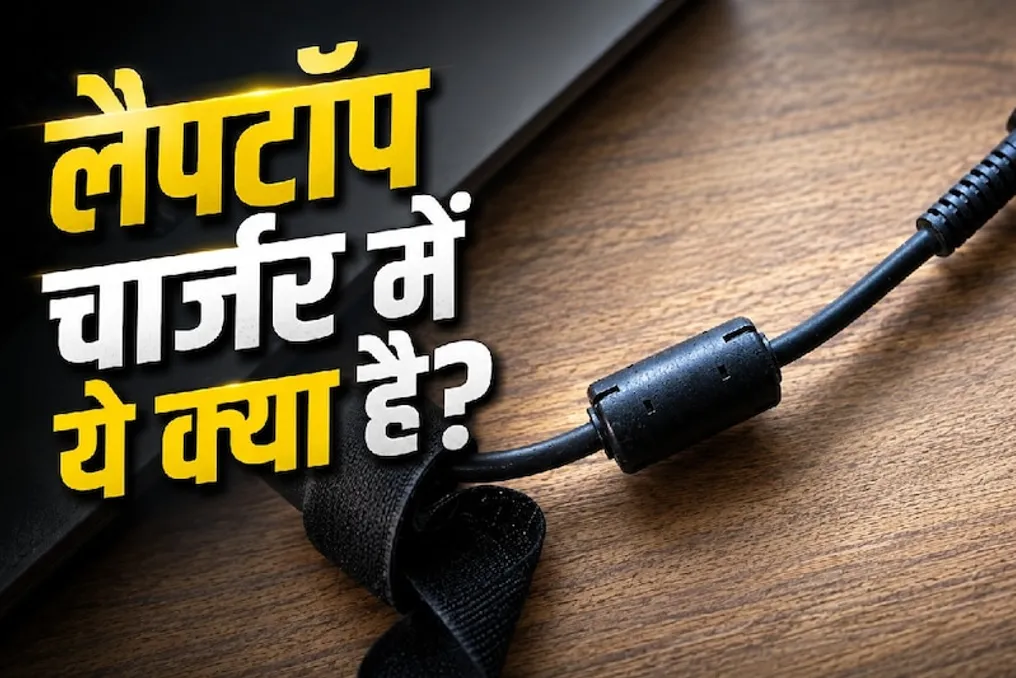
At the end of the cable used to charge a laptop, there is a small cylinder that often goes unnoticed by most people. This component is present in chargers used both at home and in offices, and it performs important functions.
This cylindrical, thick element located at the end of the laptop charging cable is called a ferrite bead or ferrite choke. It functions as an electromagnetic filter, preventing electrical signals from escaping the cable and blocking the capture of other signals.
A laptop charger converts alternating current (AC) to direct current (DC). This current conversion process generates electrical noise. If the level of this noise becomes too high, it can cause operational problems. This is why these cylinders are installed near the laptop charging port, helping to suppress high-frequency sounds and electrical noise.
Copper wiring runs through the charging cable. When the current is converted, electrical noise is generated, which can spread into the air and damage surrounding electronics, such as monitors and other devices. These cylinders are used to prevent this problem.
A laptop requires direct current (DC) to function, as it also operates with a battery. For this, the charging block uses the cable to convert AC to DC. However, this is not enough because the current flow is not always perfectly clean, which can negatively affect the laptop's electronic components. The ferrite bead is installed to protect the laptop, helping to maintain the purity of the current flow and ensuring hardware safety by reducing electrical noise.
Next time you look at a laptop charger, you will be able to understand the reason for this small cylinder. This element, which is often ignored, helps protect your laptop and surrounding electronics from electrical noise.
Nowadays, in new chargers, this cylinder is not visible externally. Specifically, in many new Type-C laptop chargers, filters and other components are integrated directly inside the power supply unit.