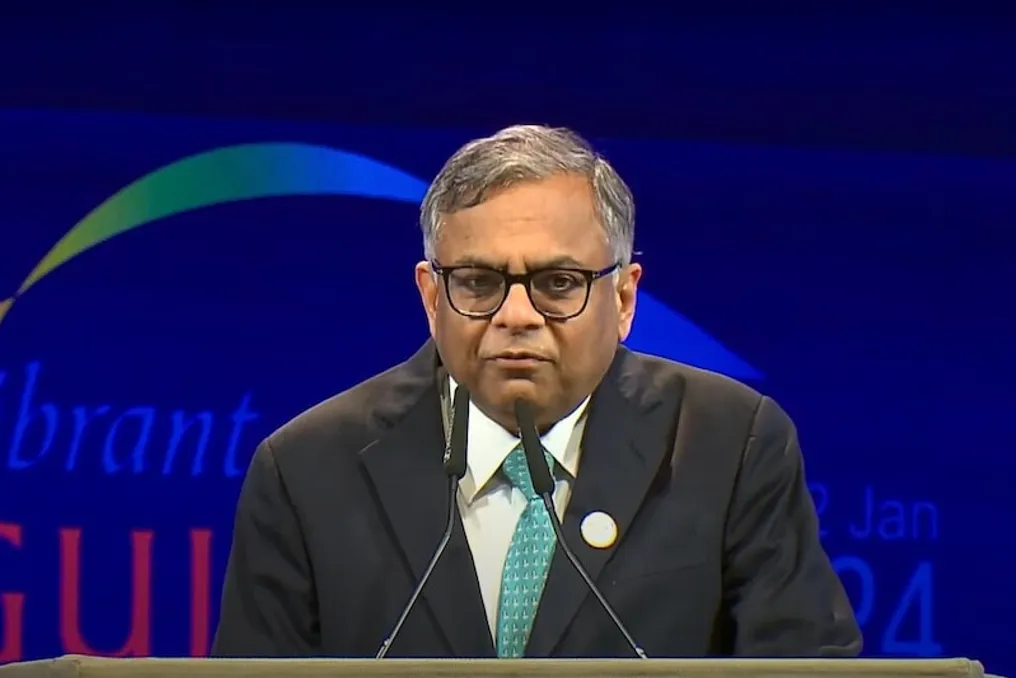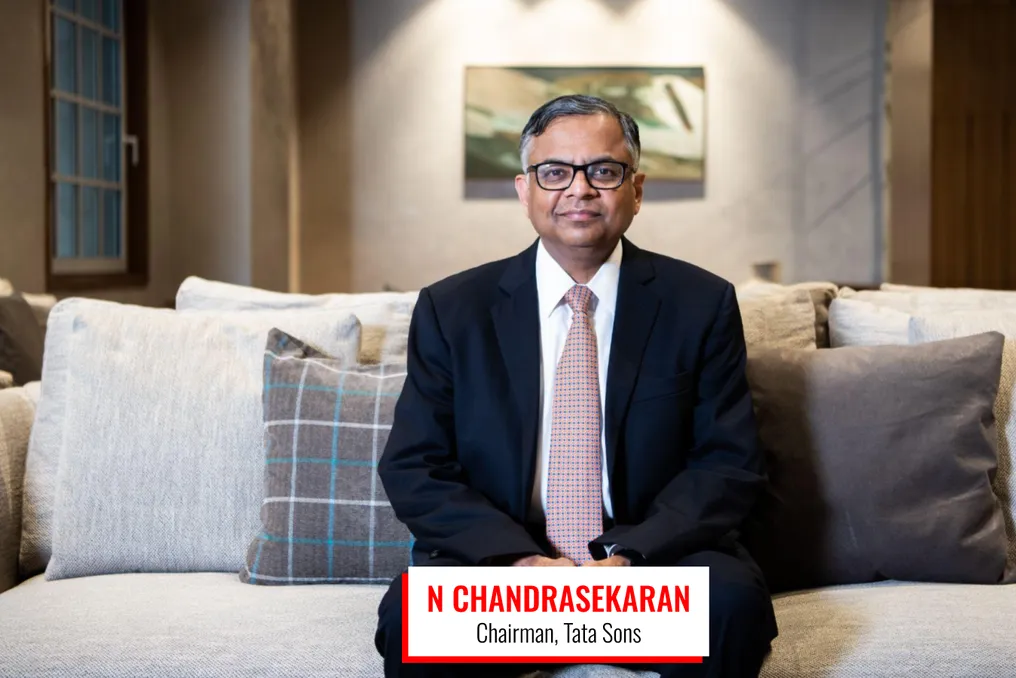
N Chandrasekaran, chairman of Tata Sons, has decided not to continue his work or put himself forward for re-election because the board members could not reach a consensus regarding his future role.
N Chandrasekaran, chairman of Tata Sons, has decided not to continue his work or put himself forward for re-election because the board members could not reach a consensus regarding his future role.
Chandrasekaran was appointed as chairman of Tata Sons, the holding company of the $400 billion Tata Group, in February 2017. According to Chandrasekaran's statement, his five-year term was set to expire on February 20, 2027.
It is reported that the Boards of Sir Dorabji Tata Trust and Sir Ratan Tata Trust unanimously recommended an extension of his tenure for another five years. This decision was presented at the Tata Sons board meeting on February 24, 2026.
However, the proposal was not adopted because one board member did not support it, and in the absence of unanimous support, Chandrasekaran decided to postpone the decision. He noted in his statement that six months had passed since that meeting, and no decision had been reached.
He also emphasized that Tata Sons is a very large institution with many strategic projects at critical stages of implementation. Chandrasekaran stated that besides having a leader to guide the Group after February 20, 2027, clarity on leadership matters is crucial for employees, investors, partners, and other stakeholders.
In light of this, he previously informed the Tata Sons board on the same day of his decision not to seek reappointment upon the expiration of the term on February 20, 2027. He asked the Board to decide on a successor soon to ensure a smooth transition and expressed gratitude to all stakeholders for their support.
Chandrasekaran's decision could be a significant blow to the Tata Group, which is currently refocusing on new investment areas. Furthermore, the group faces increasing competition from industrial conglomerates, including Reliance and Adani.
Since the death of former chairman Ratan Tata in October 2024, the Tata Group has experienced several internal disagreements, particularly concerning the ownership of the two charitable trusts. Following this, Noel Tata, Ratan Tata's half-brother, took over the leadership of these trusts, but this was not without disputes among board members.
A significant piece of news related to the Tata Group has emerged: N. Chandrasekaran has resigned from the post of Chairman of Tata Sons. He made this decision ahead of the Annual General Meeting (AGM) of Tata Sons scheduled for August 18th. Although Chandrasekaran's tenure as Chairman of Tata Sons was set until February 2027, according to information, he will complete his current term but will not be reappointed.
This resignation comes at a time when the Tata Group is facing various challenges across its different businesses. Reports indicate that there were also disagreements regarding Chandrasekaran's reappointment between Tata Sons and Tata Trusts.
It is noteworthy that Tata Sons, the main holding company of the $400 billion Tata Group, manages more than 30 companies, including Tata Consultancy Services (TCS), Tata Motors, and Air India. Tata Trusts holds a 66% stake in Tata Sons.
Sources suggest that some conditions were put forth by Noel Tata, Chairman of Tata Trusts, amidst ongoing disagreements within the Tata Group. One of these conditions was that Tata Sons would never be listed. N. Chandrasekaran was not amenable to these conditions, leading to several points of contention between the two parties on the board.
According to a report by Reuters, Tata Sons Chairman N. Chandrasekaran is considering stepping down before the annual general meeting (AGM) scheduled for August 18. This move comes amid growing uncertainty regarding his reappointment as a director of Tata Sons and internal disagreements within the Tata group.
Chandrasekaran's current term as chairman expires in February 2027, but his continued tenure in this role directly depends on the decision regarding his reappointment as a director of Tata Sons. Shareholders are set to vote on this matter at the AGM on August 18.
Reuters reported that Chandrasekaran has discussed the option of leaving with close associates to avoid a decision on his continuation of office at the general shareholders' meeting.
The uncertainty arose after disagreements surfaced between Chandrasekaran and Noel Tata, Chairman of Tata Trusts. The Tata Sons board postponed the decision on Chandrasekaran's reappointment as chairman in February after Noel Tata expressed concerns about the performance of some new group ventures.
Chandrasekaran's career at Tata Sons has a long history. He joined the Tata Sons board in October 2016, after spending several years leading Tata Consultancy Services (TCS). He initially started working at TCS in 1987, progressing through the ranks before becoming its CEO and Managing Director in 2009, and later Chairman of TCS in 2017.
In January 2017, Tata Sons announced the appointment of Chandrasekaran as its new executive chairman. He took over this position from Ratan Tata, who returned as interim chairman after Cyrus Mistry was ousted from the post in October 2016. Chandrasekaran became the first non-Parsi and non-Tata to lead the group, thereby concluding the leadership structure closely tied to the Tata family.
During the 2017–2018 period, one of Chandrasekaran's primary focuses was simplifying the vast Tata group and strengthening its business verticals. Under his leadership, the group concentrated on sectors such as technology, consumer business, electric vehicles, aviation, and electronics. Tata Sons also worked on consolidating some of its enterprises and improving their financial efficiency.
From 2019–2021, the Tata group accelerated investments in new business areas. The group expanded its presence in fields such as digital services, electric vehicles, electronics manufacturing, and aviation. Tata Digital was established as the group's digital division, while Tata Motors intensified its focus on electric vehicles.
In January 2022, the Tata Group completed the acquisition of Air India from the government. The airline's return to the Tata Group was one of the most significant events during Chandrasekaran's tenure. Following this, Tata Sons integrated Air India, Vistara, and other aviation operations into the group's broader aviation segment. The group also announced plans to merge Air India and Vistara to create a larger full-service airline.
In February 2022, Tata Sons extended Chandrasekaran's term as executive chairman for another five years. His second term began in February 2022 and is scheduled until February 2027. This extension occurred as the group continued to implement investment plans in technology, digital business, electric vehicles, aviation, and manufacturing.
In 2023–2024, the Tata group accelerated its plans to build up manufacturing and electronics presence in India. Tata Electronics announced investments in semiconductor production and assembly, while the group expanded its plans in areas such as batteries and electric vehicles. The question of succession at Tata Sons became increasingly relevant as Chandrasekaran approached the end of his second term.
Concurrently, the Tata group continued to actively invest in entities such as Air India, Tata Electronics, and Tata Digital.
According to a Reuters report, the Tata Sons board postponed the decision on Chandrasekaran's reappointment as chairman in February 2026. This decision followed comments from Noel Tata regarding the performance of some new group businesses. This development highlighted the relationship between Tata Trusts and the Tata Sons board. Tata Trusts is the largest shareholder of Tata Sons and plays a crucial role in the group's governance.
The latest development occurred just before the Tata Sons general shareholders' meeting on August 18. Shareholders are expected to vote on Chandrasekaran's reappointment as a director. Since his chairmanship is contingent on him being a director of Tata Sons, the vote is significant for his continued leadership of the group. Reuters reported that Chandrasekaran had discussed the possibility of stepping down with close associates. Deciding to leave office before the AGM could potentially circumvent a vote on his continuation of tenure.