Artist Alim Rakhmatullaiev, born in Tashkent in 1984, is a multifaceted master actively working in the fields of fine arts, graphics, design, digital art, and decorative interior design.
Artist Alim Rakhmatullaiev, born in Tashkent in 1984, is a multifaceted master actively working in the fields of fine arts, graphics, design, digital art, and decorative interior design.
He has participated in international exhibitions such as 'United Nation: Nations – Water – Cultures' in New York and 'Watercolour + Works on Paper Fair' in London. His works are held in private collections in the USA, Great Britain, Italy, Russia, Germany, and Uzbekistan.
Rakhmatullaiev received education in Tashkent from Uzbek folk artist Zaynutdin Fakhrutdinov. He also studied architecture and construction at an institute, after which he worked in the design field for a long time. This path helped broaden his creative vision and find self-expression in contemporary art.
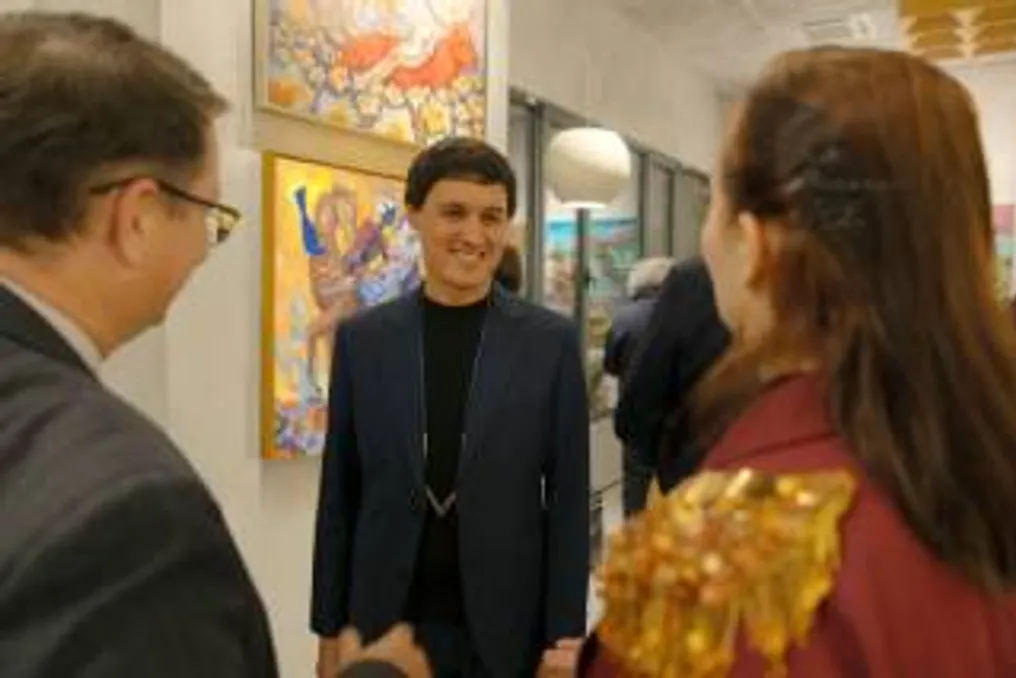
His first solo exhibition in Tashkent after many years was titled 'One more life' ('Yana bir hayot'). This exhibition took place in November 2024. The exhibition included works on which the artist had been working for over five years and which he had rarely shown to the public.
The project 'Mustaqillik Solnomasi,' which collects unforgettable events from the country's history dedicated to the 35th anniversary of our Motherland's independence, this time focuses on 1993.
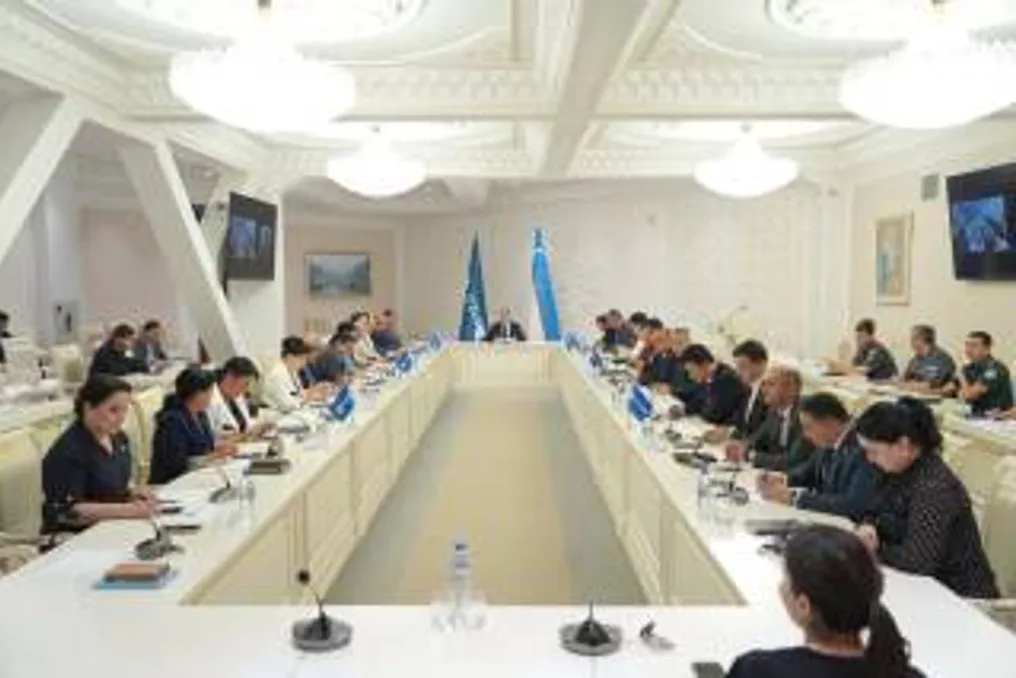
During the regular session of the O'zLiDeP faction in the Legislative Chamber of the Supreme Majlis, a number of draft laws were discussed. In particular, deputies spoke about the importance of participation in the unofficial Meeting of Leaders of Central Asian States and Azerbaijan at the President's initiative.
It was emphasized that the unofficial meeting of leaders of Central Asian countries and Azerbaijan, held in the city of Cholponat, Kyrgyzstan, became an important platform for developing regional partnership. The meeting addressed issues of strengthening relations based on mutual trust, close cooperation, and common interests between the states.
Faction members noted that important initiatives such as expanding trade and economic ties, developing transport and logistics routes, strengthening industrial cooperation, and launching digital service and investment platforms contribute to the further development of economic relations between the countries.
Furthermore, it was specially recognized that strengthening cooperation in areas such as artificial intelligence, science, education, energy, and human capital is one of the key directions of regional development. It was stressed that the meeting in Cholponat and the adopted declaration elevate relations between Central Asia and Azerbaijan to a new stage, and this process, based on unity and practical cooperation, is crucial for ensuring the economic stability, security, and well-being of the peoples of the region.
In the context of the modern world, marked by geopolitical instability and ethnic conflicts in various parts of the globe, maintaining stability and social cohesion has become a crucial task for any state. On the occasion of Peoples' Friendship Day, the President sent festive greetings to the people, which are not just words of gratitude but reflect a clear vision and strategic approach to a united and cohesive society in the country.
As the President emphasized, the idea that 'Our strength lies in unity and solidarity' has ceased to be an empty slogan; it has transformed into the daily lifestyle of millions of citizens and the driving force of society. The land of Uzbekistan has always been a meeting place for various civilizations, cultures, and beliefs, making it a cradle of tolerance.
The values of a people who, in difficult times, welcomed representatives of others onto their land and shared their bread have today been elevated to the level of state policy. In New Uzbekistan, ensuring interethnic harmony is implemented on an institutional basis. Adopted regulatory legal acts and the concept of state policy in the field of interethnic relations serve as a reliable shield guaranteeing the rights and freedoms of more than 130 peoples and ethnicities, as well as 16 religious confessions residing in the country.
Representatives of various nationalities living in this tolerant environment feel this daily. For example, a teacher belonging to the Russian people noted that all conditions have been created for free communication in Russian, quality education of children in their native language, and the celebration of national holidays. He also stressed that the system of teaching in seven languages in 157 national cultural centers and schools of Uzbekistan is a vivid testament to the high attention and respect for representatives of different nations.
Furthermore, cultural demonstration occurs through broadcasts in different languages in the mass media, as well as through the publication of newspapers and magazines, which contributes to the preservation of each nation's culture. The diversity of cultures is demonstrated by the pavilions of national cultural centers in the capital, the 'Garden of Tolerance' in 'New Uzbekistan' park, and ethnographic and tourist villages in the regions.
Reforms in this area are not limited only to the cultural sphere, but are also reflected in social and political life. Dozens of deputies, senators, state and public figures, renowned scientists, artists, and entrepreneurs from different nationalities have achieved success. The fact that about 2 thousand such people have been awarded high state orders and medals shows that human value is paramount.
Art serves as the most powerful force uniting different cultures. The President's initiative to create the professional ensemble 'Friendship' from representatives of different peoples is an important creative step in service of universal unity and cohesion. The model of Uzbekistan in matters of interethnic harmony plays a significant role not only within the country but also in strengthening the atmosphere of good neighborliness, openness, and mutual trust throughout the Central Asian region. The liberalization of movement and the expansion of economic and humanitarian ties testify to the realization of the eternal dreams of the peoples of the region.
A Kazakh representative shared his opinion on regional friendship and the future: 'We well know that the peoples of Central Asia lived based on common goals since ancient times. In recent years, the opening of borders with neighboring countries and the establishment of free movement have strengthened the ties between our families and peoples. We have united on the path to a common future and goal.'
Peoples' Friendship Day is not just a holiday or an external formality, but a sacred human value that is a reliable guarantee of peace, freedom, and prosperity of our country. The unification of all representatives of different peoples around a common goal and the feeling of Motherland will play a key role in achieving the heights of New Uzbekistan.