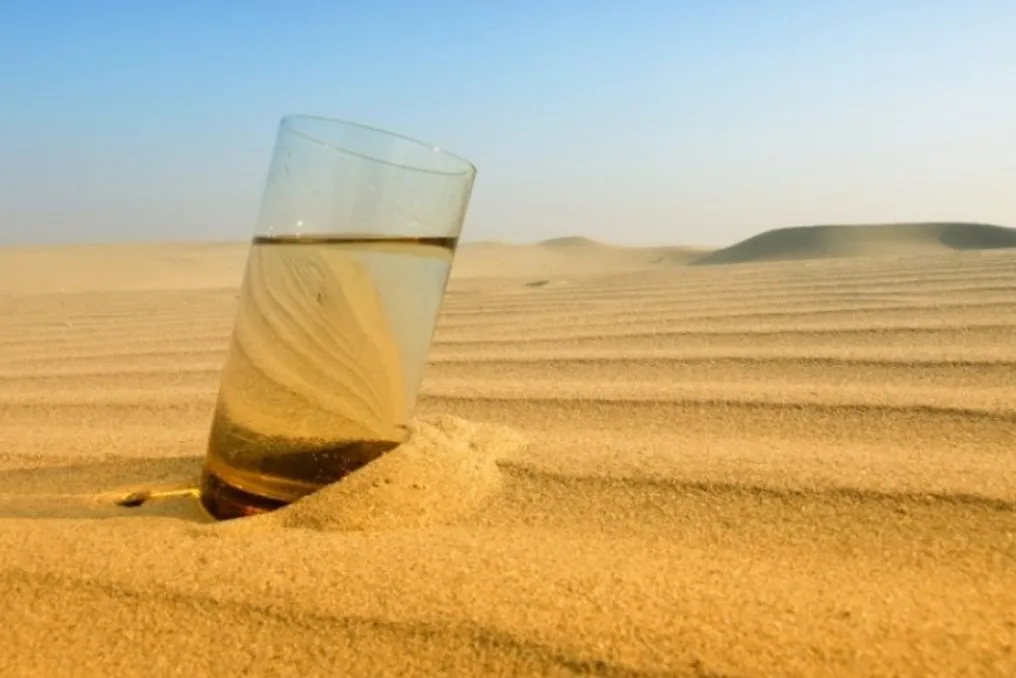
Russian specialists have developed a special unit capable of extracting up to a thousand liters of drinking water from atmospheric air daily. This technology was first successfully tested in the arid climate of Uzbekistan and subsequently in India.
The system has been named 'Water in the Desert' and is designed to operate across a wide temperature range, from plus twelve to plus sixty degrees Celsius. According to the creators, one basic set of equipment is sufficient to supply water to small settlements, tourist camps, industrial facilities, or remote field bases.
Significance of Tests in Uzbekistan
The tests in Uzbekistan were particularly significant because they were conducted in 2024 under conditions of severe drought. This allowed for testing the system's functionality in areas where the combination of high temperature and low humidity significantly complicates the process of extracting water from the air. In 2025, testing continued in India.
The principle of operation involves the unit drawing in surrounding atmospheric air and passing it through several preparatory stages. Subsequently, the airflow is directed to cooling plates. As a result of cooling, the water vapor contained in the air condenses and transforms into liquid water.
After this, the treated air enters a recuperator—a device designed to return some heat and transfer it to the next stream of air. The developers note that thanks to this scheme, energy consumption has been reduced to 0.4–0.7 kilowatt-hours per liter of water obtained.
A key advantage of this unit is its ability to operate effectively even at very low humidity levels, as low as five grams per cubic meter of air. This makes it suitable for use in the arid regions of Central Asia, as well as in the Middle East and Africa, where other systems fail. For comparison, devices based on direct cooling, like air conditioners, typically require at least eight to ten grams per cubic meter.
It was previously noted that Central Asia has faced an unprecedented shortage of water resources due to a five-year drought. The period from 2021 to 2025 has been recognized as the hottest for the region in the last 40 years, and soil moisture levels have reached historically low marks.