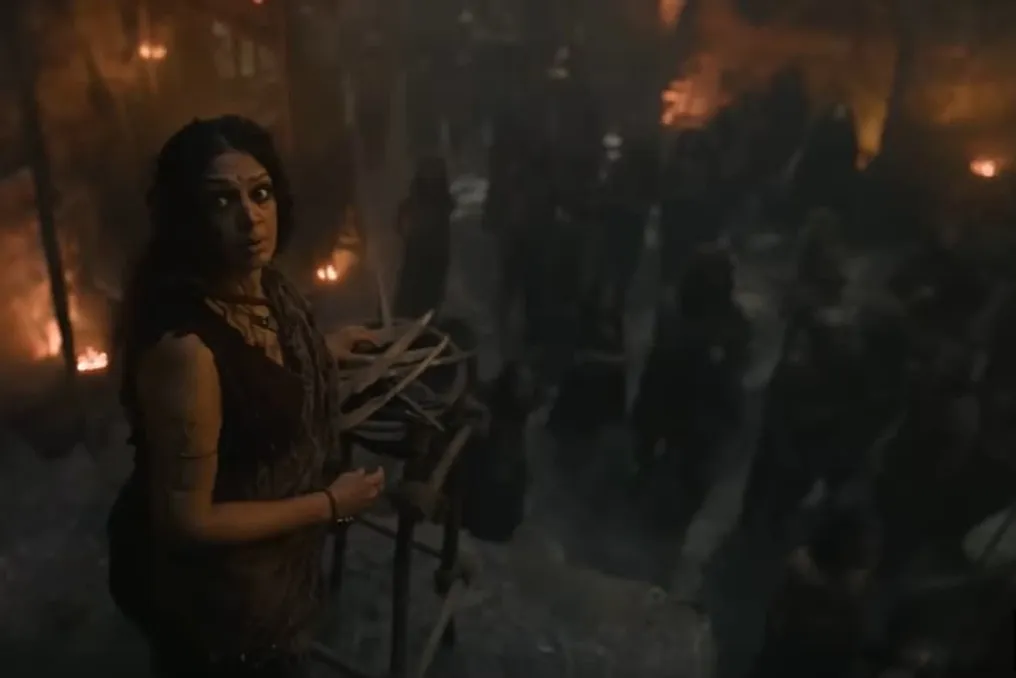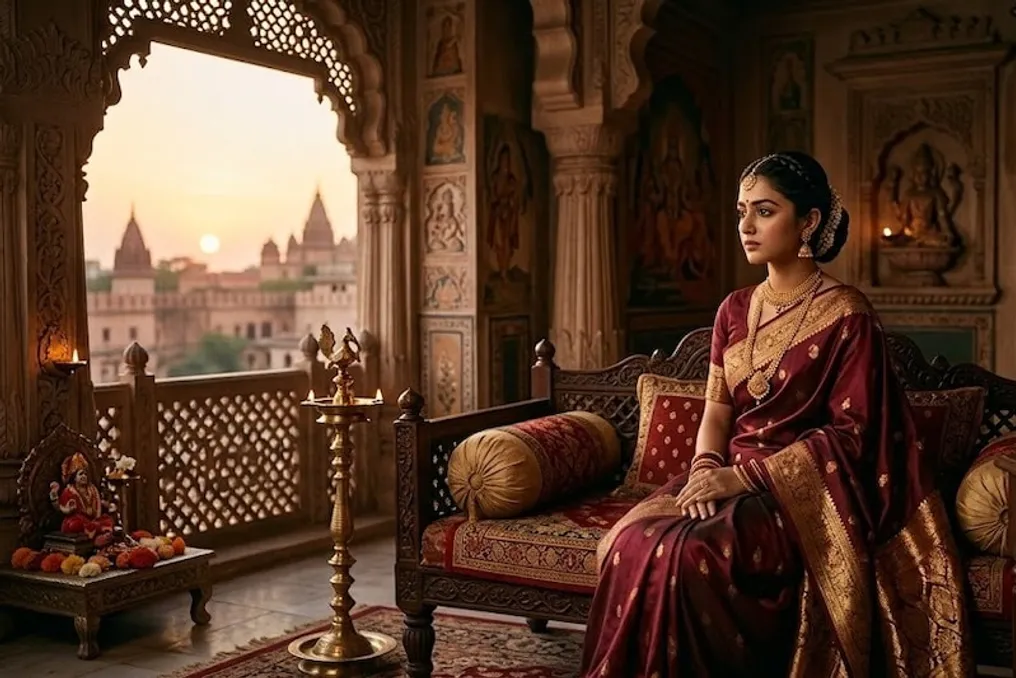
As a child, I was drawn to mythological series because of the image of divine worlds, magical weapons, dazzling costumes, and magnificent palaces. Our generation grew up listening to, reading, and watching the Ramayana. In school plays, every girl strove to play Sita; no one wanted to be Urmila. The story of Urmila in the Ramayana has been told very little. There are many more topics that could be discussed about her.
The Ramayana contains numerous events during Sita's exile: her husband's companionship, hardships in the forest, closeness to nature, and the subsequent battle with Ravana. Sita is at the center of this story. Lakshmana also demonstrated deep devotion to his brother, staying by her side like a shadow for fourteen years. However, Urmila only experienced waiting.
After marriage, a woman's life was supposed to begin with her husband, but shortly after, there was a fourteen-year absence of her husband. Valmiki's mention of Urmila in the Ramayana is extremely limited. During the wedding ceremonies, Janaka arranges the marriage of his daughter Urmila to Lakshmana.
When it became clear that Rama would have to go into exile, Lakshmana decided to go with her. Sita was supposed to go with him, but in the preparations for this separation in Valmiki's narrative, there are no long dialogues between Lakshmana and Urmila where she could express her thoughts. Perhaps this is the greatest irony of her character: the woman who waited the longest has the quietest voice. Therefore, perhaps later versions of the Ram stories tried to fill this void and give Urmila a chance to see herself from another perspective.
Urmila is often compared to Sita. Sita decided to go into the forest with her husband and shared the hardships of her exile with Rama. But Urmila's path was different. Or rather, circumstances provided her with a path where her self-sacrifice is less evident. Sita had Rama, and Lakshmana's purpose was to serve Rama and Sita, but Urmila faced a life where her husband was not present, and there was no battlefield to witness her sacrifice. We certainly see Sita's sacrifice, but we can also feel Urmila's sacrifice.
It is this difference that makes Urmila's character poignant. All three characters who went into the forest had mutual presence. Urmila remained in Ayodhya. This meant not only that she said goodbye to her husband for fourteen years. It also meant that she alone accepted those early years of her married life when a young wife plans life and future with her husband. For Lakshmana, exile was a chosen duty. For Urmila, the same duty turned into separation.
Under such circumstances, it becomes necessary to mention Urmila's sleep. A famous episode appears in known folk tales and regional traditions of the Ram stories. According to it, when Rama went into exile, Lakshmana decided to stay awake for 14 years to serve and protect Rama and Sita. He feared that if he slept, it would hinder his service. Then the goddess of sleep appeared to Lakshmana. Lakshmana asked her to pass his sleep on to someone else. This folk tale tells that Lakshmana's wife, Urmila, took on Lakshmana's sleep herself. After this, Urmila slept for fourteen years while Lakshmana stayed awake. When Rama, Sita, and Lakshmana returned to Ayodhya, Urmila's sleep ended.
Telugu tradition songs focusing on Urmila's sleep expanded this silent pain. Urmila cannot be viewed only as a symbol of sacrifice. Modern writers try to look at her again as a woman who expresses desires and dissent. The most famous example of this can be found in Kavita Kane's novel 'Sita's Sister'. Kane lifted Urmila from the periphery of the narrative and placed her at the center. In her novel, Urmila is not just a devoted wife; she is a loving woman, a woman with her own desires, and a woman who asks questions about her life. Literary studies also portray Urmila Kane as a woman reclaiming a voice silenced in traditional narratives.
Kavita Kane pushes Urmila far beyond the role of Lakshmana's wife in her work. Women in traditional stories who are often identified in relation to a male character, Urmila Kane demands her own identity, and perhaps this is where Urmila comes closest to the modern woman. Not all sacrifices are made in the forest. Some women fight within the home. Someone's sacrifice is shown with a sword and bow, while someone's sacrifice is hidden in waiting, duties, and solitude. Authors who read Urmila's story from a modern perspective describe this silent sacrifice.
Another aspect of Urmila's personality is her sense of duty. She is Janaka's daughter. In the home where Sita was raised, and where life was viewed not only through the lens of royal palace comfort but also through the prism of questions about duty and reason. This is why in later Ram stories, Urmila was often depicted as a woman who understood Lakshmana's duty. However, the beauty of Urmila's sacrifice lies in the fact that she cannot be seen merely as the ideal wife.