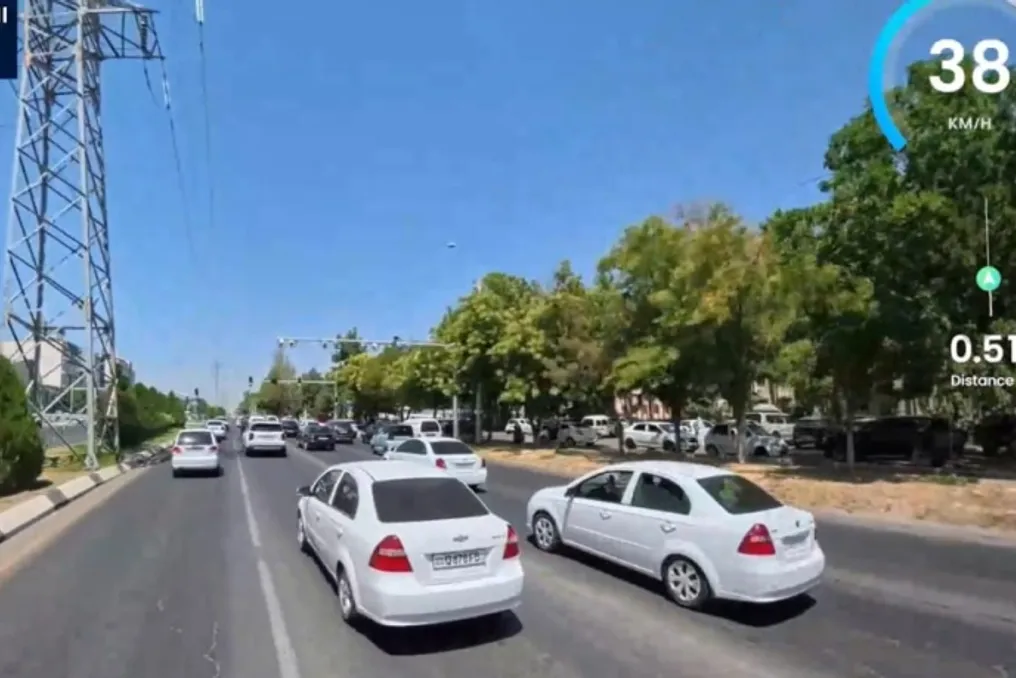
Changes have been made to the traffic light operation at the intersection of Fitrat and Geidar Aliyev streets in Tashkent, increasing the duration of the 'green' signal for more effective passage of traffic flows.
Specialists from the Center for Road Traffic Organization (TSODD) analyzed the traffic situation and identified the direction with the highest concentration of vehicles, based on which the decision was made to increase the green light time specifically for this direction.
Before the adjustments, the first phase of the traffic light cycle lasted 35 seconds, and the second lasted 28 seconds; now the most congested direction receives a 60-second green signal. Additionally, the stopping point for oncoming traffic was adjusted, allowing drivers to complete turns more safely and clear the intersection faster, enabling one cycle to pass more vehicles.
According to TSODD data, these modifications have already yielded positive results: daytime queues have become noticeably shorter, and the time to pass through the intersection has been reduced to two minutes. Nevertheless, the functioning of the intersection is affected by a nearby railway crossing; during train passage, traffic is temporarily suspended, which may cause brief queue formation.
TSODD intends to continue monitoring traffic flows and plans to conduct separate tuning of the traffic light operation for morning and evening rush hours. The next step is to integrate neighboring intersections into a unified 'green wave' system, which will allow drivers traveling at a set speed to encounter a green light more often and stop less frequently.
Previously, the 'green wave' system was expanded by connecting another section of the Small Ring Road, after which the travel time on this section decreased by almost half.