A decision was made regarding the football club 'Navbahor' because several players had not been released from debts, as determined by the relevant committee of the Uzbekistan Football Association.
A decision was made regarding the football club 'Navbahor' because several players had not been released from debts, as determined by the relevant committee of the Uzbekistan Football Association.
According to this decision, the club was prohibited from registering new footballers at both national and international levels for a two-list period, starting from July 24, 2026.
This ban has now been lifted because the club has fully settled all outstanding debts.
Athletes from the junior and youth national teams of Uzbekistan demonstrated impressive results at the Asian Weightlifting Championship held in Tashkent. In a single competition day, they managed to win a total of eighteen medals, including seven gold, six silver, and five bronze awards.
The performance of Shakhnoza Khaydarova is particularly noteworthy. In the under 69 kilograms category among juniors, she won three disciplines: snatch, clean and jerk, and combined event. In the youth division, the athlete took first place in the snatch and combined event, and received a silver medal in the clean and jerk.
Otabek Karimov also won another gold medal among juniors in the under 85 kilograms weight class by winning the snatch. Additionally, in the same category, he added two bronze awards to his resume—in the clean and jerk and combined event.
In the youth category under 85 kilograms, Hikmatillo Khaydarov achieved the following results: he won the snatch, took second place in the combined event, and received bronze in the clean and jerk.
In the under 69 kilograms category among juniors, Nurhaet Kobilova won silver in the clean and jerk and combined event, as well as bronze in the snatch. Azizbek Qutbiddinov in the under 85 kilograms category brought home two more silvers—in the clean and jerk and combined event, and became a bronze medalist in the snatch.
It should be noted that the Uzbek team had already won four awards the day before. Furthermore, the female weightlifters were successful the day before, securing three gold, six silver, and one bronze medal in this tournament.
A fundamental shift is occurring in global demography. While concerns several decades ago were focused on excessive population growth, the primary threat today is the sharp decline in birth rates and population aging.
To maintain demographic stability and prevent natural population decline, an average rate of 2.1 children per woman is required. However, more than half of the world's population lives in countries where this safe rate is lower.
The most serious consequences of the crisis are visible in Asia and Europe. In South Korea, which was considered an absolute record holder for the process, the fertility rate hovers around 0.7. High real estate costs, intense competition in the labor market, and the expenses of raising children force young people to forgo starting a family and having children.
In Japan, which has become one of the oldest nations, this figure is approximately 1.2, and the country's population is shrinking by hundreds of thousands annually. China, which long pursued the 'One child, one family' policy, has also fallen into a severe demographic trap: the fertility rate reached 1, and the population began to decrease. As a result, India has taken the position of having the largest population.
The situation in Europe is also critical: the average birth rate across the continent is 1.46. For example, Italy (1.2) and Spain (1.16) are facing serious population aging. In the USA, the rate is 1.6, and the demographic balance is mainly maintained through external immigration.
The sharp drop in birth rates worldwide is linked to several interconnected factors. Firstly, urbanization and the high cost of living in cities place significant pressure on family budgets. Secondly, as women receive higher education and have more opportunities for career advancement, the age of marriage is noticeably postponed. Thirdly, family and personal values are changing: among the younger generation, the tradition of living without children or limiting themselves to one child is becoming popular.
The demographic crisis entails serious economic and social consequences. The reduction in the workforce and the increase in the number of pensioners create unprecedented strain on state budgets and pension systems. Economic growth and innovation rates are slowing down, and due to a lack of children, schools and kindergartens are closing, while the demand for nursing homes is increasing.
Despite developed countries (South Korea, Japan, and European countries) allocating huge financial resources and providing tax incentives to stimulate birth rates, these efforts have not yet yielded the expected results. In regions such as Central Asia, including Uzbekistan, and in Africa, high birth rates persist. Consequently, a sharp change in the balance of economic power in the world and the direction of global labor migration is possible in the near future.
The activities of people's representatives in studying local problems, identifying and eliminating difficulties, as well as providing social support to the population, are of great importance. These events are held in districts, as well as in neighborhoods and quarters.
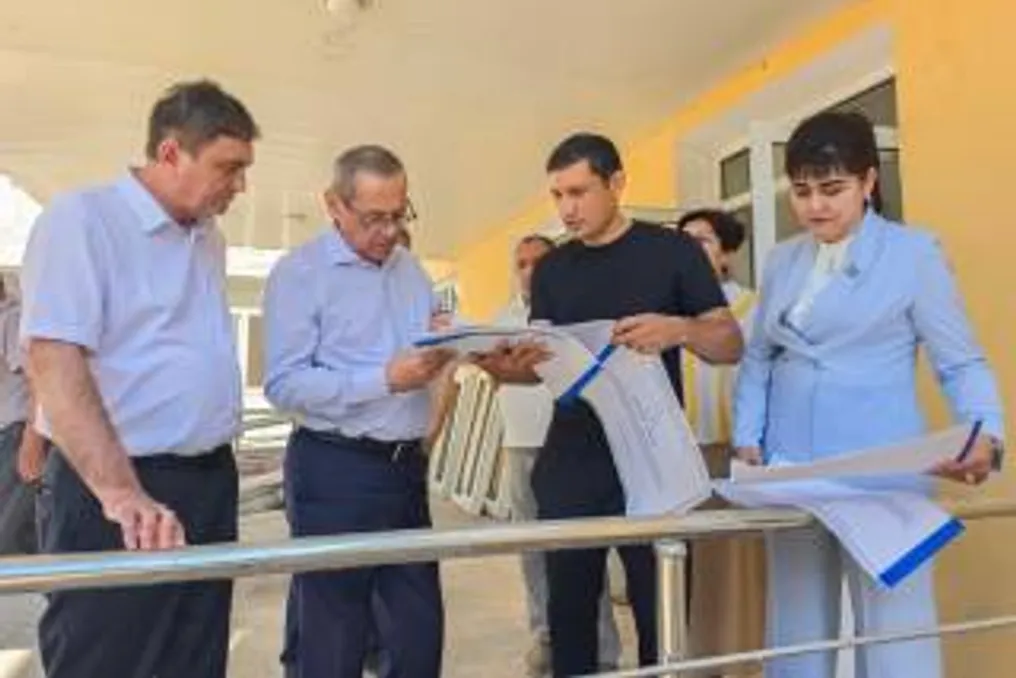
Ulugbek Inoyatov, head of the faction of the People's Democratic Party of Uzbekistan in the lower house of parliament, is conducting inspections of social facilities in Urganch district of Khorezm region and meeting with voters and residents.
During his visit, U. Inoyatov visited secondary school No. 38 in the district, where he familiarized himself with the progress of reconstruction work. This school, which educates over a thousand students, is being fully renovated under the 'Initiative Budget' based on a deputy's request. Recommendations were given regarding the quality and timely completion of repair work according to the established schedule, as well as the effective organization of the process of preparing for the new academic year.
A meeting was held with the 'neighborhood community' in the 'Arboblar' quarter of the district, during which the progress of work in several areas was analyzed: teaching youth crafts, increasing women's economic activity, social support for needy families, and creating favorable conditions for citizens wishing to start their own business.
During the meetings, appeals from representatives of the quarters were heard, and measures to resolve them were determined jointly with deputies of the local Council and heads of organizations.
In addition, Deputy Durbek Akhmedov of the Legislative Chamber visits quarters in Uchtepa district of Tashkent city, as well as socio-economic facilities, holding open discussions with residents. Measures are being taken to eliminate identified shortcomings and problems while studying socio-economic facilities in the region.