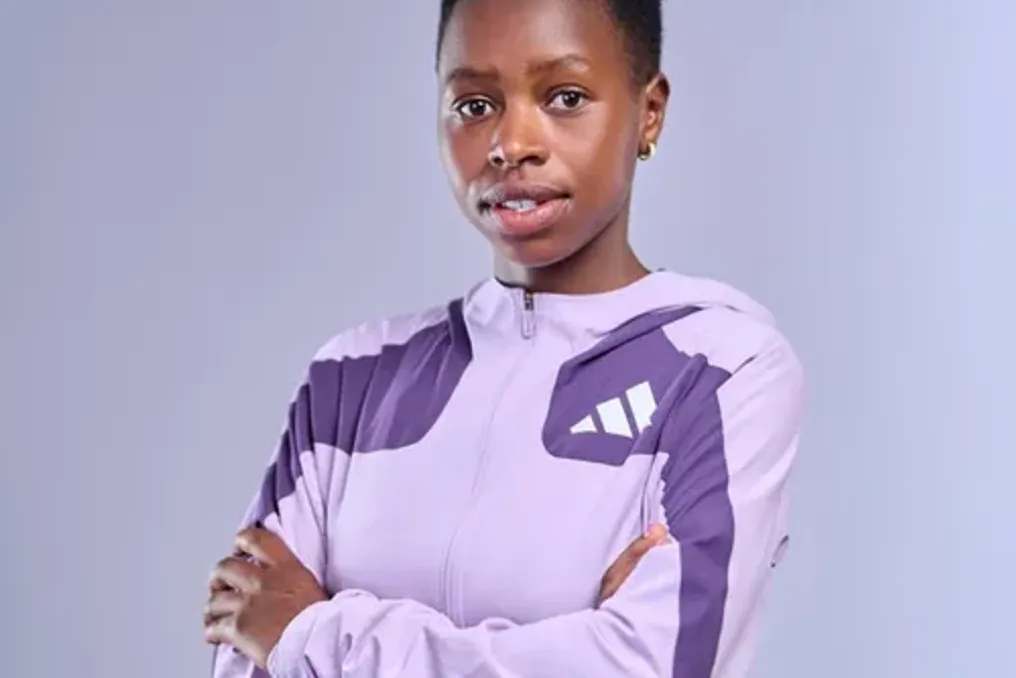
Kenyan athlete Brenda Kenei intends to break the 30 minute 30 second barrier in the TotalSports Race Joburg 10km women's race. Despite the challenging course profile and high altitude, she aims to qualify for the 2027 World Championships.
Kenyan athlete Brenda Kenei intends to break the 30 minute 30 second barrier in the TotalSports Race Joburg 10km women's race. Despite the challenging course profile and high altitude, she aims to qualify for the 2027 World Championships.
Although this is her first start in South Africa, Kenei is considered one of the main contenders for victory in this race. Kenei shared her excitement, noting that she is interested in participating in the women's competition in South Africa, where she can share the joy with thousands of sports enthusiasts while achieving the necessary standard for the 2027 World Championships.
Kenei's personal best is an impressive 30:29, which is one minute faster than the time set by her compatriot Daisyla Jerono during the Cape Town series stage this weekend. However, Kenei explained that the race in Johannesburg might be difficult due to the high altitude.
Kenei admitted that competing in Johannesburg will be difficult due to the altitude and moderately hilly route, but stated her readiness for such a challenge. Her main goal is to beat the 30:30 mark. She noted that the determination of many women striving for their own limits motivates athletes at the forefront, and wished everyone safe and successful preparation, urging runners to support each other on race day.
The final stage of the three-event series will take place at Marks Park, located in the heart of Johannesburg. Kenei may also draw confidence from Jerono's performance in the Mother City, as it was her debut race in South Africa. Jerono previously stated that she was happy to visit South Africa and Cape Town for the first time, participate in the women's event, and advocate for social justice and human rights worldwide. From an athletics perspective, she plans to execute her strategy, push her limits, and conserve energy for the intense final kilometer, aiming for a personal best.
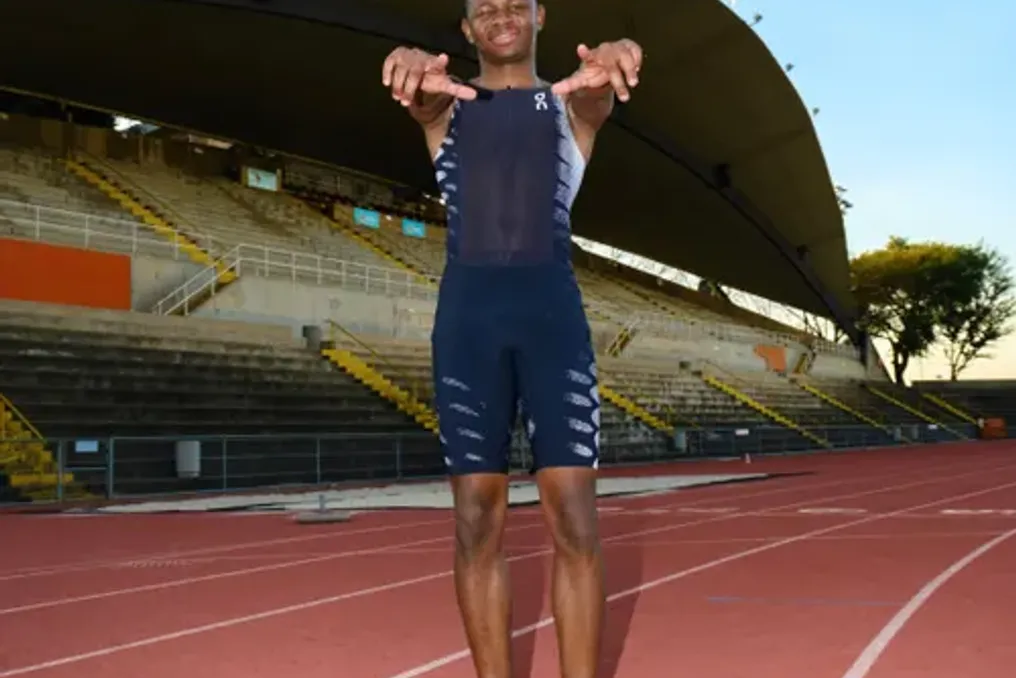
Mukona Manavhela, who qualified for both the 100m and 200m races at the World Junior Athletics Championships taking place in Oregon this week, possesses a unique approach to sports.
His nickname 'Smiley' emerged even before he won medals; it originated when he was in third grade playing rugby, and the coach decided to give every team member a nickname. This moniker has stayed with him even after his gap tooth disappeared.
Today, his smile remains, but what is more striking is the calm confidence behind it. Conversations with this teenage sprinter quickly reveal that he behaves differently: he speaks thoughtfully, pauses before answering, and rarely chooses the obvious option.
He discusses failures with the same composure as successes, speaks of faith without preaching, and of ambition without arrogance. This unusual combination of qualities is notable for someone whose most significant races may still lie ahead.
Before athletics became his calling, rugby was his world. Having grown up in Polokwane, he saw sport everywhere: street football, games in the residential complex yard, and weekend rugby shaped his childhood.
'I have always loved sports,' he shares. 'When I was younger, I wanted to be a professional footballer.'
Rugby soon became the sport where he excelled. His performances helped him secure a scholarship at Jeppe High School for Boys, one of South Africa's traditional rugby powerhouses. Athletics was also there, but initially, it took a backseat to his rugby commitments, rather than replacing them.
'I played rugby and athletics simultaneously,' he recalls.
For a time, this worked. However, athletics began asking questions that rugby could no longer answer. His sprint times improved dramatically. By the age of 16, he established himself as one of South Africa's brightest young sprinters, winning his first national title and posting times that hinted at much larger arenas.
At the same time, rugby taught him a harsh lesson. After making the provincial training squad, he suffered an ankle ligament injury, forcing him to confront the reality every athlete faces: talent is not enough to shield against disappointment.
'It broke me,' he says quietly.
This injury became a turning point, not an end. Looking back, he believes it helped him make a decision that was already forming in his mind. Athletics stopped being something he did alongside rugby; it became the path he chose. By tenth grade, the choice had become inevitable.
'I had to decide,' he says. 'Either rugby or athletics.'
He chose the track. This decision was about more than just faster times; it was about opportunities.
As a young athlete, he began studying the world's greatest competitors not just out of admiration, but for understanding. He was fascinated by Kobe Bryant's relentless pursuit of perfection. Roger Federer's composure under pressure offered lessons beyond tennis. Michael Jordan's competitiveness, Diego Maradona's confidence, and Johan Blake's fearless running became subjects of his study.
He speaks of them less as heroes and more as teachers. 'I studied not just the sport itself,' he asserts. 'I studied their mentality. I wanted to understand how they think.'
He realized that the answer was less related to natural ability. Success belongs to athletes who make difficult decisions long before anyone approves them. 'Sometimes you have to sacrifice,' he says. 'There are people you leave behind. There are decisions you have to make that will define your future.'
These decisions often arrive sooner than expected. While many teenagers are still defining themselves, he was weighing competing dreams, moving to school, and learning to handle the expectations that come with scholarships and growing reputation.
The pressure, he says, is inevitable: 'There will always be expectations.'
When he enrolled at Curro on an athletics scholarship, comparisons were natural. Other talented sprinters had gone before him, and many expected him to follow their script. Instead, he decided to write his own.
'I understood that Bayanda (Vala) has his own story. I am here to create mine.'
It is a simple statement, but it reveals the mindset underlying everything else. He does not measure himself against those who came before him. He measures himself against the athlete he believes he can still become.
Perhaps this explains why conversations with him rarely dwell on medals. Instead, they constantly return to the goal. Winning is important. Growth is more important. Becoming a person capable of winning—that, in his view, is the real achievement. This perspective makes him seem older than the teenager sitting across from me.
A stopwatch measures speed. Character develops on a completely different timeline.
If there is one thing Smiley has learned, it is that dreams have an expiration date. If left untouched for too long, they remain just dreams. At some point, they demand action.
He acted according to his dreams, and now they have borne the best fruit: qualification for the World Junior Athletics Championships in Oregon this week. This competition represents the dream of any promising junior when they first put on spikes—a stage that has presented generations of future Olympic and world champions.
Nevertheless, when he talks about qualifying for both the 100m and 200m, there is surprisingly little celebration. Instead, his thoughts have already shifted to what will happen after the starting pistol fires.
'My goal is to win,' he states casually. 'I don't want anything else to influence it.'
There is no bravado in this statement—only belief. He explains that championship races are not much concerned with rankings or reputation. 'You can finish with the fastest time, but if I win in 10.20 seconds, I am the champion.'
This is the mentality he intends to apply on the world stage in Oregon, USA, in the coming days.
It is the same mentality that recently attracted the attention of one of the fastest-growing brands in global athletics. When the Swiss sports company On approached his management with a sponsorship opportunity, the news arrived sooner than expected. The initial plan was to wait until after the World Junior Championships before considering professional offers. But then the phone rang.
'I was shocked,' he admits.
Most young athletes would naturally focus on what such an agreement means for them personally. Smiley's first instinct was different. 'When On invests in me, they invest in Africa.'
This response shows how he views opportunities—not as something to consume, but as something to multiply. He hopes his success will prompt global brands to look more closely at the continent and discover the depth of talent waiting for its chance.
'If I am lucky,' he says, 'it will open doors for other children.'
This is an unusually selfless viewpoint in a profession often built on individual achievements. Although much about Smiley seems unusual. Even when the conversation turns to victories, he speaks less about medals than about meaning.
'Eventually, you get tired of winning,' he says.
This sounds like an extraordinary statement from an athlete at the beginning of his journey. Then he explains: 'If victory has no meaning, then the victory is meaningless.'
For him, this meaning has always been found in the people watching: the children. He laughs, recalling how he always wanted to hold babies, even as a child. Today, this instinct has evolved into something greater. He understands that every race is watched by young people searching for someone to believe in.
'Just as I was inspired, perhaps I can inspire another child.'
These moments, he says, stay with him much longer than medals. When children ask for photos, copy his celebrations, or dream bigger because they saw his competitions, victories take on a different significance.
Perhaps this is why criticism rarely bothers him. Athletes, he says, will always have critics. History proves this. He points to musicians who were rejected before achieving success and great athletes whose ambitions were deemed unrealistic. Every generation, he says, confuses confidence with arrogance until achievements change the conversation.
'People will always say something.'
His job is not to respond to them. His job is to run.
The journey is just beginning. He still has world championships to participate in, to make senior teams, to chase records, and if all goes as he envisions, the Olympics await somewhere on the horizon.
However, for now, he remains a teenager with a slight smile and an unusual perspective—a boy whose nickname survived childhood because it still suits him.
The stopwatch will continue to measure how fast he runs. Time, however, may ultimately judge him by something entirely different: not just by the medals he wins, but by the people who begin to believe in themselves a little more because they watched him pursue his goals.