At the age of ten, Saiyette Aima confronted how cancer changed her family. Her grandmother, whom she described as the family's 'emotional center,' noticed a small, pimple-like spot on her neck. Initially, it did not seem serious, but after a medical examination, she was diagnosed with Stage III breast cancer.
Saiyette, now 17 and living in Dubai, was young and thousands of kilometers away from her grandmother in Delhi, but this experience left a deep mark. She told Khaleej Times: 'I watched her undergo chemotherapy and radiation therapy, and I saw how cancer affected not only her health but our entire family.'
Her grandmother passed away in 2020 during the Covid-19 pandemic, when travel restrictions complicated an already difficult time for the family. Saiyette recalls: 'My parents, my sister, and I were the only members of our family living here in Dubai. The rest of my family lived with her in Delhi.'
Looking back, Saiyette notes that at the time, she was too young to fully understand what was happening. 'Cancer was almost like a whisper in our home,' she shares. 'As I grew older, I began to realize that this silence or careful handling of the topic of cancer could itself become part of the problem.'
Starting help through hair
Saiyette's first attempt to do something was related to a simple gesture. She and her sister donated their hair through the Locks of Hope organization, a program of Friends of Cancer Patients that supports patients experiencing hair loss during chemotherapy. Saiyette noted: 'It was a small gesture, but it taught me that I don't need to wait until I have a big platform or extensive resources to start helping.'
This modest act later grew into something significantly larger. Last year, Saiyette launched a fundraising campaign called For Her, For Hope through the YallaGive platform in support of Friends of Cancer Patients. With community support, the campaign raised about 10,400 dirhams. For this, she was recognized as the Month's Fundraising Hero by YallaGive.
However, the fundraising also made the teenager notice something else. 'People are often more willing to donate to charitable causes related to cancer than to talk about cancer itself,' she said. This observation became the driving force behind her cancer awareness initiative called Pink for Purpose.
As part of this project, Saiyette conducted interviews with oncologists, surgeons, and other healthcare professionals on topics such as early signs, treatment methods, recovery, lifestyle, and hereditary risks of cancer. It is particularly important to her to make these conversations accessible to youth and families who may struggle to discuss the topic of cancer.
From conversations to screenings
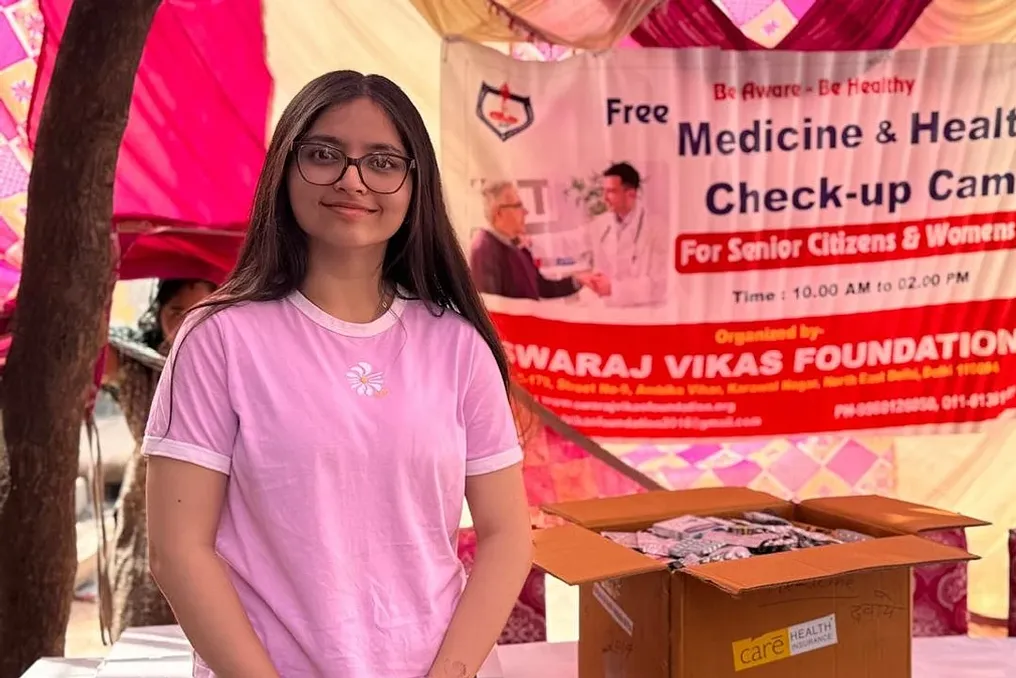
Ultimately, Saiyette wanted her work to go beyond online awareness. Earlier this year, she helped organize a breast cancer awareness and screening program in India, collaborating with medical specialists from AIIMS New Delhi and the National Cancer Institute.
According to Saiyette, over 150 women participated in the program, learning about self-breast examination, possible warning signs, and when to seek medical attention. Some women were recommended for further medical examination after the screening.
For Saiyette, this held special significance due to her grandmother's fate. This experience showed her how easily early signs can be missed, even in well-informed families with access to healthcare and doctors. She emphasized: 'A woman might hear that early detection matters, but she can still face low health literacy, fear, uncertainty, language barriers, or embarrassment.'
For some participants, she added, it was one of their first comfortable interactions with the formal healthcare system.
Transferring the mission to the field of technology
Currently, Saiyette is applying the same idea in another area that interested her since childhood—technology. She has developed the CareCheck platform for breast health, which she says is in the final stages before public launch. This platform is designed to guide women through self-breast examinations, reminders, and the ability to track changes and maintain a symptom history. It is also intended to simplify complex medical information and help users find nearby healthcare providers.
Saiyette carefully emphasizes that the platform is not intended for diagnosing breast cancer and does not replace a doctor. 'Its goal is to help a woman recognize that something has changed and then determine if she needs professional attention,' she stated. She is currently gathering feedback from doctors and organizations she previously worked with before the platform's release.
Although she dedicated most of her teenage years to interacting with doctors and working in healthcare, Saiyette does not plan to become a doctor herself. After graduating, she hopes to study computer science or engineering in the US or UK, focusing particularly on artificial intelligence. 'The emotional connections I formed because of cancer made me realize that I can use CS in healthcare without being a doctor or nurse.'
Seven years after her grandmother's diagnosis first brought cancer into her life, Saiyette continues to cherish those memories. 'I just know that she hopefully is proud of everything I have achieved in her memory.'