Venture firm Accel, which was one of the first to back Flipkart and Swiggy, is increasing its presence in India amid the transformation of startups driven by artificial intelligence. The firm has raised $550 million for its ninth early-stage fund in India. These funds are part of a total of $3.5 billion raised across four new global funds, including a growth fund of $1.35 billion to support companies from seed rounds to Initial Public Offerings (IPOs).
In the last 18 months, Accel has raised $1.2 billion for India, setting a record pace for such large-scale fundraising in the country, despite growing caution among some global investors due to the Middle East war.
Discussion on the Role of AI
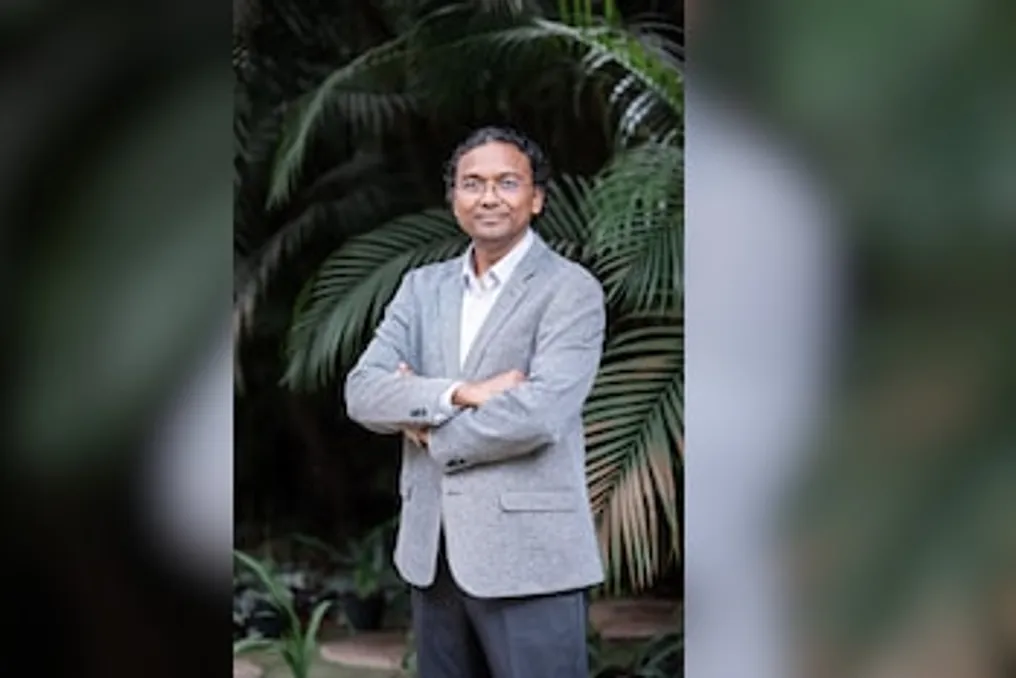
Shekhar Kirani, a partner at Accel, notes that the key difference about this moment is that AI is arriving in India simultaneously with its global spread, unlike previous technological waves.
Kirani stated that Fund IX was raised ahead of schedule, and a significant portion of Fund VIII's capital ($650 million) remains available. He emphasized that the size of the new fund reflects sufficient capital to support the ecosystem, not a lesser opportunity or a desire to raise less than competitors. "We have enough money to operate in the country," Kirani told Business Standard.
He also clarified that Accel is deploying capital at the same pace: Fund IX is expected to begin deployment next year, and a "significant" amount of Fund VIII's capital remains available. Furthermore, the $1.35 billion growth fund serves as a general pool for companies supported by Accel that require follow-on funding for scaling, including those in India.
Accel's Strategy and New Opportunities
Another Accel partner, Bharat Shankar Subramanian, commented on how the accelerated adoption of AI is changing opportunities for Indian founders compared to past technological waves. He stated that the approach remains unchanged: "So get in early and stay long."
Accel focuses on consumer goods, advanced manufacturing, and fintech, with AI permeating all three areas. This includes continued online adoption in megacities, Tier-1 cities, and the Bharat region, high-precision manufacturing, defense, and space, as well as new AI-based fintech use cases.
Rachit Parekh, another Accel partner, described two directions related to the firm's shift from consumer internet and SaaS to advanced manufacturing and deep tech. These directions are Indian manufacturing for global markets and strategic manufacturing within India. According to him, this demonstrates India's ability to succeed in certain categories and the necessity of diversifying global supply chains. Portfolio companies like Zetwerk, Simplify, and Captain Fresh are already expanding globally. The second focus includes strategic sectors, such as defense, where robotics is another emerging opportunity. Accel is also making long-term bets in deep tech, biotechnology, and quantum computing, including Sarla Aviation, Fabheads Automation, Scimplify, and Unmannd.
Responding to the question of changing opportunities in sovereign sectors for Indian founders, Parekh noted that government support is creating huge new markets in defense, AI, space, and other recently emerged strategic areas that could become significant. "There is an opportunity, a huge market, and sufficient government support to start and scale," Parekh said. He added that programs like RDIF, TDB, and iDEX provide founders access to capital and government clients.
Some fear that global AI funding is concentrated in US-based foundational model companies, leaving Indian startups without capital. Kirani countered that the biggest opportunities lie beyond the layer of Large Language Models (LLMs), specifically in applications and infrastructure. "The middle layer, as well as the application layer, represents much larger waves," said Kirani.
Kirani expressed optimism about AI-focused companies from India that build vertical applications and infrastructure on top of LLMs, regardless of whether the base models originate from the US, China, or elsewhere. He noted that AI-using startups are growing rapidly because the technology automates previously difficult-to-solve workflows. "We have never seen such a pool before," Kirani added.
Kirani stressed that Accel's strategy remains the same: to be the first institutional sponsor at the early stage. Companies that previously took 18–24 months to raise the next round are now often doing so within 12 months. Rapid growth attracts more capital and faster.
When asked if India can create global AI leaders in the next decade, Kirani replied that he expects several such companies, not just one. "If you give a 10-year horizon, you will see a significant number of companies from this part of the world that will be very unique and own categories," Kirani concluded. He also noted that AI has changed the traditional flow of technology from West to East, giving Indian founders faster access to cutting-edge tools.