The author shares thoughts on the film based on the epic 'Odyssey,' arguing that while the content itself is outstanding, this adaptation fell short of expectations. He notes that the film presents Homer's myth narrative delivered in Nolan's unique cinematic style.
Despite setting aside praise for how Nolan surpassed James Cameron and Steven Spielberg, as well as critical attacks from supporters of Elon Musk, his main complaint focuses on the director's own genius, which, in the author's view, shows signs of insecurity despite his recognition as a genius.
The author emphasizes that adapting the 'Odyssey' is a complex task because it is an epic that reveals human character, whose roots are Greek, but whose themes are universal to any society. He states that he does not object to so-called 'wok' changes, such as changing Helen's role or casting Athena, provided the essence of the story is preserved.
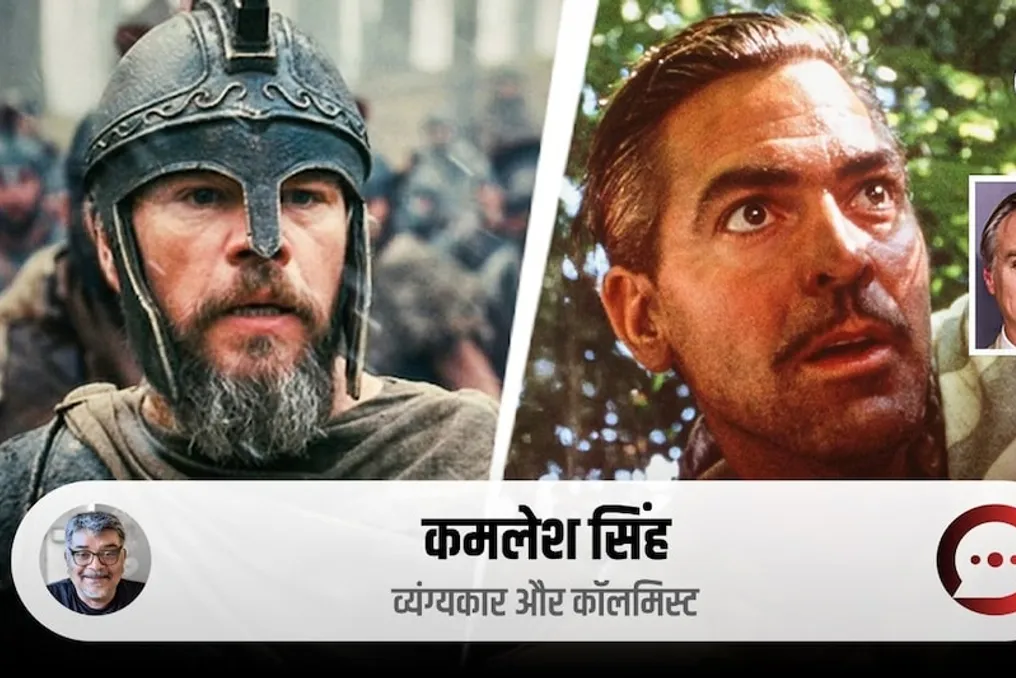
However, the main problem, according to the critic, is that Nolan has 'internally emptied' the main characters, despite the participation of brilliant actors. For example, Matt Damon significantly changed his image, losing weight, mastering the skills of sailing a Viking ship, and enduring physical hardships during filming. Nevertheless, on screen, Odysseus appears merely as a depressed and burdened man.
The author believes that the true betrayal lies precisely in this melancholy. The Odysseus portrayed by Damon seems like a man consumed by guilt over the massacre in Troy, similar to a Christian carrying a cross. This, according to the critic, does not align with the image of Odysseus from Homer's epic, who was a polymath—a man who knew many paths and could find a way out of any situation, where method was secondary to returning home.
Nolan replaced this moral cunning and resourcefulness with a feeling of regret, because regret is visually perceived as a depth that, in the author's opinion, is absent. Similarly, in the scene with Argos, the old dog awaiting its owner after long travels, Homer used only four lines to evoke a strong emotional response. Nolan, however, creates an atmosphere, making the viewer wait for this touching moment, but then it simply does not happen.
Ultimately, the author wonders whether this is related to the editing of the three-hour film, to hubris, or to what Nolan himself conveys through the film: 'I am Nolan. I don't need to explain anything.' This inner voice, like a metaphorical tanpura, sounds beneath every frame.