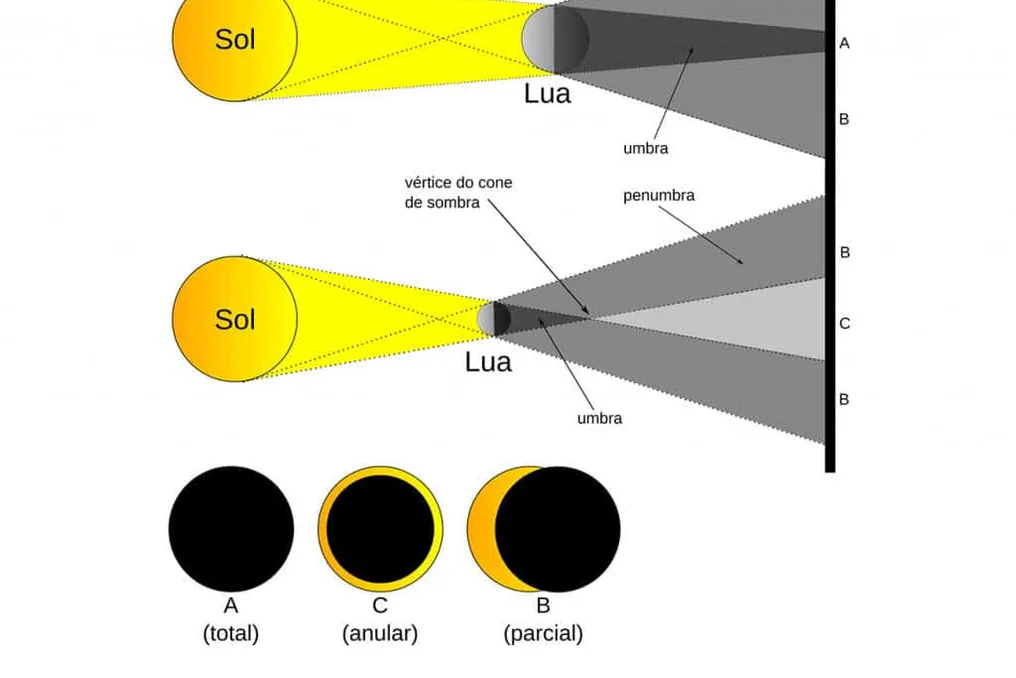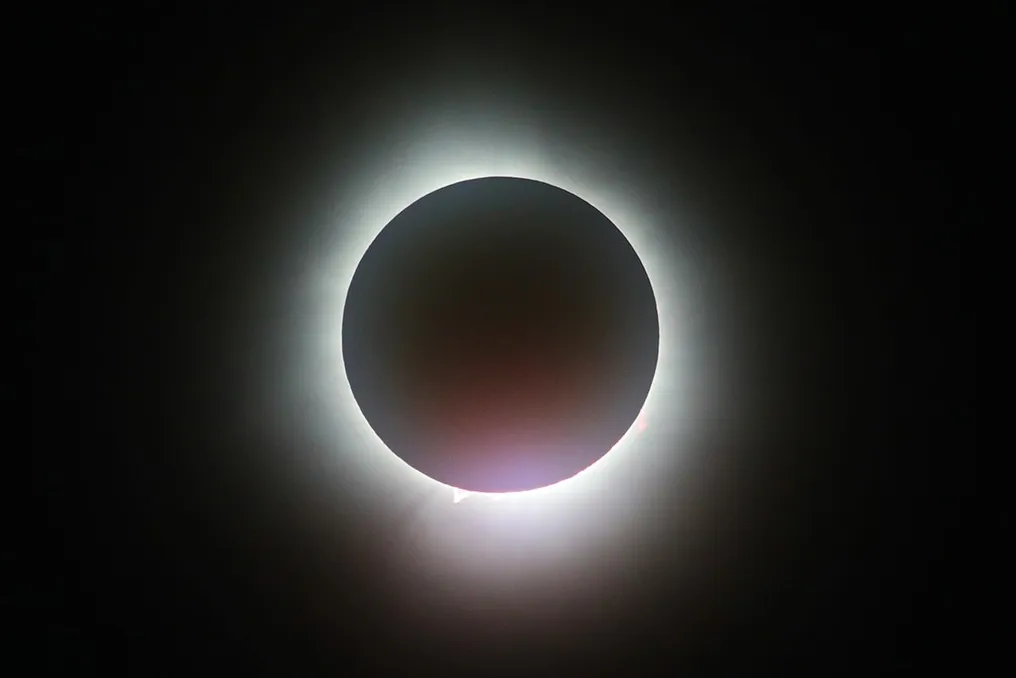
This Wednesday, August 12th, around 13:58 Brasília time, the Moon is expected to completely cover the Sun in a restricted band across the planet. This band will pass through several countries and territories, including Greenland, Iceland, northern Russia, parts of Spain, and a small section of Portugal.
Furthermore, large portions of Europe, as well as certain areas of North Africa and North America, will have the opportunity to observe the solar eclipse partially. It is important to note that this event will be brief, with the total solar eclipse duration predicted to be around 2 minutes and 18 seconds. In several locations, the period of total solar coverage will be even shorter.
In comparison, during the last visible event in North America in 2024, the duration at the focal point in Mexico was slightly longer, totaling 4 minutes and 28 seconds.
For those who wish to follow the phenomenon, it is crucial to follow strict safety precautions. Observation must never be done with the naked eye, as intense solar radiation can cause permanent damage to the retina. Ordinary glasses, binoculars, cameras, and telescopes without adequate solar filters do not provide sufficient protection for the eyes.
Recommendations include seeking out number 14 welding masks, known as 'eclipse glasses,' at hardware or construction supply stores. NASA always advises inspecting portable glasses or visors before use, discarding any equipment that is torn, scratched, or damaged. It is also essential to supervise children using these devices.
There is only one safe moment to look at the sky without eye protection, which is when the Sun is completely obscured and darkness begins to set in.
Since Brazil is not part of the eclipse path this Wednesday, the National Observatory has organized an alternative for interested citizens. Live broadcasts showing images from different points along the eclipse path, accompanied by expert analysis, will be transmitted via its YouTube channel.
It is relevant to know that total solar eclipses are not uncommon events, occurring with a certain periodicity, approximately every 18 months, when the Moon returns to cover the Sun and darken a terrestrial band. However, occurrences in densely populated areas are rare, and they hardly happen in the same location twice.
Spain serves as an example, having had its last total solar eclipse over a century ago, specifically on August 30, 1905. For Brazil, the phenomenon has not reached national territory since November 3, 1994, when it affected some southern cities, notably in Rio Grande do Sul and Santa Catarina.
However, there is already a confirmed future date for the return of the event. Exactly 19 years from now, on August 12, 2045, a total solar eclipse will be visible in parts of the North and Northeast states, and partially visible in the rest of the country.