Currently, Microsoft Edge requires the use of a Microsoft Account to synchronize browsing information, such as history, favorites, and passwords, across various devices. However, soon users will have the option to use an Apple ID to log in.
Currently, Microsoft Edge requires the use of a Microsoft Account to synchronize browsing information, such as history, favorites, and passwords, across various devices. However, soon users will have the option to use an Apple ID to log in.
This development is seen as a strategy by Microsoft to attract new users to its browser. The profile Leopeva64, active on the X platform, identified that this feature is already being tested in both the beta version of Microsoft Edge (version 152.0.4191.10) and the Canary version 153.0.4210.0, although it needs to be activated through the browser's experimental features section.
When the feature is activated, the Microsoft Edge user area, located in the upper right corner, will display a sign-in field for the Microsoft Account, followed by authentication options that include Google Account and Apple ID.
The inclusion of Google Account login was already a recently implemented feature in Edge, reinforcing the trend of Microsoft expanding its access options by adding support for Apple ID. The main benefit of this integration is enabling users to bring data generated in other browsers, such as passwords, history, and favorites from Safari or Chrome, into Edge. Furthermore, it becomes possible to use Edge without the requirement of having a Microsoft Account.
Although it may seem like an unintuitive decision by Microsoft at first glance, there is a strategic logic: by making login options more flexible in Edge, the company seeks to capture more users or, at least, reduce the probability of them migrating to competing solutions. Currently, Microsoft Edge is on version 151, and it is estimated that Apple ID login will be part of version 152, scheduled for the last week of August.
Initially, the feature will be available on both Edge for Windows and macOS systems, but it should not be released in the mobile versions of the browser in this initial phase. However, it is important to note that even in the final versions, the availability of the feature may occur progressively, reaching some users before others. This is because, despite Google Account login already being official in Edge, a significant portion of users has not yet had access to this alternative.
Joby Aviation announced the acquisition of defense company Resonant Sciences for US$ 500 million (equivalent to R$ 2.6 billion). This move aims to strengthen the electric aircraft manufacturer's strategy to increase its share in the military segment.
Resonant Sciences, headquartered in Dayton, Ohio, United States, will be integrated into Joby after the agreement is finalized, which is expected in early 2027. The purchase financing will be carried out with US$ 450 million (R$ 2.3 billion) in equity and US$ 50 million (R$ 258.7 million) in stock.
After the transaction is completed, Resonant will continue operating as Joby's defense division, maintaining its current activities. Concurrently, the company's commercial side will remain focused on developing air taxis, with the first services expected to begin this year.
This acquisition occurs in a context where electric aircraft companies are seeking new revenue streams beyond urban air taxis. The development of these vehicles involves very high costs, and regulatory procedures to start commercial operations are progressing slowly, delaying expectations of large-scale financial gains.
In this scenario, military contracts have emerged as a particularly attractive opportunity for companies needing to sustain costly operations while awaiting the maturation of the commercial market. According to Joby, the merger of experiences will allow it to combine its knowledge in propulsion and autonomous systems with Resonant's expertise in radio frequency, sensors, and mission systems, aiming to create stealth aircraft that make detection difficult.
Although the acquisition substantially expands Joby's presence in the defense sector, the company already has established ties with the United States Armed Forces dating back several years. This proximity began in 2016 when the company joined a project of the Defense Innovation Unit, an initiative of the U.S. Department of Defense dedicated to developing and implementing innovative technologies.
In 2020, Joby reached a significant milestone by becoming the first eVTOL developer to receive airworthiness approval and a flight authorization certificate from the U.S. Air Force for government testing. Three years later, in 2023, the company delivered its first aircraft to Edwards Air Force Base in California for testing purposes.
Currently, the purchase of Resonant strengthens this pre-existing relationship, granting Joby access to specific technologies for military applications. The strategy adopted by Joby reflects a broader trend among electric aircraft manufacturers who are seeking support in military projects to stabilize their finances.
Air taxis still face the need to obtain the necessary governmental permits in most markets where these companies plan to operate commercially. Without these authorizations, the sector struggles to convert the vehicles into a relevant source of revenue. Meanwhile, companies continue to report losses due to high development costs. Last week, Joby reported a net loss of US$ 245.4 million (R$ 1.3 billion) in the second quarter of 2026, against revenue of US$ 38.6 million (R$ 199.8 million).
Given this situation, securing military contracts is beginning to gain importance comparable to putting air taxis into commercial operation. Competitor Archer Aviation, based in San Jose, USA, is following a similar path. Last month, this company presented a new aircraft model developed in collaboration with the defense technology firm Anduril.
Additionally, the sector is undergoing a consolidation process, as Boeing recently announced the sale of three of its eVTOL subsidiaries to Archer itself, in a large transaction that also covers the air taxi market. For Joby, the acquisition of Resonant Sciences transcends a mere business expansion; it represents an attempt to consolidate its position in the defense market while the company works to make air taxis a sustainable commercial operation.
Zoom corrected a serious vulnerability on Tuesday, the 11th, which allowed for the discreet invasion of computers and phones. This flaw was identified by the cybersecurity firm A Security and only required the victim to be participating in a video conference with screen sharing active.
The incident raised concerns about how easily the flaw was discovered, given that researchers used public artificial intelligence models to exploit the vulnerability from the start, using fewer than twenty text commands, known as prompts.
The weak point resided in the protocol responsible for managing real-time annotations, the feature that allows drawing and marking the screen. This flaw created an opening that led to remote code execution.
According to technical reports provided by A Security, an attacker present in the meeting, regardless of whether they were the host or a guest, had the ability to inject malicious code into the devices of all other participants in the room. This attack, nicknamed 'Zoomsday,' presented a significant risk because it operated in a zero-click format, meaning it required no action from the victim.
It was not necessary for the person to click a suspicious link in the chat, download a harmful file, or accept any request on the screen. With control over the system, the cybercriminal gained unrestricted access to steal confidential information, activate the camera and microphone, or install malicious software.
In a business context, the consequences would be extremely detrimental. A hacker could steal a collaborator's credentials to access the company network, compromising servers from a single video call.
What alarmed experts the most was the speed with which AI located and exploited the breach. The cybersecurity firm reported that it took only one day of work; they assigned an AI agent to examine frequently neglected functions in the Zoom code, finding the error and setting up the invasion in record time.
The vulnerability affected the Zoom application across all compatible systems, including Windows, macOS, Linux, Android, and iOS (iPhone). Given that participation in video conferences ranges from professional meetings to virtual classes, millions of users could have had their devices exposed if the details of the flaw had leaked.
Fortunately, the flaw was communicated to developers responsibly. The service owner released a detailed security statement, implemented the necessary corrections on the servers, and made updates available for the applications.
Although there are no records of 'Zoomsday' being maliciously exploited on the internet, the general and unanimous advice is that users update the application immediately.
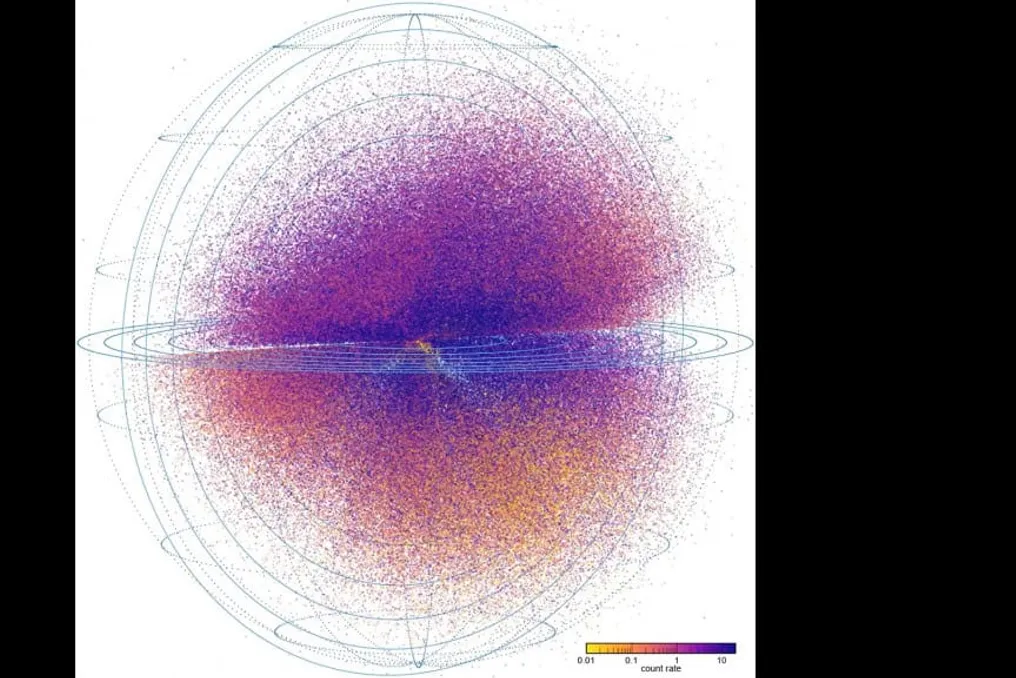
Astronomers have managed to identify nearly two million X-ray sources through the second large public catalog generated by the eROSITA space telescope. This survey significantly expands the inventory of known objects in the high-energy universe, encompassing supermassive black holes, stars, galaxy clusters, and remnants of exploded stars.
The catalog, named DR2, was compiled from the first three complete sky surveys conducted by the observatory, totaling 556 days of observation. The vast quantity and consistency of the records enable investigations into extreme phenomena, aiding in the search for answers regarding black hole growth, galactic evolution, and the formation of the largest cosmic structures.
The eROSITA mission, led by Germany, not only produces this survey but also increases the capacity to correlate X-ray sources with objects detected in other electromagnetic spectrum bands. This allows scientists to differentiate between various types of celestial bodies and define their position on the universal distance scale with greater accuracy.
The majority of the DR2 discoveries consist of point sources, exceeding 1.9 million records. These are mainly active supermassive black holes located in the cores of distant galaxies and stars belonging to the Milky Way. Active black holes are crucial for understanding the transformation of galaxies over billions of years, while stellar sources help study stellar life cycles and activities.
The catalog also includes about 64 thousand sources classified as extended objects. Among these are large galaxy clusters, nearby galaxies, and remnants of stellar explosions. Such clusters serve as markers for the distribution of the largest cosmic structures and can contribute to studies on the influence of dark matter and dark energy on the evolution of the universe.
X-ray observation is fundamental because it reveals environments that do not easily stand out in visible light. For example, as matter approaches a black hole, it can reach temperatures of millions of degrees before crossing the event horizon. Other emitters detectable in this range include neutron stars, supernova remnants, and the extremely hot gas found in galaxy clusters.
A notable aspect of this new survey is the correlation established between X-ray sources and corresponding observations in the infrared and optical light. This combination enables astronomers to determine whether a specific record belongs to a nearby star, a distant galaxy, an active black hole, or another energetic phenomenon.
In the parts of the catalog where such correspondences have already been confirmed, approximately 88% of the objects are linked to distant galaxies that possess actively feeding supermassive black holes.
Miriam E. Ramos-Ceja, manager of the ground segment of the eROSITA instrument and lead author of the publication on DR2, stated that the catalog constitutes an exceptionally vast inventory of the X-ray sky, creating solid foundations for statistical analyses of cosmic populations.
Mara Salvato, spokesperson for eROSITA and president of the group responsible for monitoring the sources, emphasized that detecting X-ray emission is only the starting point. Identifying the counterparts in other spectral bands makes it possible to define the nature of the objects, their location on the cosmic distance scale, and the formation of better structured datasets.
The magnitude of DR2 offers researchers the opportunity to compare large groups of objects under similar conditions, which can facilitate the discovery of patterns that would be overlooked in smaller observational samples. Study possibilities range from reconstructing the growth trajectory of supermassive black holes over billions of years, mapping galaxy clusters, and searching for rare or unique objects.
Although eROSITA concluded its scientific observations in early 2022, the material collected before the shutdown was sufficient to support new public data releases. The next iteration of the catalog, named DR3, is scheduled to be released in 2028.