The 203-meter warship, the largest in Latin America, served as an arcade center for four days during Rio Innovation Week 2026. This was one of the most unusual sights at the event: while presentations on artificial intelligence and multi-billion dollar agreements took place at Pier Mauá, the NAM Atlântico ship, belonging to the Navy, functioned as a video game museum.
Similar stories
Popular
Sesc RJ also set up a stand focused on gaming culture to discuss technology and education. At the sixth edition of the event, held in Rio from August 4 to 7, games were present in at least four different locations across the program: in the museum on the ship, at the UniCup final, at the free esports school FERJEE, and at the Sesc RJ stand.
In the center of the ship was the Game Station area, which was one of the most visited spots at RIW 2026. It featured consoles organized by decade: the Atari 2600 and the Computer Space arcade machine represented the 1970s; the Sega Master System 3 with Sonic represented the 1980s; the Super Nintendo and Mega Drive represented the 1990s; the PlayStation 1 and Xbox represented the 2000s; and there was also a PlayStation 5 with EA Sports FC games and a mobile gaming zone.
In addition to the museum, the ship hosted the final match of the UniCup tournament, a university esports championship. This tournament was free and open to all event participants, including matches in CS2, League of Legends, Valorant, and EA Sports FC 26. The final took place on the last day of the event, August 7.
For FERJEE, this was the second event where the federation organized an esports operation aboard the NAM Atlântico. FERJEE also established a free esports school in the same space for low-income communities, offering games such as Counter-Strike and Stumble Guys. The program included panel discussions on esports careers, the history of competitions in Brazil, and the participation of women in competitive environments, featuring invited guests from the federation. For younger audiences, the school also served as an opportunity to learn about the work of the Navy.
Outside the ship, Sesc RJ presented the 'Education in Multiple Dimensions' stand, inspired by the Sesc Orgulho Nerd project, which combined games, pop culture, and education. The program included three panel discussions dedicated to edutainment, pop culture, and gaming communities, featuring actor Fred Mascarenhas, producer Henrique Granado (Level Up Eventos), and Mario Vinicius Sant’Anna from ProGeek-RJ.
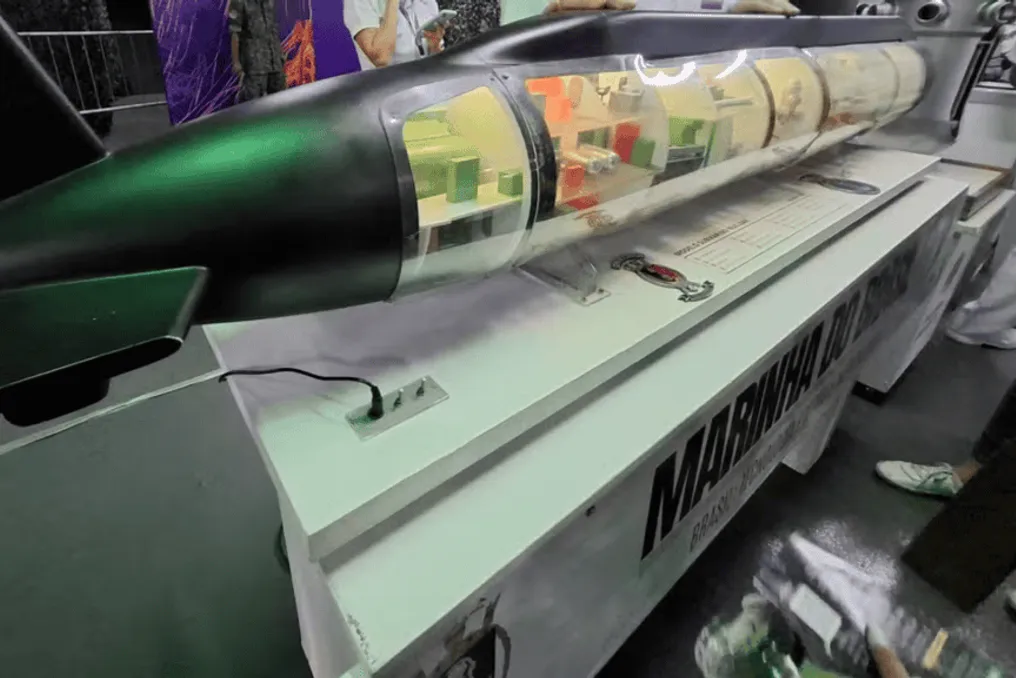
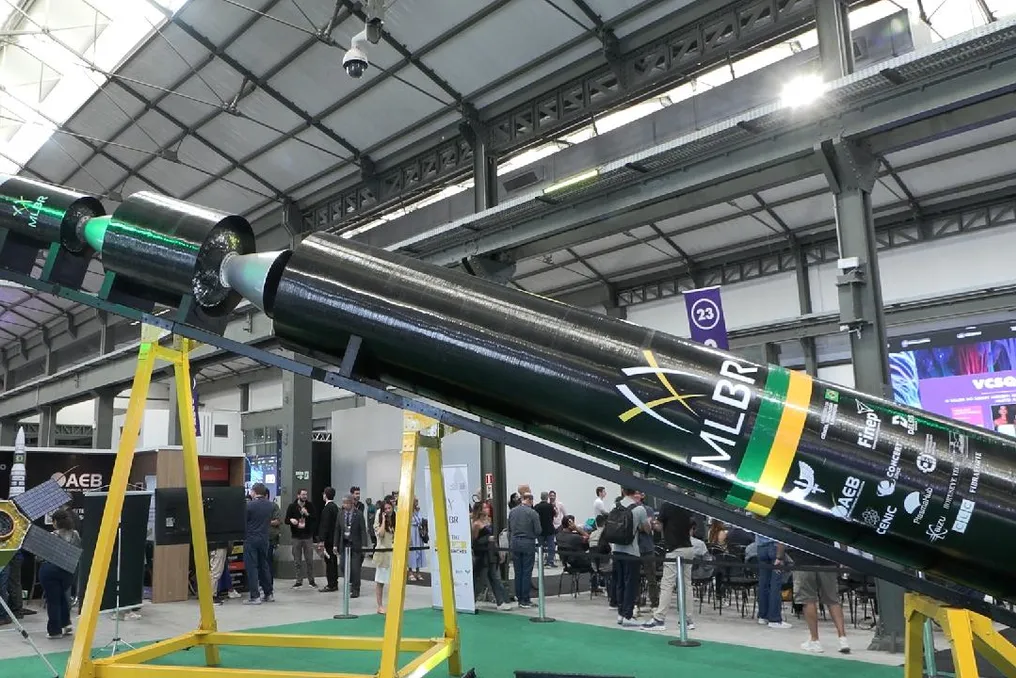
The NAM Atlântico is the largest naval vessel in Latin America, belonging to the Brazilian Navy, and this is the second time it has hosted events related to gaming at RIW. The Navy also demonstrated robotics, virtual reality parachute jump simulators, and the research vessel Vital de Oliveira.
Meanwhile, the rest of the Rio Innovation Week program continued at Pier Mauá. The sixth edition concluded with approximately 200,000 visitors over four days. RIW 2026 gathered 3,200 speakers from 22 countries, 2,000 startups, and 400 exhibitors, spread across 40 stages and more than 1,650 hours of content. The program was divided into 16 thematic tracks covering areas such as agritech, fintech, healthcare, blockchain, and aerospace, as well as artificial intelligence, robotics, and cybersecurity.
This year's theme was 'Symbiosis, the future does not happen in isolation,' and it was presented on the main stage, featuring Malala Yousafzai, Nobel Peace Prize laureate, and neurobiologist Edward Moszer, Nobel laureate in Medicine, among other international figures.
On the business front, CREA-RJ entered into a technical partnership with NVIDIA on the final day of the event, providing attendees with free access to the company's AI consultations. The City of Rio also used the event to showcase projects such as Rio Sense Lab, LED Pulse, and Sandbox Rio, related to city technology and innovation. The next Rio Innovation Week is scheduled for August 24–27, 2027. In the same year, organizers will hold the São Paulo Innovation Week, which started in May 2026.
The Rio Innovation Week concluded after four days dedicated to technology exhibitions, business networking, and innovation demonstrations. Organizers note that this event highlights the growing significance of Rio de Janeiro as a regional innovation hub.
A new partnership was established during the event, specifically an agreement between Brazil and China on satellite technologies. It is estimated that about 180,000 people attended the event.