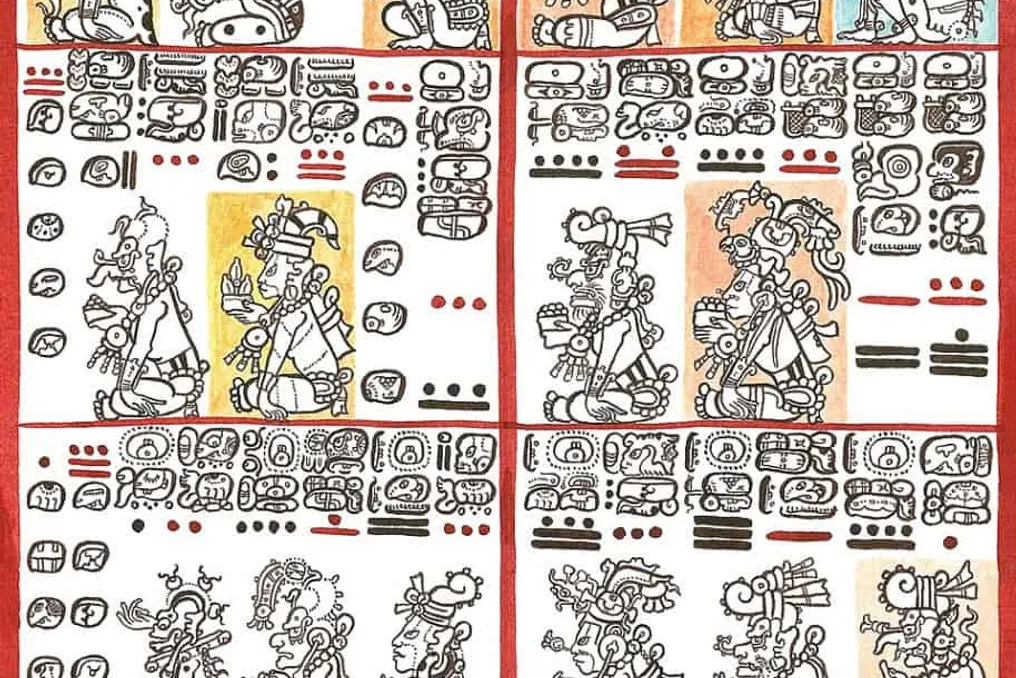
Approximately a thousand years ago, the Maya possessed a sophisticated system for monitoring the movements of the Moon, which was fundamental for predicting solar eclipses. This knowledge is recorded in the Dresden Codex, classified as one of the oldest books in the Americas.
The method employed combined various lunar cycles and included periodic adjustments intended to neutralize small discrepancies between these periods. This approach ensured that the calendar remained operational even across multiple generations.
Current research suggests that this system allowed them to anticipate almost all solar eclipses visible to the Maya between the years 350 and 1150, with an estimated margin of error of about one hour. It is notable that this result was achieved without the use of optical equipment or modern computational resources.
The Dresden Codex details a timing system based on the observation of lunar cycles. The primary challenge was that these periods were not perfectly synchronized, leading to the accumulation of minuscule variations over the years.
To prevent this misalignment from compromising predictions, the Maya implemented corrections into the system. This tactic allowed for the periodic recalibration of the calendar, maintaining its effectiveness over time.
The combination of cycles and adjustments resulted in a calculation mechanism that, according to the cited studies, demonstrated unusual accuracy for that era. It is estimated that the system covered virtually all solar eclipses that could have been observed by the Maya between 350 and 1150, with a maximum difference of approximately one hour.
The performance of this method is remarkable, given that it was developed exclusively from accumulated observations and calculations performed without telescopes, computers, or knowledge of contemporary physics. Furthermore, the functioning of the calendar indicates that the knowledge did not depend on a single observation; the maintenance of the system required that information be continuously preserved and improved by successive generations, allowing the corrections to keep the time count updated.