The website uses a security service to protect against cyberattacks. The action you performed triggered this protective system.
The website uses a security service to protect against cyberattacks. The action you performed triggered this protective system.
There are several actions that can lead to such a block, including entering a specific word or phrase, executing an SQL command, or submitting incorrect data.
Users are advised to contact the website owner to report the block. When contacting them, they should specify what actions were being performed when this page appeared, and also provide the Cloudflare Ray ID, which is located at the bottom of the page.
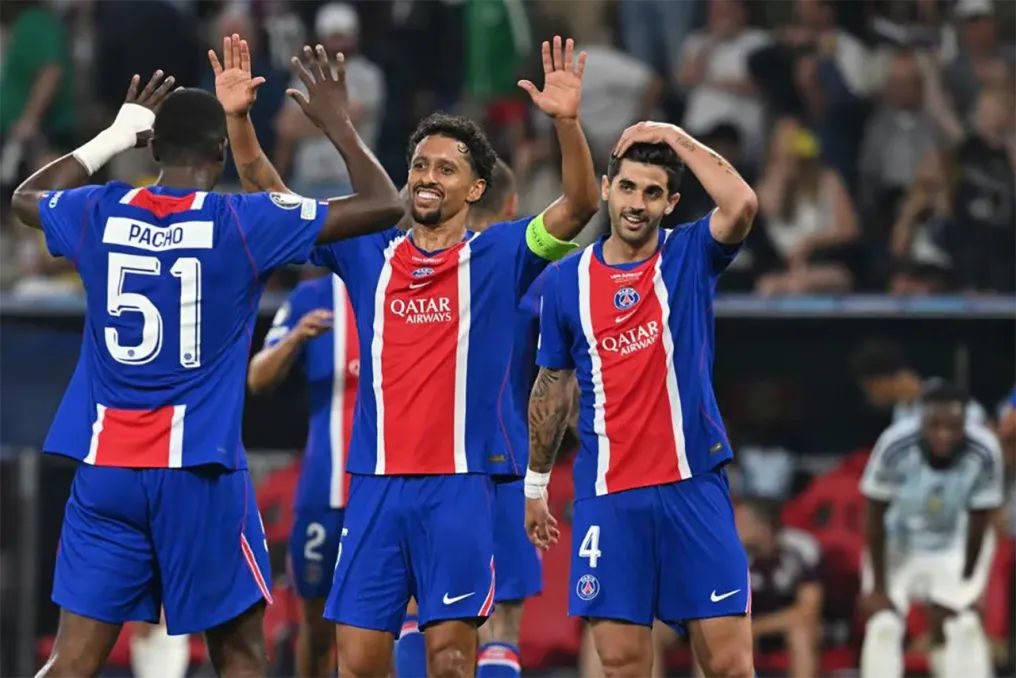
Paris Saint-Germain defeated the English club Aston Villa 2-1 in the UEFA Super Cup match held in Austria. Thanks to this victory, the Parisian club has won the trophy for the second consecutive year.
Khvicha Kvaratskhelia opened the scoring in the 20th minute of the match. However, Aston Villa managed to equalize in added time of the first half with a goal from Bryan Majo.
The winning goal for PSG was scored by Désiré Doué in the 61st minute. This victory secured PSG's second UEFA Super Cup title.
Previously, the French club won this trophy for the first time in 2025, defeating Tottenham in a penalty shootout after a 2-2 draw in regular time. PSG won the penalty shootout 4-3.
At the age of 17, Bryan Majo became the youngest player to score in the history of the UEFA Super Cup, as according to the presented data, no one younger than him started a match in this tournament.
PSG is the reigning Champions League champion for the last two seasons and has now won the UEFA Super Cup for the second consecutive year. Aston Villa entered this match as the reigning Europa League champion.
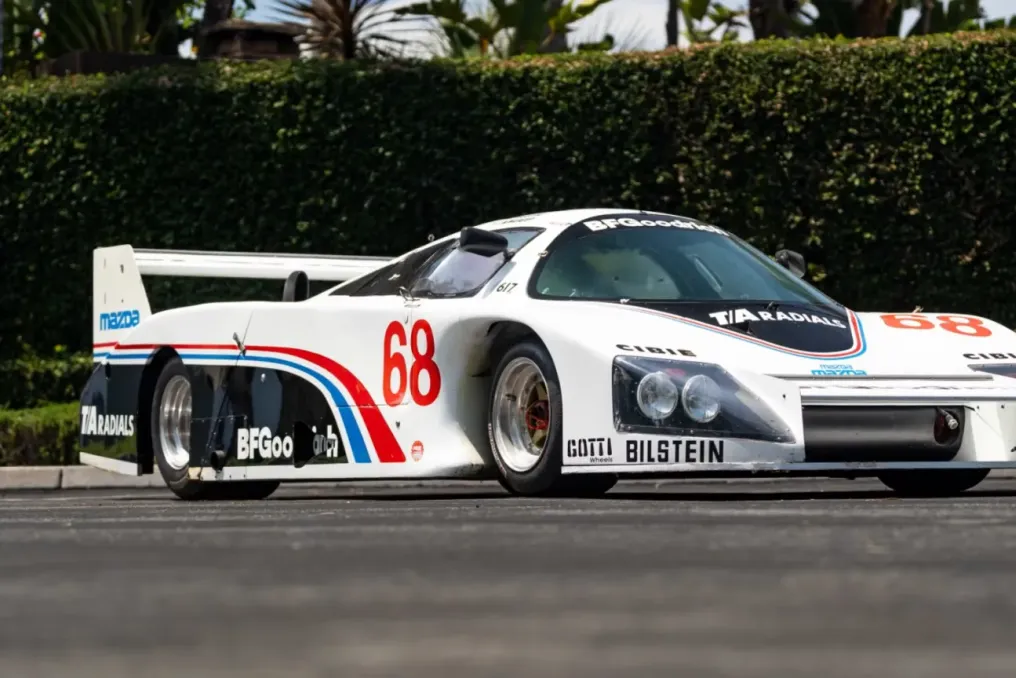
In 1984, a prototype participated in the 24 Hours of Le Mans using street tires and achieved victory in its respective class. This vehicle was the Lola T616-Mazda number 68, supplied by BF Goodrich, and was driven by John Morton, John O’Steen, and Yoshimi Katayama. The car secured the checkered flag in tenth place overall classification and was the winner among the Class C2 vehicles.
The achievement is remarkable, considering that Le Mans represents the greatest challenge in motorsport, where even renowned cars can suffer under the pressure of a full day's race at competitive pace. Aligning a car at La Sarthe with adapted street tires for racing is an unusual feat.
These tires had constructions and dimensions distinct from traditional competition tires, which required elements such as suspension, aerodynamics, wheels, and unsprung mass to be redesigned to accommodate these characteristics. Even the wheel well volume needed to be altered, as they were smaller than the tires usually employed on prototypes of that size. Lola explored this opportunity by modifying a car originally conceived to be light and have low aerodynamic resistance.
To understand how this Lola managed to win its class at Le Mans with tires similar to street tires, it is necessary to revisit the beginning of the program and understand the context of the tires and why BF Goodrich agreed to take them to the world's most demanding race.
In the late 1960s, BF Goodrich introduced the Radial T/A to the American market. Although it was not a new technology, its use by the common consumer was still limited. At that time, most tires used diagonal construction with overlapping plies. The radial tire presented a completely different structure, reinforced by a mesh of steel wires arranged radially in the carcass, hence its name.
These tires were aimed at the high-performance segment, particularly muscle cars, which experienced a power increase in the late 1960s, peaking in 1971, with cars producing close to 500 hp from engines up to 8 liters. To demonstrate the superiority of radial tires in all aspects, and not just comfort and durability, BF Goodrich chose to test them on tracks while most racing tires were still diagonal, with only IMSA using radials.
After obtaining positive results in 1970 and 1971, including a victory at the Watkins Glen SCCA National in the first year, BF Goodrich decided to present its radial tires at Le Mans in 1972. They equipped John Greenwood's 'Stars and Stripes' Corvette, which exceeded 320 km/h at Hunaudières/Mulsanne and secured pole position in its category.
The relevant advance occurred in 1981, when BF Goodrich began developing a new line of street tires aimed at new high-performance sports cars. These models were already distinct from the muscle cars of the 1960s, especially European ones, as they aimed to compete in a market dominated by brands like Michelin, Pirelli, and Goodyear. Thus, the Comp T/A was born, and BF Goodrich decided to develop it following the precedent of putting it on tracks.
In the following year, the company commissioned two Porsche 924 Carrera GTRs to test the new tire in the most challenging environment possible. One of these cars, registered by BF Goodrich with Jim Busby and Doc Bundy, completed the 1982 24 Hours of Le Mans in 16th place overall and won its category. This result fulfilled the promotional objective, but the tire's behavior caught the attention of BF Goodrich's senior management: around noon during the race, the team removed one tire just to inspect the wear and found it was still in good condition. The Porsche could also stay on the track for long periods, which helped the team gain an advantage over competitors.
This positive experience led BF Goodrich executives to question: 'What is the limit of a street tire at Le Mans?' After all, it was a modest Porsche 924, not a 935 or a prototype. Gary Pace, responsible for the company's high-performance sector, reframed the question: would it be feasible to create a racing tire from a street tire? A tire capable of supporting the side loads and temperatures of a prototype while maintaining the basic construction of a street tire?
From this program emerged the Experimental T/A tires. They were not merely Comp T/A tires bought in stores, nor were they conventional slicks with a street product name stamped on the sidewall. They were experimental tires created for competition, but that preserved the characteristics and structural components of a radial intended for public road use.
Although it may sound like marketing jargon, the audacity of the project becomes clear when remembering that a slick is not simply a street tire without grooves. In addition to the smooth tread, the carcass, containment belts, treads, and compounds are designed to control the shape of the contact patch, cornering stiffness, and the tire's response under the specific loads and temperatures of the competition.
On the other hand, a street tire must balance steering precision and grip with shock absorption, puncture resistance, durability, and comfort, requiring its compounds to function over a much wider temperature range (though significantly lower than slicks) and on various types of surfaces. Besides dry grip, it must handle wear, rolling resistance, and noise.
In summary, the slick is a precision instrument, while the street tire functions as a Swiss Army knife—multifunctional, but not specialized. BF Goodrich intended to maintain precisely this versatility in the Experimental T/A. The manufacturer itself stated that the program should support higher speeds, higher side loads, and higher temperatures, preserving the characteristics and components of a street radial tire. The tires used on the Lola were sized 275/35 in the front and 385/35 in the rear, both mounted on only 13-inch wheels. This detail was fundamental to the car's development.
In this project, Jim Busby did not act only as a driver; he was responsible for converting the BF Goodrich idea into a competitive car. The first step was selecting the engine. Busby chose the Mazda 13B, a two-rotor Wankel, because it was compact, light, and had adequate power for the newly formed Group C2.
For the chassis, Busby sought out Lola. At this point, the tire issue ceased to be just a marketing strategy, as most Group C2 cars used 15 or 16-inch wheels, while the Experimental T/A had only 13 inches. Generally, wheel size is determined by the car's development, but in this case, since BF Goodrich financed the project, Lola developed the vehicle starting from the tires.
The base model, Lola T600, used 16-inch wheels, and a three-inch difference may seem small, but it has a significant impact. A smaller wheel requires appropriate brakes and affects aerodynamic flow, both in the front tire area and in the size of the wheel wells. Additionally, the suspension geometry takes into account the tire size and the weight of the wheel-tire assembly, and this geometry, in turn, defines the mounting and pivot points of the suspension on the chassis.
The first consequence of this change occurs in an invisible aspect: unsprung mass. The smaller and lighter assembly allowed Lola to reduce the reaction transmitted to the steering wheel through the vertical travel of the wheels, known as 'bump steer,' a movement caused by the variation in convergence during the vertical displacement of the suspension. In a street car, this effect is noticeable when passing over a ripple, feeling the steering wheel move subtly. However, at 250 km/h or 280 km/h, this variation is drastically amplified.
Although there are no specific details about the suspension changes, Lola reported that the smaller and lighter wheel and tire assembly offered greater freedom to designers in developing the suspension compared to a larger 15 or 16-inch assembly.
Another factor is the external diameter of the wheel-tire assembly. Besides making more revolutions to cover the same distance, it modifies the design of the wheel well, which, in turn, can alter the bodywork design and consequently the aerodynamic design. The 13-inch tires allowed for a more compact front end and a lower ride height; for comparison, the T600 had a height of 1,054 mm, while the T616 had a height of 990 mm. The wheelbase was reduced from 2,710 mm to 2,640 mm, and the front track width went from 1,570 mm to 1,510 mm, keeping the width constant at 78.5 inches. The tires were small in diameter but maintained a width of 385 mm in the rear.
All this engineering resulted in a car with lower aerodynamic drag, although this is not exclusive to the tires. Lola incorporated the ground effect ducts from the T610 (successor to the T600), which decreased the dependence on a large rear wing exposed to clean airflow. Consequently, the T616 received a low wing, close to the aerodynamic wake of the body, balancing downforce and drag. This was one of the car's great assets, as despite high aerodynamic load allowing for higher speed in corners, resistance imposes a cost on straights, both in speed and fuel consumption.
This is where the choice of the Mazda 13B is justified. The engine weighed only 105 kg and generated about 300 hp—modest power, even for C2 standards, but it offered a very advantageous weight-to-size ratio for the project. This is because Group C2 established a minimum weight of 700 kg. With a 105 kg engine, the rest of the car could weigh 595 kg, allowing for the use of more robust components to withstand the 24-hour enduro, such as suspension arms and the Hewland gearbox.
Furthermore, being compact, the engine allowed for the best possible fitting of mechanical components without increasing the vehicle's volume. In practice, the 13B gave the T616 rear the same benefit that the 13-inch wheels brought to the front. With less mass to accelerate and brake, less volume to displace air, and an architecture focused on fuel economy, the T616 traded some top speed for efficiency. In a timed lap, this might seem like a disadvantage; however, in a long-distance race, the calculation was different.
Theoretically, the car was perfect for its purpose, but its functionality needed to be proven in practice.
In February 1984, BF Goodrich took the car to the 24 Hours of Daytona, where the Lolas competed in the IMSA GTP category. The team entered two cars: number 67, piloted by Jim Busby, Rick Knoop, and Boy Hayje, which started 17th but retired after 391 laps due to engine problems; and number 68, driven by Pete Halsmer, Ron Grable, Rick Knoop, and Dieter Quester, which started 28th and finished the race in 17th place.
Although these results did not justify the entire program, at least one of the cars had completed its first race.
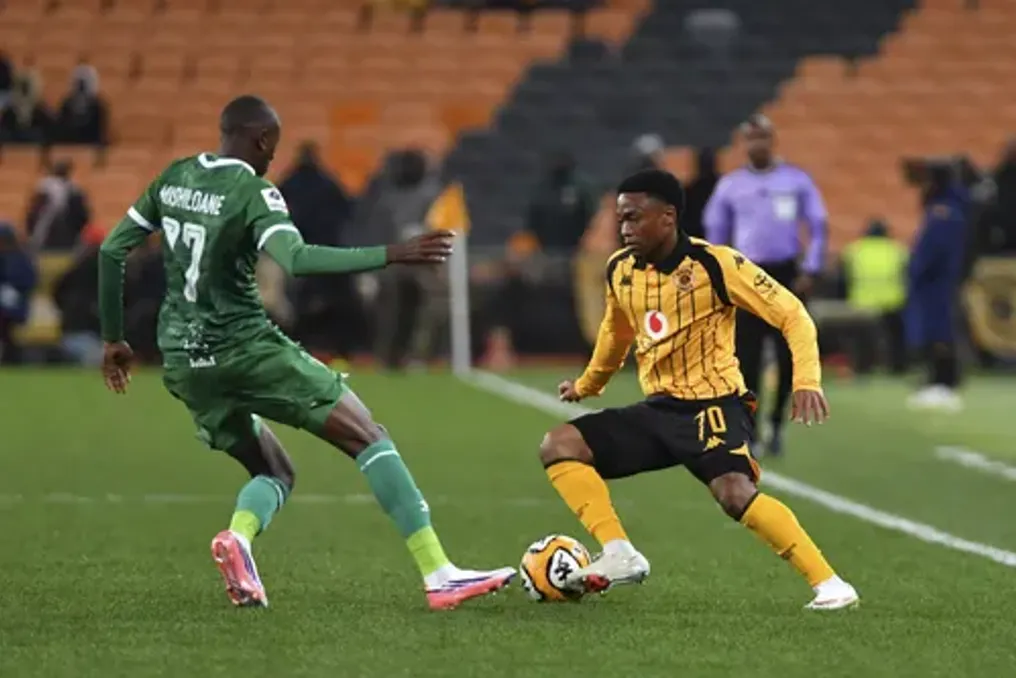
{On Wednesday evening, during the KZN derby held at Chatsworth Stadium amid heavy rain, the Lamontville Golden Arrows team managed to draw with Durban City. The goalkeeper of Arrows, Edward Maowa, played a key role in resisting the visitors.
Maowa was at the center of the team's defense when City showed its best period after halftime, repeatedly threatening to score and break the contest. The Namibian goalkeeper made a magnificent save from a long-range free kick after the 60th minute, followed by two more crucial saves during close-range shots. These actions proved decisive, allowing Arrows to withstand the opponent's prolonged pressure.
The match started about fifteen minutes later than scheduled because the water on the pitch required a late inspection. The harsh weather conditions hindered both teams from playing at a free pace. City, which was seeking its first win of the season after a 1-0 defeat to Sekhukhune United early in the campaign, had an advantage in the early stages, but it failed to create clear scoring opportunities.
Samkelo Maseko and Gaston Sirino participated in the game, attempting to score, while Arrows came close to success when a header from a corner hit the crossbar, and City's goalkeeper, Frederick Asare, managed to collect it. Twenty minutes before the end of the match, Arrows coach Pitso Dladla, playing against his former club, made substitutions in an attempt to strengthen the team's position.
Arrows also created threats late in the game when Sabelo Sithole almost broke through in the eighty-minute, but Siyabonga Msomi stopped him and received a yellow card. Since neither side could score the winning goal, the points were split. Arrows began their league campaign with two consecutive draws, while City remained without wins after the first two encounters, with another KZN derby against Richards Bay ahead of them.
Meanwhile, Langelihle Phili was named player of the match on Wednesday after helping his team secure a 2-0 victory over Sekhukhune United.