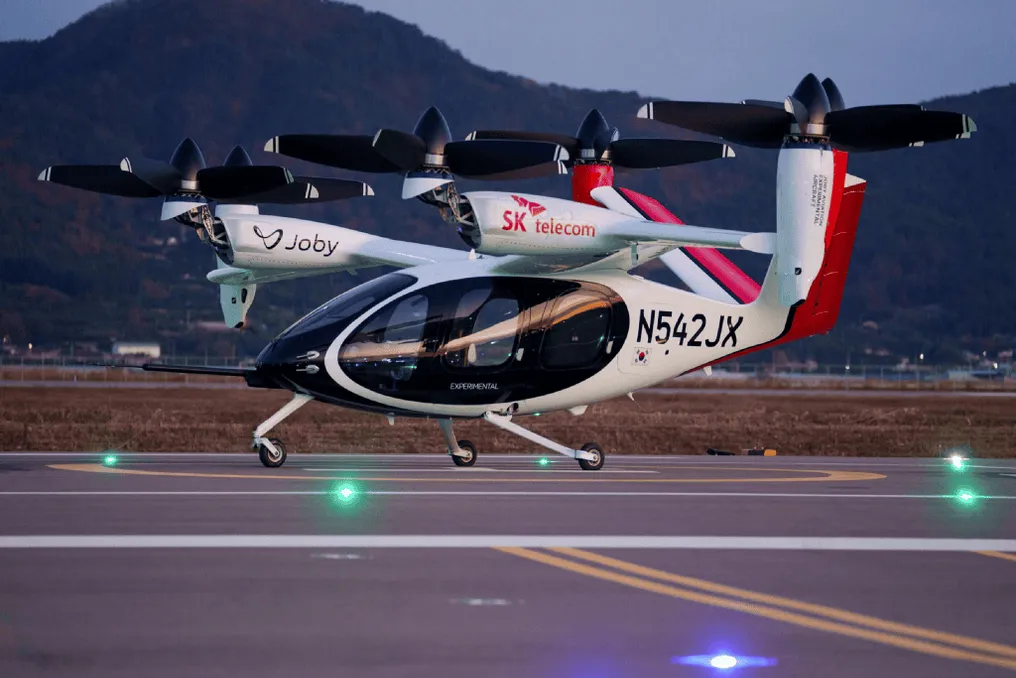
Joby Aviation announced the acquisition of defense company Resonant Sciences for US$ 500 million (equivalent to R$ 2.6 billion). This move aims to strengthen the electric aircraft manufacturer's strategy to increase its share in the military segment.
Resonant Sciences, headquartered in Dayton, Ohio, United States, will be integrated into Joby after the agreement is finalized, which is expected in early 2027. The purchase financing will be carried out with US$ 450 million (R$ 2.3 billion) in equity and US$ 50 million (R$ 258.7 million) in stock.
After the transaction is completed, Resonant will continue operating as Joby's defense division, maintaining its current activities. Concurrently, the company's commercial side will remain focused on developing air taxis, with the first services expected to begin this year.
This acquisition occurs in a context where electric aircraft companies are seeking new revenue streams beyond urban air taxis. The development of these vehicles involves very high costs, and regulatory procedures to start commercial operations are progressing slowly, delaying expectations of large-scale financial gains.
In this scenario, military contracts have emerged as a particularly attractive opportunity for companies needing to sustain costly operations while awaiting the maturation of the commercial market. According to Joby, the merger of experiences will allow it to combine its knowledge in propulsion and autonomous systems with Resonant's expertise in radio frequency, sensors, and mission systems, aiming to create stealth aircraft that make detection difficult.
Military Relations History
Although the acquisition substantially expands Joby's presence in the defense sector, the company already has established ties with the United States Armed Forces dating back several years. This proximity began in 2016 when the company joined a project of the Defense Innovation Unit, an initiative of the U.S. Department of Defense dedicated to developing and implementing innovative technologies.
In 2020, Joby reached a significant milestone by becoming the first eVTOL developer to receive airworthiness approval and a flight authorization certificate from the U.S. Air Force for government testing. Three years later, in 2023, the company delivered its first aircraft to Edwards Air Force Base in California for testing purposes.
Currently, the purchase of Resonant strengthens this pre-existing relationship, granting Joby access to specific technologies for military applications. The strategy adopted by Joby reflects a broader trend among electric aircraft manufacturers who are seeking support in military projects to stabilize their finances.
Air taxis still face the need to obtain the necessary governmental permits in most markets where these companies plan to operate commercially. Without these authorizations, the sector struggles to convert the vehicles into a relevant source of revenue. Meanwhile, companies continue to report losses due to high development costs. Last week, Joby reported a net loss of US$ 245.4 million (R$ 1.3 billion) in the second quarter of 2026, against revenue of US$ 38.6 million (R$ 199.8 million).
Given this situation, securing military contracts is beginning to gain importance comparable to putting air taxis into commercial operation. Competitor Archer Aviation, based in San Jose, USA, is following a similar path. Last month, this company presented a new aircraft model developed in collaboration with the defense technology firm Anduril.
Additionally, the sector is undergoing a consolidation process, as Boeing recently announced the sale of three of its eVTOL subsidiaries to Archer itself, in a large transaction that also covers the air taxi market. For Joby, the acquisition of Resonant Sciences transcends a mere business expansion; it represents an attempt to consolidate its position in the defense market while the company works to make air taxis a sustainable commercial operation.