The Money Plant is considered one of the easiest houseplants to care for. It can even be grown without soil, as it grows easily in water. However, despite ample watering and careful care, its shoots may hardly develop. The plant remains alive, rare new leaves appear, but the growth rate is so slow that the plant's appearance remains unchanged for many months.
If your money ivy is in this condition, simple watering is not enough. To ensure good development, a balance of many factors is necessary, including lighting, soil, fertilizer, pot, and temperature. Experts have suggested seven simple methods that will help your money plant grow faster, becoming denser and more beautiful.
Tips for Growing Money Plants
Firstly, you should choose a location with sufficient, but not direct sunlight. Although the plant requires good light for quality growth, it should not be placed under intense and direct sun, as this can lead to leaf scorching. A spot near a window that receives plenty of, but soft, light is ideal. With insufficient light, the leaves may remain small, and the distance between shoots may increase.
Secondly, it is crucial to avoid daily watering. This is one of the most common mistakes that slow down the growth of the money plant. No plant should receive an excess of water. Constantly moist soil can damage the root system. Before watering, check the top layer of the soil with your finger; watering should only be done when this surface has dried out. Additionally, the pot must have drainage holes. Yellowing leaves or the appearance of dampness and mold smell in the soil may indicate overwatering.
Thirdly, during the vegetative period, the plant needs to be fertilized. Watering and light alone are not enough for constant rapid growth. Light application of nutrients during active growth can significantly accelerate the development of new leaves and shoots. You can use regular liquid plant fertilizers every 4–6 weeks, but you should avoid excessive fertilizer, as this can harm the roots.
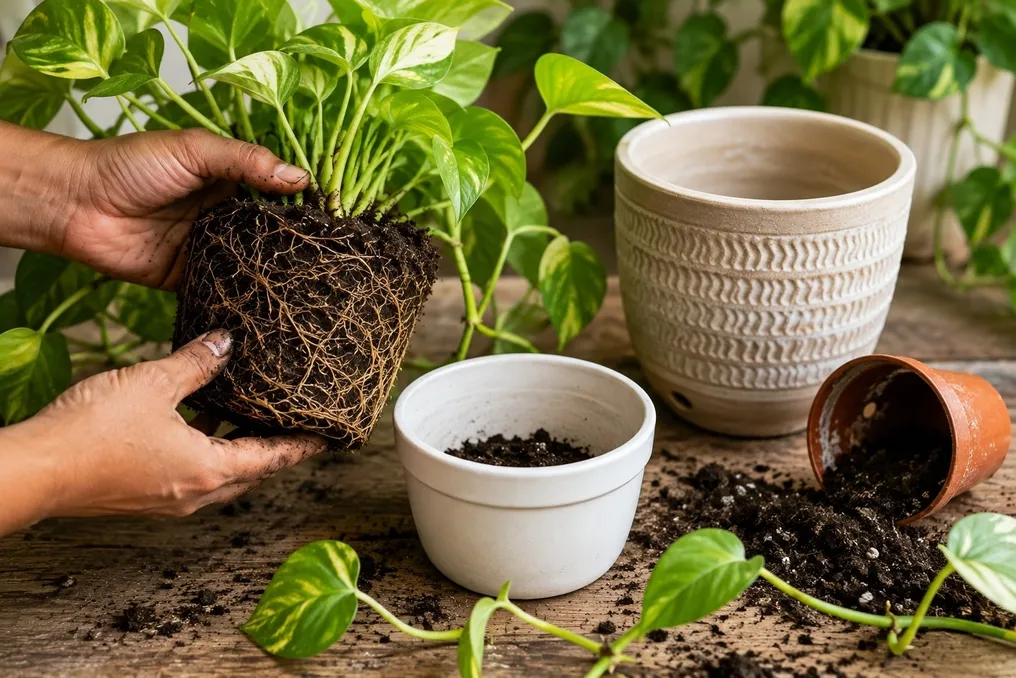
Fourthly, if the plant's roots are outgrowing the pot, it should be repotted into another container. Sometimes the problem lies not in the visible parts of the plant, but in the root system. If the roots start coming out of the drainage holes or completely fill the pot, a larger vessel will be required. When choosing a new pot, it is better to take one slightly larger than the old one, not too large. It is important to use soil with good drainage so that water does not stagnate.
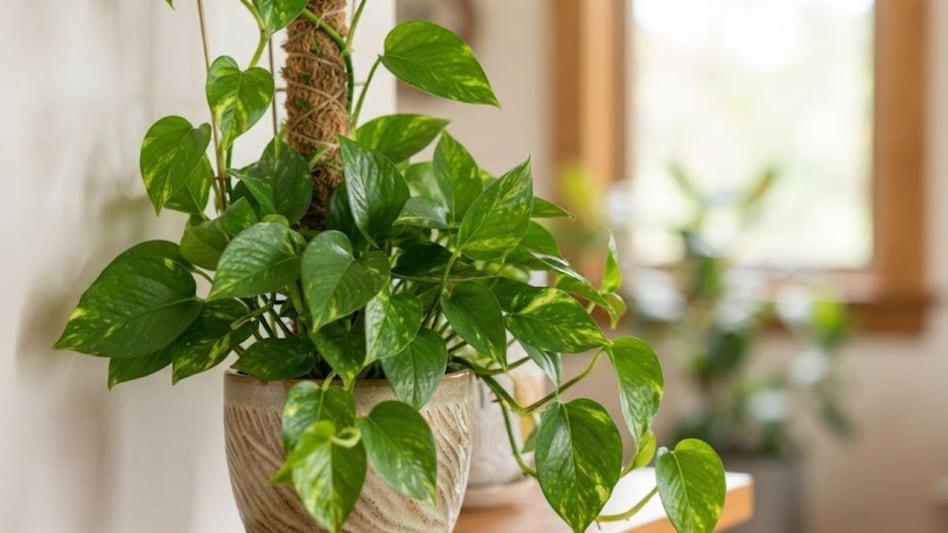
Fifth, instead of letting the shoot hang down, it should be tied upwards. Since the money plant is naturally vining, support allows it to become denser and more attractive, while the leaves become larger and thicker. For this, a coconut or moss pole can be used as support.
Sixth, the plant must be protected from air conditioners and cold air. The money plant prefers warmth and moderate humidity. Direct airflow from the air conditioner, proximity to heaters, or windows with constant cold drafts should be avoided. Sudden temperature changes and severe cold negatively affect plant growth, so a normal room temperature regime is optimal.
Finally, pruning the shoots correctly is necessary. If a shoot has become too long but has few leaves, it can be trimmed slightly. Removing long and weak stems stimulates the appearance of new side branches. The cut parts should not be thrown away: they can be planted in water or soil to produce new roots, and then these cuttings can be used to increase the density of the main plant.
If your money plant does not change its condition for a long time, instead of just increasing watering, you need to pay attention to comprehensive care. Ensuring the plant has proper lighting, adequate water, timely fertilization, use of well-draining soil, sufficient space, and appropriate temperature will significantly improve its growth. A small adjustment in care can turn an ordinary plant into a lush, green, and beautiful one.