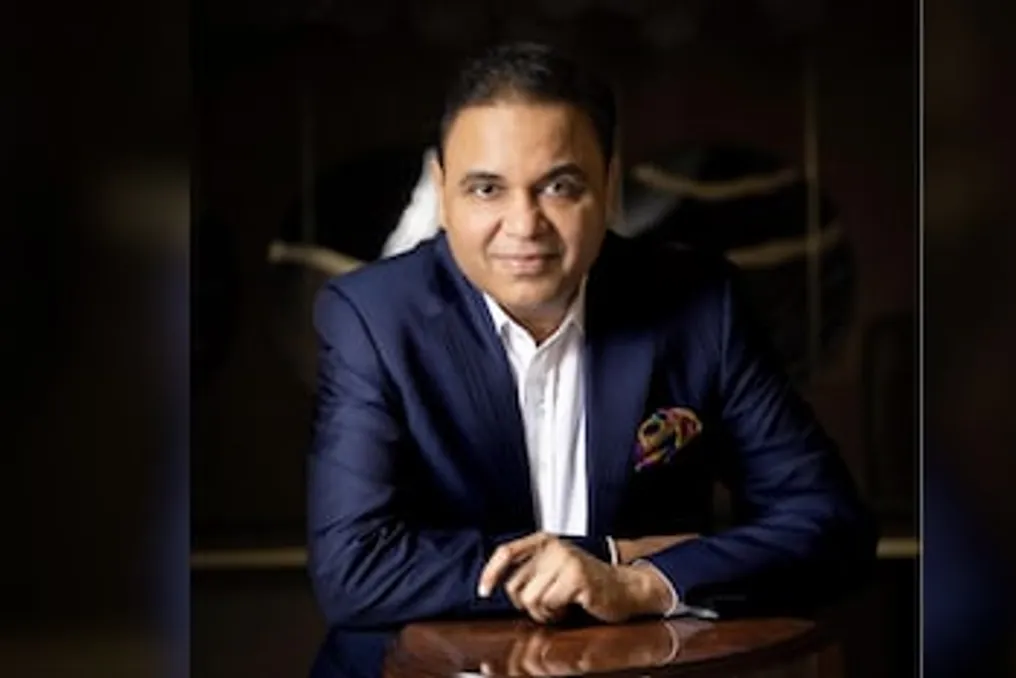
Himadri Speciality Chemical Ltd intends to allocate approximately ₹1300 crore for capital expenditure over the next year. The specialty chemical producer is accelerating investments in lithium-ion battery materials, advanced carbon materials, and other high value-added products, according to Chairman and CEO Anurag Chaudhary.
Furthermore, the company is preparing for another investment cycle worth about ₹1500 crore next year. They also plan to establish India's first commercial carbon nanotube manufacturing plant with initial investments of ₹70 crore, Chaudhary added in an exclusive interview with Business Standard.
The Kolkata-headquartered company has completed the acquisition of a 100% stake in Birla Tyres Limited, based in Balasore, Odisha. Since April 2025, this division has been a wholly-owned subsidiary of the company. After resuming production last May, the tyre division operates at a capacity of 100 tonnes per day and is increasing its production capacity monthly. In the first quarter of FY2027 alone, it generated revenue of ₹126 crore.
Himadri has already earmarked capital expenditures of ₹1125 crore for its Lithium Iron Phosphate (LFP) production project, ₹170 crore for super-specialized technical carbon, and ₹70 crore for the carbon nanotube project. Chaudhary stated: 'We are targeting a revenue of ₹30,000 crore from battery chemicals over the next six years through a series of phased investments.'
Strategy to create a raw material hub for lithium-ion cells
The company positions itself as a creator of a raw material component hub for lithium-ion cells, possessing capabilities in both cathode and anode materials. This strategy aims not only to meet India's growing demand for battery production but also to serve global clients looking to diversify their supply sources away from China.
Unlike companies specializing in either cathode or anode materials, Himadri intends to develop competencies on both sides of the battery ecosystem. On the cathode side, the company is setting up an LFP plant with an initial capacity of 2000 tonnes per year, followed by a facility with a capacity of 40,000 tonnes per year. Ultimately, the company is aiming for a capacity equivalent to approximately 100 GWh within five years.
Chaudhary noted that this strategy could strengthen India's position in the global market for lithium-ion components, especially given that China currently dominates LFP production. He emphasized: 'Today, 100 percent of LFP capacity is only in China. No company outside China in the world produces LFP. Therefore, Himadri intends to be a pioneer in this.'
Development of anode materials and carbon nanotubes
Regarding the anode side, Himadri is developing capabilities in synthetic graphite, natural graphite, and silicon-carbon materials. Chaudhary believes that this combination will enable Himadri to become a 'one-stop shop' for battery manufacturers, capable of supplying both cathode materials and various types of anodes and custom blends.
The company is intensifying its focus on silicon-carbon materials, which have the potential to radically change the landscape of lithium-ion batteries. Himadri has developed its own technology and plans to build a manufacturing plant. 'We are evaluating potential sites for the project in Odisha, Andhra Pradesh, and West Bengal,' he reported.
Another promising area for Himadri is carbon nanotubes. Chaudhary described them as a high-potential material due to their combination of strength, conductivity, and lightness. 'We will start with a 200-tonne plant in West Bengal and subsequently move to a larger expansion. The launch is expected in the fourth quarter of FY2027, and this facility is expected to place Himadri among the select global producers serving this rapidly growing market.'
Himadri is considering additional investments and capacity expansion across several states, with Odisha, Andhra Pradesh, and West Bengal emerging as key locations for future growth. Chaudhary added that the company is exploring several capital expenditure opportunities across different products, and West Bengal is increasingly becoming a priority for new production volumes.
Expansion into premium segment and AI integration
'We are advancing our penetration into premium specialized areas through Super Specialized Technical Carbon (SSCB), utilizing our fully integrated carbon platform. SSCB is expected to deliver significantly higher realization value in niche applications such as lithium-ion batteries, engineering plastics, textiles, fibers, coatings, and conductive black. This project, supported by proposed capital expenditure of ₹170 crore, is scheduled to launch in the fourth quarter of FY2028,' stated Chaudhary.
Additionally, the company is exploring how artificial intelligence can be integrated into all its operations, particularly in manufacturing. 'Himadri views AI not as a standalone technology investment, but as an integral part of business operations that can enhance efficiency and sustainability,' he concluded.